


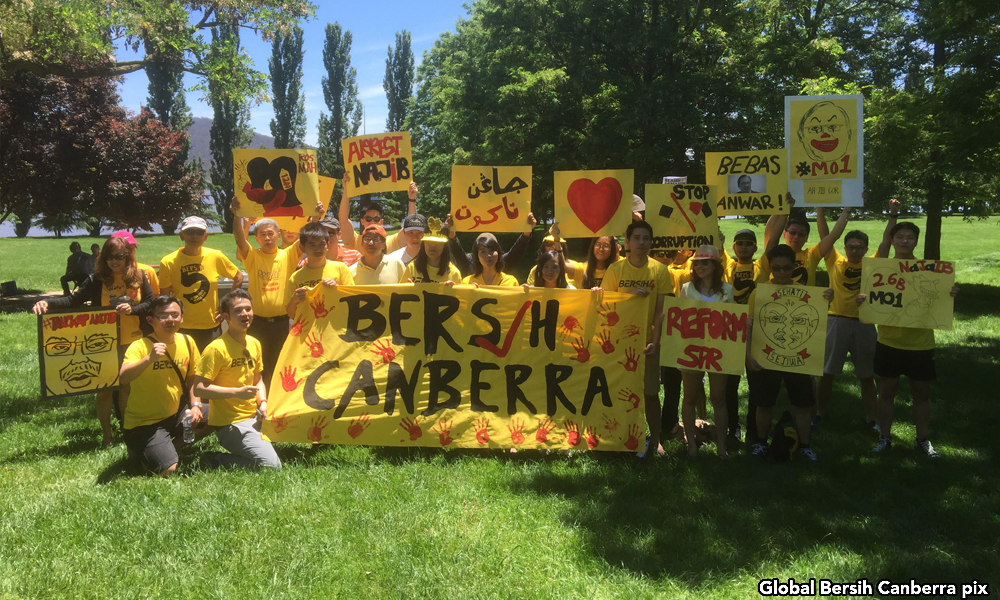

Global push for overseas voting reform
COMMENT Malaysians abroad have sent a proposal to the Election Commission (EC), urging it to implement reforms that will deliver a secure and transparent voting process at as many overseas locations as possible.
The principal objectives of the proposal, co-ordinated by Global Bersih (GB), is a voting system that gives voting rights to all eligible Malaysians abroad and delivers a legitimate tally of all votes cast overseas.
The proposal, which contains suggested reforms to the current system, was distributed for signatures at Bersih 5 rallies across the globe during the weekend of last Nov 19.
The proposal has since been emailed to the EC from various cities with GB chapters, and followed up by letter. It has also been delivered to Malaysian missions in France, Perth, New Zealand, Germany, Switzerland and Sydney.
A survey by GB recently revealed widespread inconsistency and a lack of knowledge in many overseas missions regarding voter registration and overseas voting legislation.
Partly as a result, citizens everywhere have little faith in the system when it comes to voting and related issues at overseas missions, and many would hesitate to even register as overseas (advance) voters. In the same vein, Bersih 2.0 has always maintained its preferred option is for voters living abroad to fly home to vote if they can afford travel costs.
It is precisely with these issues in mind that GB now seeks a system of registration and voting that engenders confidence in the minds of voters as they cast their ballots abroad.
GB is calling for legislative and regulatory reforms that “adhere to the letter and spirit of Malaysia’s constitution”, says Geneva-based Bala Chelliah, the newly elected president of GB, which independently acts in support of the demands of electoral reform group Bersih 2.0.
Recognising the deficit of faith in the system, Chelliah said: “Malaysians living abroad are entitled to a clear system that is uniformly adopted and implemented across overseas missions.
“Transparency and accountability are key issues addressed in the proposal, which seeks to cover citizens living abroad who are eligible to register as new or ‘ordinary’ voters as well as overseas (advance) voters.”
A key reform in the proposal covers the counting of ballots - in GB’s view, ballots should be counted at high commissions, embassies and consulates, not sent back to Malaysia for counting.
“We urge all political parties from the government and opposition to study this proposal from Malaysian citizens and to consider offering their open support,” said Chelliah.
GB’s proposals hold that political parties, their candidates or independent candidates should be able to appoint overseas Malaysians as official scrutineers at overseas ballot centres. These overseas scrutineers, or party agents, should have the same authority and powers as their counterparts in Malaysian polling stations.
They should be allowed to monitor the receipt and opening of ballot sacks, and monitor the sealing of these sacks when voting, counting and final tallying are conducted overseas.
The proposal before the EC also seeks overseas (advance) voting to be extended to Malaysians in Singapore, Brunei, Indonesian Kalimantan and the southern provinces of Thailand, all of whom were not allowed to cast their vote from these locations during GE13, on May 5, 2013.
COMMENT Malaysians abroad have sent a proposal to the Election Commission (EC), urging it to implement reforms that will deliver a secure and transparent voting process at as many overseas locations as possible.
The principal objectives of the proposal, co-ordinated by Global Bersih (GB), is a voting system that gives voting rights to all eligible Malaysians abroad and delivers a legitimate tally of all votes cast overseas.
The proposal, which contains suggested reforms to the current system, was distributed for signatures at Bersih 5 rallies across the globe during the weekend of last Nov 19.
The proposal has since been emailed to the EC from various cities with GB chapters, and followed up by letter. It has also been delivered to Malaysian missions in France, Perth, New Zealand, Germany, Switzerland and Sydney.
A survey by GB recently revealed widespread inconsistency and a lack of knowledge in many overseas missions regarding voter registration and overseas voting legislation.
Partly as a result, citizens everywhere have little faith in the system when it comes to voting and related issues at overseas missions, and many would hesitate to even register as overseas (advance) voters. In the same vein, Bersih 2.0 has always maintained its preferred option is for voters living abroad to fly home to vote if they can afford travel costs.
It is precisely with these issues in mind that GB now seeks a system of registration and voting that engenders confidence in the minds of voters as they cast their ballots abroad.
GB is calling for legislative and regulatory reforms that “adhere to the letter and spirit of Malaysia’s constitution”, says Geneva-based Bala Chelliah, the newly elected president of GB, which independently acts in support of the demands of electoral reform group Bersih 2.0.
Recognising the deficit of faith in the system, Chelliah said: “Malaysians living abroad are entitled to a clear system that is uniformly adopted and implemented across overseas missions.
“Transparency and accountability are key issues addressed in the proposal, which seeks to cover citizens living abroad who are eligible to register as new or ‘ordinary’ voters as well as overseas (advance) voters.”
A key reform in the proposal covers the counting of ballots - in GB’s view, ballots should be counted at high commissions, embassies and consulates, not sent back to Malaysia for counting.
“We urge all political parties from the government and opposition to study this proposal from Malaysian citizens and to consider offering their open support,” said Chelliah.
GB’s proposals hold that political parties, their candidates or independent candidates should be able to appoint overseas Malaysians as official scrutineers at overseas ballot centres. These overseas scrutineers, or party agents, should have the same authority and powers as their counterparts in Malaysian polling stations.
They should be allowed to monitor the receipt and opening of ballot sacks, and monitor the sealing of these sacks when voting, counting and final tallying are conducted overseas.
The proposal before the EC also seeks overseas (advance) voting to be extended to Malaysians in Singapore, Brunei, Indonesian Kalimantan and the southern provinces of Thailand, all of whom were not allowed to cast their vote from these locations during GE13, on May 5, 2013.
Prohibitive cost of travel for voters
Recognising the prohibitive cost of travel for voters in some countries - for example, Sydneysiders having to make the 12-hour journey to Melbourne to vote from overseas - GB’s proposal also makes the case for more voting locations to be set up as polling stations, and that they are not limited to high commissions and embassies.
“In researching our proposal, we found that the Philippines enables voters to cast their ballots in what they call ‘field voting’ locations," says Lydia Chai of GB. “We can learn from our Asean neighbours.”
However, faith in the EC, the very custodians of the voting system in Malaysia and abroad, is very thin in the minds of many Malaysians.
Remembering the results of indelible ink being introduced into voting for GE13, some Malaysians abroad also fear similar proposals to prevent abuse of the system could backfire, just as consensus grows that Malaysia’s 14th general election will soon be called.
Speaking from Melbourne, GB’s city co-ordinator for Melbourne and the president of SABM Australia, Praveen Nagappan, said: “While enhanced controls over the current process are wanting, we don’t see anything to believe that the custodians of the system will deliver overseas voting along with enhanced controls.
“We campaigned for the use of indelible (non-washable) ink to be placed on the finger of voters as they collected their ballots in GE13. What was delivered instead was washable, edible ink.
“There is no telling what may happen to a very good set of reforms to overseas voting that GB has proposed, and our preference in Melbourne is for overseas Malaysians to return to Malaysia to vote.”
Summing up, Nagappan said: “We would prefer to see structural change at gatekeeper level, such as at the EC, before any procedural changes are introduced. We simply do not trust the current gatekeepers based on their track record.”
GB’s newest president personally met in Geneva with Amran Mohamed Din, Ambassador and Permanent Representative to the Mission of Malaysia to the United Nations, in Geneva on Jan 27, to hand over the GB proposal and brief him on the group’s effort.
Chelliah said: “Our request was well-received and the ambassador was glad that GB had already submitted the proposal directly to the EC, and explained that, as the mission’s role was only to facilitate the process, he promised to contact us if he received any new instructions.”
At the same time, Amran confirmed that the Geneva mission now had a system to register first-time voters.
The full GB proposal may be viewed here.
WILLIAM DE CRUZ is former Global Bersih president.
The views expressed here are those of the author/contributor and do not necessarily represent the views of Malaysiakini.


Are you sure you want to delete this comment?
This action cannot be undone.