



In solidarity with Lena Hendry, NGOs screen film that got her nabbed
Several human rights groups have showed solidarity with embattled activist Lena Hendry by screening the documentary that had landed her in trouble.
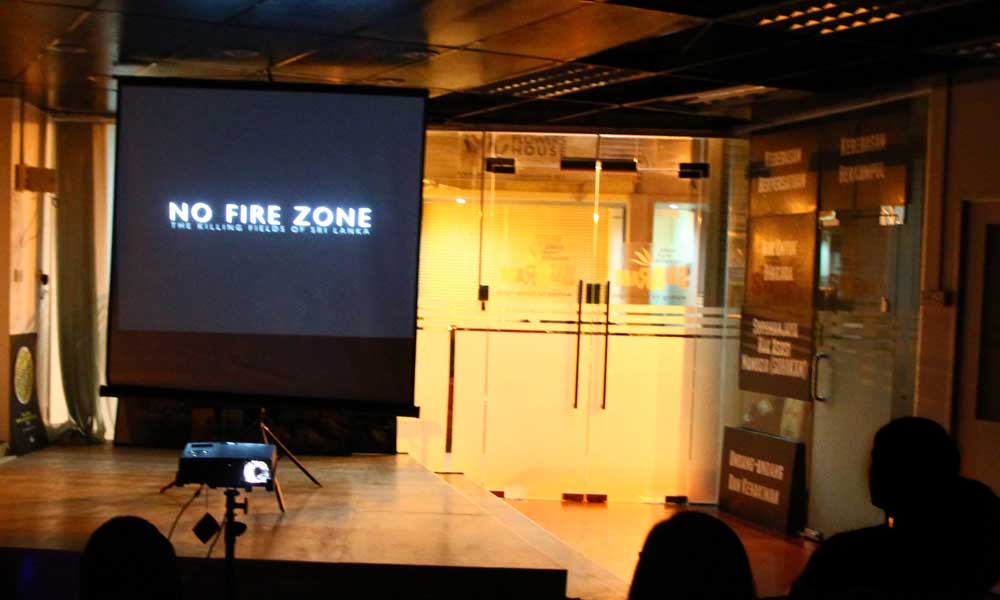
The screening of ‘No Fire Zone: The Killing Files of Sri Lanka’ took place at Suaram’s office in Petaling Jaya last night.
Apart from Suaram, the co-organisers of the screening were NGOs Aliran, Asia Pacific Forum on Women, Law and Development, Amnesty International - Malaysia, Joint Action Group for Gender Equality, Community Communications Centre (Komas), and Lawyers for Liberty.
Several human rights groups have showed solidarity with embattled activist Lena Hendry by screening the documentary that had landed her in trouble.
The screening of ‘No Fire Zone: The Killing Files of Sri Lanka’ took place at Suaram’s office in Petaling Jaya last night.
Apart from Suaram, the co-organisers of the screening were NGOs Aliran, Asia Pacific Forum on Women, Law and Development, Amnesty International - Malaysia, Joint Action Group for Gender Equality, Community Communications Centre (Komas), and Lawyers for Liberty.
It was held as part of a broader campaign dubbed #DefendHendry, which calls on the government to end state action against Hendry.
The event drew about 30 people, including Hendry herself.
The highly graphic documentary was streamed online through video-sharing service Vimeo in conjunction with yesterday’s screening.
The one-and-half hour documentary by British journalist Callum Macrae documents the alleged war crimes committed in the final months of the Sri Lankan civil war, through the photos and videos captured by its victims and its perpetrators.
The Sri Lankan army had initially denied the documentary’s allegations, but a later Sri Lankan government commission reportedly deemed the allegations to be credible.
A 2015 UN report said human rights abuses had been perpetrated by both sides of the conflict, which include torture, extrajudicial killings, and shellings of civilians and hospitals.
The Kuala Lumpur Magistrate’s Court had previously found Hendry guilty of violating Section 6(1)(b) of the Film Censorship Act 2002 for screening a shorter, earlier version of the said film on July 3, 2013.
She is due to be sentenced on March 22 and intends to appeal her conviction.
The Act’s provision, among others, prohibits the screening of films that have yet to be approved by the Film Censorship Board, with penalties of a fine between RM5,000 and RM30,000, or imprisonment of up to three years, or both, upon conviction.
Section 2(3) of the Film Censorship Act states that the Act does not apply to films published, displayed, or distributed over the internet.
'Film exposed war crimes'
Speaking to reporters after the screening, Suaram executive director Sevan Doraisamy appeared unfazed when asked if he is concerned that the government may take action over the night’s screening of the film.
He said when the film was screened in 2013 for which Hendry was arrested and charged, it was part of an effort to galvanise international support for investigations into the alleged war crimes in Sri Lanka.
“So it was an international campaign in the name of human rights. What Hendry did and what Komas did by screening the movie was another gesture in support of human rights.
“That’s about it, you’d have to look at the whole thing from this angle rather than film censorship and all that.
“This is the question: If there is a human rights violation and it was filmed, then we as human rights defenders have all the rights to view it and to have action against that violation.
“In that sense, we wanted to show our solidarity and support to Hendry, and to tell clearly that what Hendry did was a good thing in the international campaign against these violations in Sri Lanka,” he said.
Meanwhile, during discussions with the audience about the film, Hendry said a study comparing film censorship laws in the UK with those around the world had found that Malaysia’s laws are among the most repressive.
She said Malaysia should move to a rating-based system instead, and let potential viewers decide whether to watch the film, rather than mandating that every film needs to be approved by the Film Censorship Board before it can be screened.


Are you sure you want to delete this comment?
This action cannot be undone.