



Still no progress on human rights in Sri Lanka
COMMENT I don't think that the international community of nations represented in the UN Human Rights Council (HRC) are really serious in addressing the issue of human rights in Sri Lanka.
Despite earlier resolutions that urged an international investigation into gross human rights abuses in Sri Lanka especially after the civil war, Sri Lanka continues to evade its international responsibility.
In the current session of the HRC in Geneva, countries like the United States, Britain, Macedonia, Montenegro, Northern Ireland are pushing for a resolution that would give the Sri Lankan government a two-year extension for it to present credible evidence on the progress of human rights in the country.
Apparently, countries like Australia, Canada, Germany, Israel, Japan, and Norway might be supporting this resolution that was co-sponsored by Sri Lanka.
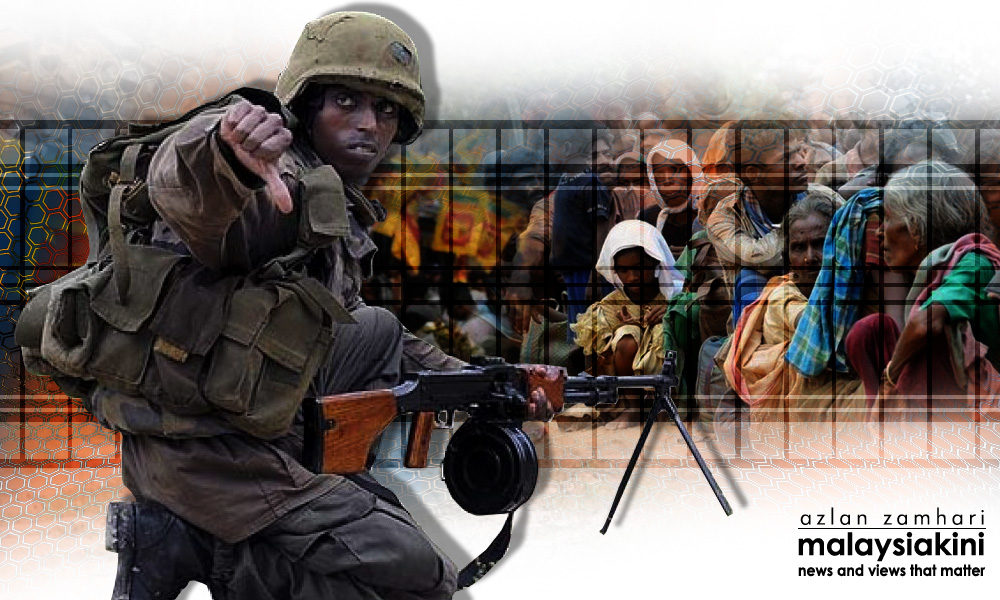
Chances are that this two-year extension might be given to Sri Lanka despite the fact that the human rights situation is horrendous in the country. After the civil war, which ended in May 2009, little progress has been made in promoting human rights, reconciliation and bringing to justice those who were responsible for war crimes.
More than 150,000 Tamils, men, women, and children have disappeared without a trace. The government is yet to address this issue, which remains an extremely sore point for Tamils, especially those who lost their loved ones.
Despite the promise by the new government of Maithripala Sirisena, the Sri Lankan Armed Forces have not returned to their barracks...
COMMENT I don't think that the international community of nations represented in the UN Human Rights Council (HRC) are really serious in addressing the issue of human rights in Sri Lanka.
Despite earlier resolutions that urged an international investigation into gross human rights abuses in Sri Lanka especially after the civil war, Sri Lanka continues to evade its international responsibility.
In the current session of the HRC in Geneva, countries like the United States, Britain, Macedonia, Montenegro, Northern Ireland are pushing for a resolution that would give the Sri Lankan government a two-year extension for it to present credible evidence on the progress of human rights in the country.
Apparently, countries like Australia, Canada, Germany, Israel, Japan, and Norway might be supporting this resolution that was co-sponsored by Sri Lanka.
Chances are that this two-year extension might be given to Sri Lanka despite the fact that the human rights situation is horrendous in the country. After the civil war, which ended in May 2009, little progress has been made in promoting human rights, reconciliation and bringing to justice those who were responsible for war crimes.
More than 150,000 Tamils, men, women, and children have disappeared without a trace. The government is yet to address this issue, which remains an extremely sore point for Tamils, especially those who lost their loved ones.
Despite the promise by the new government of Maithripala Sirisena, the Sri Lankan Armed Forces have not returned to their barracks.
Thousands of soldiers continue to occupy Tamil lands and homes as an excuse to prevent the "re-grouping" of the Liberation Tigers of Tamil Eelam (LTTE). Even retail trade once controlled by Tamils has been taken over by the Sri Lankan Armed Forces cooperative organisations.
Tamil fishermen who once dominated the fishing grounds in the seas of the north and east of Sri Lanka have been denied access. The heavy presence of the Sri Lankan navy has made it difficult for them to earn a living due to the introduction of certain draconian legislations and the re-designation of certain areas as high-security zones.
LTTE is dead and gone
The LTTE is dead and gone, many of their leaders have been killed in the civil war and many others have been detained and then rehabilitated.
The Sri Lankan government in the hands of the Sinhalese majority continues to exert overwhelming dominance on Tamils, their areas, their homes, and lands. The LTTE "threat" has become a convenient excuse for the government to ensure Sinhala settlement in Tamil areas, thus altering the demographic landscape.
During the height of the civil war, it is believed that more than 100,000 Tamils were killed. Thousands perished as result of the indiscriminate bombing of Tamil areas.
However, despite numerous complaints and petitions, visit by UN officials and others, nothing has been done to address this issue of war crimes in the country. Those responsible for these continue to roam the corridors of power and many top officials of the armed forces have been given diplomatic posts abroad.
Despite some tough resolutions by the UN Human Rights Council, including urging a credible international investigation, nothing concrete has resulted in terms of convincing the Sri Lankan Tamils that the government is serious in addressing this issue of war crimes.
More than eight years have passed since the end of the civil war, but the human rights of the Tamils continue to erode rapidly, without any resolution in sight.
Tamil organisations in Sri Lanka are wondering whether the two-year extension requested by the Sri Lankan government from the UN Human Rights Council is for making progress on the human rights front or more for the unfinished business of completely dominating the Tamils in every aspect of their lives?
P RAMASAMY is Deputy Chief Minister II of Penang and the state assemblyperson for Perai.
The views expressed here are those of the author/contributor and do not necessarily represent the views of Malaysiakini.


Report this comment
Are you sure you want to delete this comment?
This action cannot be undone.