




Detention camp hospitality almost kills four refugees
For almost three months, Ki Tho, 20, was not able to move his lower torso and both his legs. Even after a month's rehabilitation, he can now only shuffle from one place to another with the help of a walking aid and with someone supporting him.
For almost three months, Ki Tho, 20, was not able to move his lower torso and both his legs. Even after a month's rehabilitation, he can now only shuffle from one place to another with the help of a walking aid and with someone supporting him.
The Burmese Chin refugee was suffering from severe malnutrition, which allegedly developed while he was held at the Lenggeng immigration detention centre in Negri Sembilan.
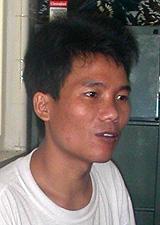 Bedridden and feeling on the brink of death, Ki (
photo
) was released on May 18 to the care of United Nations High Commissioner for Refugees (UNHCR) along with three other Chins suffering the same symptoms.
Bedridden and feeling on the brink of death, Ki (
photo
) was released on May 18 to the care of United Nations High Commissioner for Refugees (UNHCR) along with three other Chins suffering the same symptoms.
Four days later, they were placed in different homes run by a social worker, who was cynical about the reason for their release - "so they wouldn't die on them (the authorities)".
Immigration officials could not be reached for comment today.
The social worker said the four had symptoms like gastrointestinal disturbances, swelling caused by excessive collection of fluid in various parts of the body, inflammation and degeneration of nerves and muscular weakness.
(These symptoms are similar to those of beriberi, a disease rare in Malaysia, caused by improper diet and the poor absorption and utilisation of Vitamin B1.)
"The authorities have been nervous about deaths in custody ever since the report on Semenyih camp, which highlighted horrendous conditions there," he said.
The social worker, who requested anonymity, was referring to the document released by Tenaganita executive director Irene Fernandez in August 1995, which alleged that 60 detainees had died in the camp.
She was subsequently found guilty of publishing false news via the report, entitled 'Abuse, Torture and Dehumanised Treatment of Migrant Workers at Detention Camps', and sentenced to 12 months in jail. However, she is appealing the decision and is on bail.
Fear of starvation
The four refugees were among 164 Chins who had been arrested after a protest in front of their embassy in Kuala Lumpur in January, against the Burmese military junta's alleged persecution of the predominantly Christian Chin community.
After being held at the Pudu police station, the demonstrators were handed over to the department when the Attorney-General's Chambers decided not to press charges.
At the Lenggeng camp, the activists found their calls for freedom and liberty in Burma being reduced to pleas for decent food and time to pray without being kicked in the backs by camp officers.
Their two meals a day comprised less than a handful of rice with a clump of fish, packed in plastic bags, Ki said during an interview yesterday.
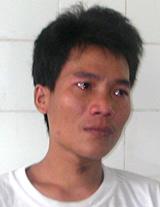 "Many of us would open the packets to find maggots squirming inside," he said, breaking down a number of times while recollecting his experience.
"We would just throw away whatever maggots we could see and gulp down the food. If we threw away the meal, then we would have died of starvation. We drank a lot of water, though."
However, their diet coupled with drinking dirty water resulted in bouts of dysentery. According to Ki, about 40 of the Chin fell severely ill this way, while he and the other three refugees eventually became severely malnourished.
He also claimed that the Chin were denied their right to pray.
"We would pray as a group, but a number of officers would barge into the hall to force us to conclude our prayers quickly," he claimed.
"Because I could not move as fast as the other detainees when moving from one place to another, I was often kicked and left sprawled on the floor by certain immigration officers."
'Medicines seized'
Although his condition worsened, Ki said he only taken once to a doctor at a nearby clinic.
Weekly visits to the detention centre by volunteer medical teams - arranged by the UNHCR - turned out to be pointless as medicines dispensed would be confiscated by the camp authorities.
"Everything would be treated with (paracetamol). From headaches to stomach upsets, swollen joints and lack of vitamins, we would be given only one tablet of (paracetamol). I don't know what they (the authorities) did with the medicines given by the UNHCR doctors," he said.
"After about a month, I could not move any part of my body from the chest downwards. Parts of my body, including the testicles, had swollen to an unbelievable size. I could not even sit up on my own, let alone walk. Two friends had to carry me to the toilet and for my bath."
As their health was visibly deteriorating, the authorities released Ki and the other three.
While two have since regained their health and returned to various Chin communities around Kuala Lumpur, Ki and the other refugee will have to remain in the home until they recover fully.


Are you sure you want to delete this comment?
This action cannot be undone.