




Batam - island paradise and haven for migrant worker brokers
SPECIAL REPORT Ships and containers are berthed in a row, backed by towering skyscrapers as the Malaysian border looms in the horizon.
A mobile carrier informs users that roaming charges will now apply, but Kampung Tua, Teluk Mata Ikan and Nongsa form a district in Indonesia’s Batam city.
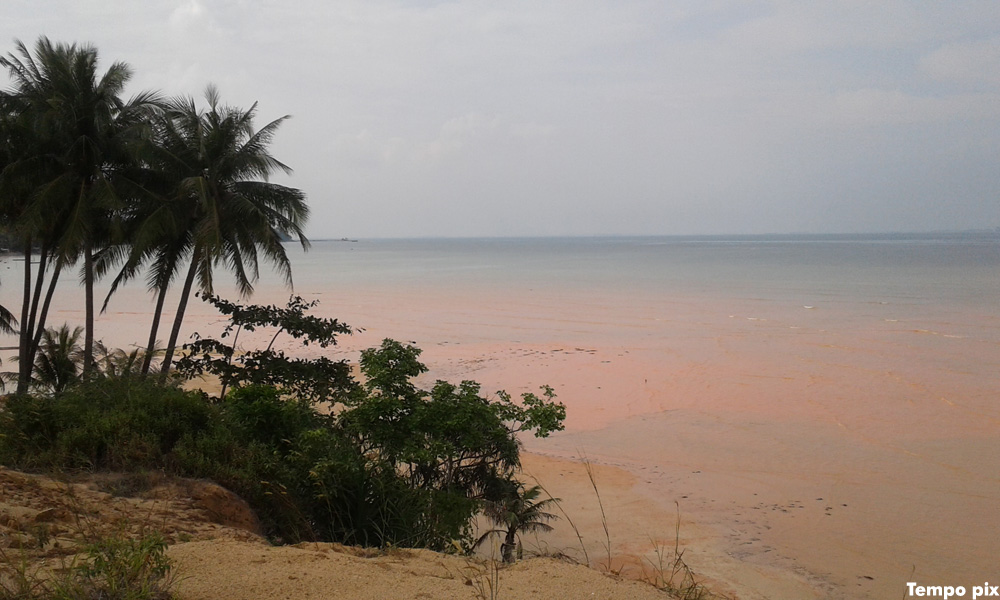
Its calm, blue waters hide a tragic tale. A boat ferrying 93 undocumented workers returning home from Malaysia capsized while heading towards Teluk Mata Ikan on Nov 2 last year. There was no survivor.
The cove is a popular landing and take-off spot for undocumented workers as Nongsa is a district closest to the borders between Batam, Malaysia and Singapore.
“The boat journey to Malaysia only takes 30 minutes,” said Christianus Pascalis, a local pastor in Batam, who is also a migrant workers’ rights activist.
 Nongsa is not a rural district. The Riau Islands’ district police have their headquarters in this town. It has an international airport, a number of holiday resorts and boasts an international standard golf course as part of its attractions.
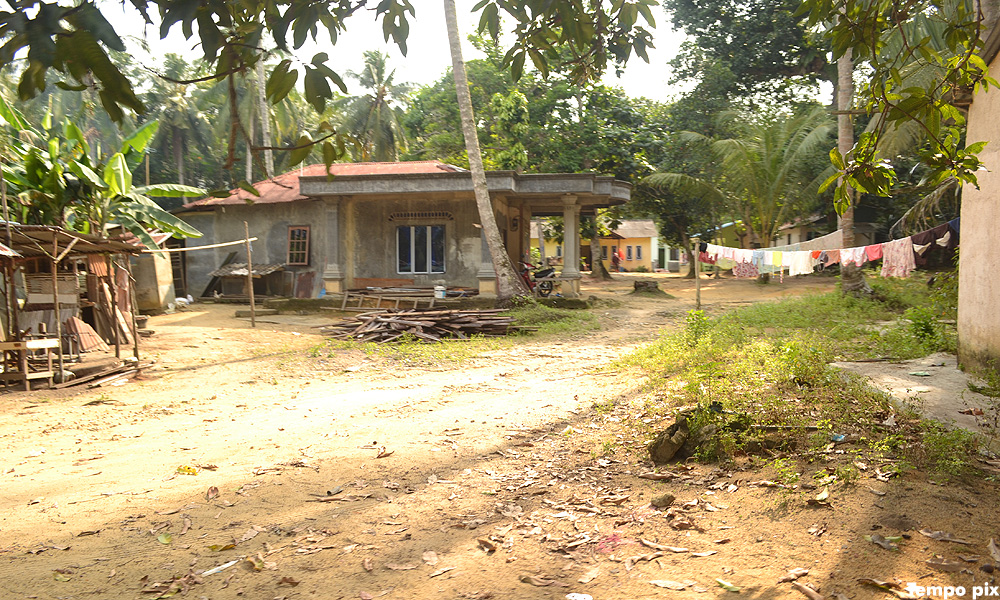
Its coastlines, however, paint a different picture. Along the cove, Kampung Tua is just one of the many sparsely-populated villages. Each village has its own jetty but there were no boats in sight during one visit.
These small isolated jetties are the main exit points for trafficked Indonesian workers.
According to Pascalis, almost the entire length of Batam’s coastline is used as “escape routes” to traffick illegal workers to Malaysia.
He also identified seven popular hotspots favoured by traffickers - Teluk Mata Ikan, Pulau Berakit, Tanjung Bemban, Tanjung Uma, Tanjung Riau, Sekupang Ujung and Kampung Tua Patam Lestari - all located near Nongsa.
“Because there are so many spots, it is difficult to clamp down on human trafficking,” he noted.
 Legal immigration exits are also exploited by human traffickers, who smuggle Indonesians, including citizen Siti Aisyah, who has been charged with the murder of North Korean Kim Jong-nam at KLIA2.
Siti Aisyah first exited the city’s main international ferry terminal at Batam Centre on Feb 2. She is believed to have been working illegally in Malaysia as there is no record of her employment status....
SPECIAL REPORT Ships and containers are berthed in a row, backed by towering skyscrapers as the Malaysian border looms in the horizon.
A mobile carrier informs users that roaming charges will now apply, but Kampung Tua, Teluk Mata Ikan and Nongsa form a district in Indonesia’s Batam city.
Its calm, blue waters hide a tragic tale. A boat ferrying 93 undocumented workers returning home from Malaysia capsized while heading towards Teluk Mata Ikan on Nov 2 last year. There was no survivor.
The cove is a popular landing and take-off spot for undocumented workers as Nongsa is a district closest to the borders between Batam, Malaysia and Singapore.
“The boat journey to Malaysia only takes 30 minutes,” said Christianus Pascalis, a local pastor in Batam, who is also a migrant workers’ rights activist.
Nongsa is not a rural district. The Riau Islands’ district police have their headquarters in this town. It has an international airport, a number of holiday resorts and boasts an international standard golf course as part of its attractions.
Its coastlines, however, paint a different picture. Along the cove, Kampung Tua is just one of the many sparsely-populated villages. Each village has its own jetty but there were no boats in sight during one visit.
These small isolated jetties are the main exit points for trafficked Indonesian workers.
According to Pascalis, almost the entire length of Batam’s coastline is used as “escape routes” to traffick illegal workers to Malaysia.
He also identified seven popular hotspots favoured by traffickers - Teluk Mata Ikan, Pulau Berakit, Tanjung Bemban, Tanjung Uma, Tanjung Riau, Sekupang Ujung and Kampung Tua Patam Lestari - all located near Nongsa.
“Because there are so many spots, it is difficult to clamp down on human trafficking,” he noted.
Legal immigration exits are also exploited by human traffickers, who smuggle Indonesians, including citizen Siti Aisyah, who has been charged with the murder of North Korean Kim Jong-nam at KLIA2.
Siti Aisyah first exited the city’s main international ferry terminal at Batam Centre on Feb 2. She is believed to have been working illegally in Malaysia as there is no record of her employment status.
Checks showed the existence of various ways to smuggle workers from Batam Centre to Malaysia’s Pasir Gudang and Stulang Laut ferry terminals. The most popular, where one passport will be used to smuggle up to 10 workers - is dubbed as the “impostor” method by local immigration authorities.
“This method requires the involvement of local immigration officers,” said a Batam migrant activist who only wished to be identified as Doni.
Large groups of Indonesian workers are a daily sight at Batam Centre, like one group of 15 spotted travelling across the border last December.
Nearing departure, a man was seen hurriedly distributing their passports, each with a ticket slipped in between. He did not even bother looking at the names on the passports.
Approached at the queue, most of those in the group declined to answer questions. After passing through immigration, the workers were no longer detectable, as there were four ferries departing to Malaysia at the same time.
There are many other routes that can be used by the traffickers. The traffickers opened up new entry points after authorities started patrolling the old routes in the wake of the Teluk Mata Ikan tragedy.
The “underground path”, the route used by traffickers who use it to hide their tracks, expands from Nongsa, on the northeast of Batam, to the pristine beaches of islands located to the south and southeast of Batam.
Rates for those wanting to smuggle into Malaysia
Someone who knows these routes well is former migrant worker broker, Rizki. These brokers are commonly known as “tekong”. Rizki used to net his recruits from Batam Centre.
“The rate is Rp2.5 million (RM830.93) per person,” said Rizki when contacted. The rate goes up to five million rupiah (RM1,661.52) if the passport method is used.
Brokers like Rizki could earn their keep from the flood of potential recruits from all over Indonesia - looking for a quick exit to Malaysia. They move the recruits to the final destinations abroad through a network of others like them.
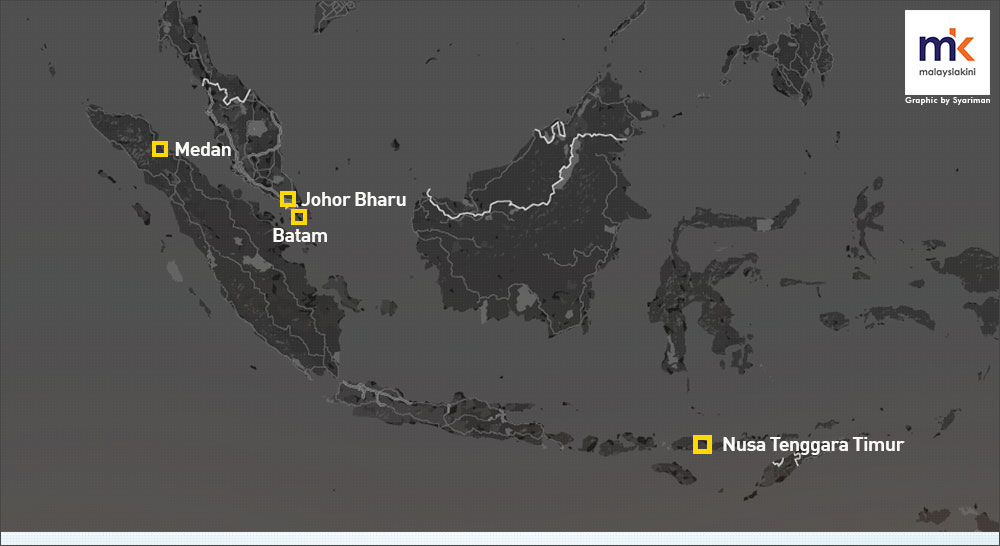
 A man, who only wanted to be known as BR, was among those who paid Rizki for his passage to Malaysia some time last December.
BR does not have a passport but Rizki promised that he would be able to pass the borders. With three other illegal recruits from Kupang, Nusa Tenggara Timur, BR was transferred from one car to another, three times
Throughout the journey, they were repeatedly reminded to obey the traffickers’ instructions so as to avoid being arrested.
They were kept overnight at a house belonging to a man named Basyir, located in an area known as Pantai Pasir Melayu, Pulau Rempang - one of the smaller islands around Batam city.
Under the cloak of darkness, they got on a boat bound for Johor, their belongings packed in plastic bags. “They never gave any guarantee of safety,” said BR.
Basyir’s job in the human trafficking network is to smuggle the recruits across the Malaysian border. Both Rizki and Basyir confirmed the methods used. “But I quit because all my friends have been arrested,” Rizki said when contacted last month.
The new illegal routes, including from Pantai Pasir Melayu, continue to thrive due to high demand from potential workers.
The illegal method is deemed to be more practical and offers a quick exit. Through formal procedures, it could take up to two months before a recruit can be employed in Malaysia. Formally, they would have to pass through a training session and pass several stages before receiving an official work permit from Malaysia.
“The demand (for human traffickers) is there because the demand for labour in Malaysia remains very high,” said Yusron B Ambari, head of the Citizen’s Protection Committee at the Indonesian Embassy in Kuala Lumpur.
The Indonesian Immigration Directorate-General public relations chief Agung Sampurno said steps have been taken to minimise the chances of collusion by repeatedly clamping down on immigration officers.
At the Batam formal exit points, the department has installed auto-gates to prevent counter officers from abetting the traffickers. However, Agung lamented that the lack of personnel to monitor the situation have hampered their progress.
“The immigration issues involving Indonesian migrant workers are like a balloon. You press it on the left, it expands to the right,” he said.
According to Agung, Immigration officers had on numerous occasions raided the illegal routes around Batam, but new ones continue to operate.
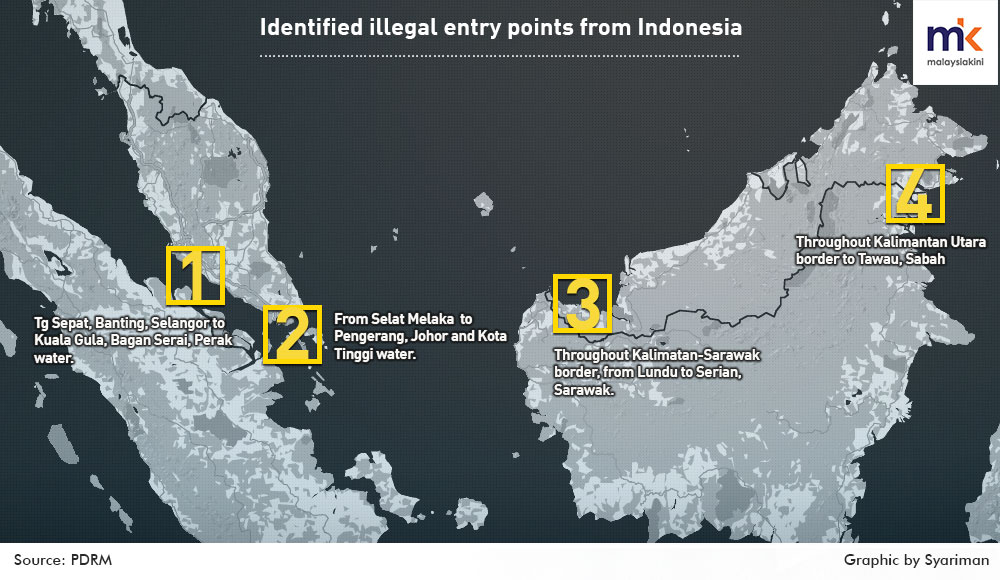
Malaysian Immigration director-general Mustafar Ali shares Agung’s sentiments. Some of the illegal entry points described colloquially as “lorong tikus” (rat routes) have morphed into “lorong gajah” (elephant routes), said Mustafar, citing an observation by Home Minister Ahmad Zahid Hamidi.
“We (Malaysia and Indonesia) will take joint action under the National Blue Ocean Strategy,” Mustafar said at a press conference in January.
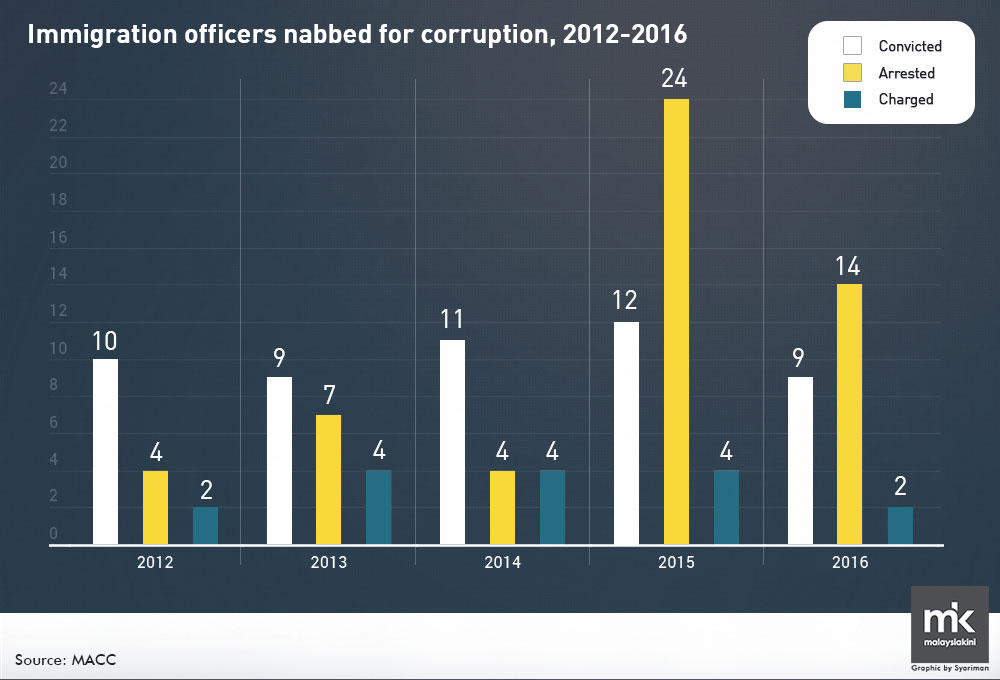
The Malaysian Anti-Corruption Commission said 69 immigration officers were arrested between 2012 and March 16 this year. Of those arrested, 16 were charged with abuse of power and corruption. It did not elaborate on the exact nature of the cases.
Nur Jazlan: Issue of corruption 'manageable'
The MACC further said that two of the officers arrested were from the management and professional ranks, while the remaining 67 comprised support staff. All the 16 charged were from the support staff category.
Deputy Home Minister Nur Jazlan Mohamed noted the problem of collusion involving immigration officers, but said he believed the issue of corruption is still “manageable”.
“Especially now, when we are focusing our efforts not only on rescuing victims. Up until last year we are concentrating on rescuing people who have been trafficked.
“Starting from this year, we are also going against the employers. Because where there is a demand, then there will be a supply,” Nur Jazlan said in an interview.
Click on the arrow below to follow the journey of a teenager who was smuggled into Malaysia to be a domestic worker, in the interactive map below or click here.
With a reduced demand, Nur Jazlan said, Malaysia hoped to reduce the incidents of trafficking in persons and smuggling of migrants.
“And therefore reduce the possibility of collusion when it comes to people who are helping these syndicates to operate in Malaysia,” he said.
Nur Jazlan admitted that workers who enter Malaysia with forged passports are unlikely to be stopped by Malaysian Immigration, especially if it is their first entry, and their data have yet to be recorded by the Bestinet biometric system.
“But again, like I said, with more intensified cooperation with foreign enforcement agencies, we can make sure that our counterparts can also ensure that the issuance of forged passports in their country can be reduced and therefore help to reduce this problem,” the Pulai MP said.
Reporting by Bambang Riyanto and Mustafa Silalahi from Tempo and Alyaa Alhadri from Malaysiakini.
Part 1: Following the money on lucrative illegal maid Indo-Msia maid trade


Report this comment
Are you sure you want to delete this comment?
This action cannot be undone.