
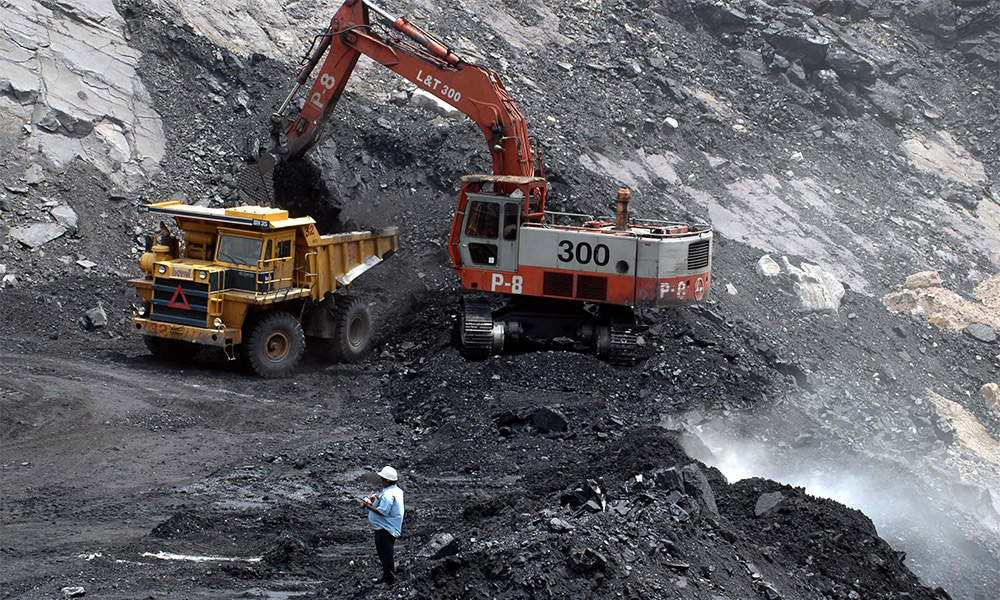
COMMENT | The timing and sequence of events made it difficult to not raise red flags. On March 29, 2017, a total of 6,300 tonnes of anthracite coal was unloaded from a cargo ship bearing the North Korean flag docked in Butterworth, Penang.

According to an exclusive report by Reuters, the 92-metre-long ship Kum-Ya was initially stopped at sea for prior inspection and safety checks by various Malaysian authorities at the instruction of the Foreign Ministry before allowed to dock and unload on the same day.

Less than 24 hours later in the evening of March 30, 2017, nine Malaysian citizens who had been barred from travelling since March 7, 2017, finally boarded a RMAF aircraft in Pyongyang and headed back to Kuala Lumpur.

The flight took off at 7.30pm Malaysian time, almost at the same moment a Malaysian Airlines (MH360) airplane flew off from KL International Airport to Beijing. In the MH large Airbus A330-300 commercial aircraft were the cold and embalmed body of Kim Jong-nam, three North Korean citizens named earlier by the Malaysian police as suspects in Kim’s murder and a number of unidentified flight crew and security personnel.

It was a swap deal that many opined that had brought nine Malaysian citizens back to our country and their families safe. Nothing is more important than the safe returns of our citizens. Indeed, negotiating with the reclusive and temperamental Kim Jong-un regime would be a nightmarish task even for any diplomats and political leaders no matter how skilled and shrewd they are.

Even the harshest critic of Najib Abdul Razak could not say he failed completely in this negotiation with North Korea. That said, in the interest of long-term national security and a more enlightened public discussion, there is a room for independent analysis that seeks to present facts and arguments unencumbered by the official narrative. Critical questions must be asked to shed more light to the events surrounding the Kim Jong-nam’s case and the consequences.

Hence the question - other than the publicly-told ‘hostage’ swap deal, were there additional, undisclosed payments and deals Malaysia made or forced to take for the safe returns of nine citizens from Pyongyang on March 31? Further, was the March 29 coal shipment delivered by a North Korean vessel to Butterworth a pure coincidence or was that a negotiated component of the deal between Najib and Kim Jong-un?

In the unfortunate case of the latter, one must ask whether it was a one-off shipment or we will soon expect more regular calling of North Korean vessels to our ports.

North Korea coal and the China connection

To untangle and analyse the issues, let us start with North Korean coal exports. With UN sanctions imposed and generally a crippled if not defunct industrial base, the North Korean regime has but a handful of viable options to make money from exports. By far the largest and most reliable source of foreign income is from coal exports to China.

That came to an abrupt end on Feb 19, 2017 when in a surprise move, China’s Ministry of Commerce banned coal from North Korea effective immediately. This was interpreted as big brother China teaching his ill-behaved little brother North Korea a hard lesson following the assassination of Kim Jong-nam allegedly by the North Korean regime.

Kim Jong-nam was murdered at KL International Airport six days earlier on the eve of Valentine’s Day in broad daylight using VX nerve agent, an extremely lethal poison banned by international conventions. When the coal money stopped coming in, the impact on Pyongyang would be devastating.

According to Reuters, the coal on board the North Korean vessel Kum-Ya was loaded from Huaneng Shandong Power Station Weihai, a coal-fired power in eastern China run by Huaneng Group, a state-owned enterprise (SOE).

Over in Malaysia, another Chinese SOE, the China General Nuclear Power Corporation (CGN) owns five power plants including the 1,400 MW Jimah coal-fired power plant in Negri Sembilan, having acquired the shares in Edra Global Energy from 1MDB in March 2016. CGN is also listed as one of the SOEs directly controlled by the Chinese government through its state-owned Assets Supervision and Administration Commission (Sasac).

While the connection is apparent for all to see, there is no evidence to suggest that the coal delivered to Penang on March 29 were meant for the CGN power plants.

In fact, coal procurement from the international market for both Independent Power Producers (of which CGN’s plants are categorised as such) and Malaysia state-owned Tenaga Nasional Berhad (TNB) power plants has always been managed entirely by TNB Fuel Services, a wholly-owned subsidiary of TNB.

Malaysia government policy mandated TNBF to act as the sole coal supplier to all coal-fired power plants in peninsula Malaysia, according to the Energy Commission. Were there changes made unannounced to the power sector coal procurement policy or special import permit given to certain intermediaries to bypass TNBF and bring in coal for the power plants?

Malaysia is the tenth largest coal importing country in the world due in large part to the growing numbers of huge coal-fired power plants built in peninsula Malaysia over the last decade. As of 2016, Malaysia imported 23 million tonnes of coal from Indonesia (57 percent), Australia (28 percent), South Africa (8 percent) and Russia (7 percent).

Government records showed that in the last decade Malaysia imported coal mainly from Indonesia and Australia, never from North Korea and China. That is hardly surprising because doing business with North Korea is unpredictable and fundamentally risky. China, on the other hand, as the factory of the world, is hungry for coal. In 2015, China’s total coal import tonnage was 15 times that of Malaysia.

In peninsula Malaysia, 90 percent of imported coal were consumed by power plants, with the rest being used for industry purposes such as steel mills and cement plants. Detailed figures on coal consumption are publicly available. However, according to annual reports published by several publicly-listed cement producers such as Lafarge Malaysia and YTL, they have been using coal as fuel for their operations.

Destination a mystery?

After further reviewing the facts and circumstances, it is more difficult to believe that the North Korean coal actually ended up in one of the power plants. First, the 6,300 tonnes of coal unloaded in Penang on March 29 was anthracite coal, which is of higher quality than the cheap bituminous and sub-bituminous coal used in the power plants throughout Malaysia.

In addition, all coal-fired power plants in peninsula Malaysia are located along the Malacca Straits south of Penang, namely Tanjung Bin (Johor), Jimah (Negri Sembilan) and Manjung (Perak). These coal power plants were built beside the coast with direct access to bulk terminal capable of handling large coal shipment.

If the March 29 coal shipment delivered by the North Korean vessel was indeed meant for one of the power plants, why did it sail past all of them and finally dock and unload at Butterworth, Penang?

Finally, another clue lies in the transport and logistics options. The only viable land transport option to deliver 6,300 tonnes coal to the final end user is by rail. Coincidentally, there are a handful of large cement plants with direct access to the railway within a 150km distance by rail from the Penang Port. These are Lafarge Malaysia’s Kanthan Plant in Chemor, Perak; YTL Cement’s Plant in Padang Rengas, Perak; and UEM Group’s CIMA Plant in Bukit Ketri, Perlis.

At the current market price, the Malaysian buyer would have paid about RM2.5 million for 6,300 tonnes of coal. Under normal circumstances, no one cares about the details of such business dealings. Malaysia is after all an open economy with thousands of multi-million trade deals made every day.

However, the timing and sequence of events surrounding the March 29 coal shipment delivered to Penang by a North Korean vessel raised too many red flags. It is therefore a matter of serious public concern.

Ten days after the swap deal happened and just when news on Kim Jong-nam started to cool down, Reuters again made an expose on a Malaysian company that has served for many years as a conduit to channel money to Pyongyang. Malaysia Korea Partners (MKP), the company named in the report has been operating out of Kuala Lumpur since about a decade ago.

It was founded by a Malaysian, Yong Kok Yeap, and his North Korean partner Han Hun-il (also known as James Han) who is known to be directly linked to the top leadership of the Workers’ Party of Korea (WPK). Interestingly, although MKP’s business activities were mainly construction, it is involved in financial services and coal trading.

If the March 29 coal deal between Malaysian firms and North Korean and Chinese entities had nothing to do with the Kim Jong-nam’s case at all, it is imperative for the Malaysian government and the firms involved to immediately come out and clear the air. Import and export of commodity fuels including coal are highly regulated and closely monitored by a number of government agencies for to safeguard energy security.

As such, the government would have all the information required to quash speculations and rumours associating the coal shipment with the ‘hostage’ swap deal and Kim Jong-nam’s murder. Left unaddressed, it would further erode trusts of the public in the government and bring Malaysia into further disrepute among the international community.


CHUNG YI FAN has been a parliamentary researcher focussing on energy and transport policies with Malaysia’s Democratic Action Party (DAP) since 2013. He holds a Master’s degree from Lund University in Environmental Studies and Sustainability Science.

The views expressed here are those of the author/contributor and do not necessarily represent the views of DAP or Malaysiakini.