




Publication banned for anti-China reports
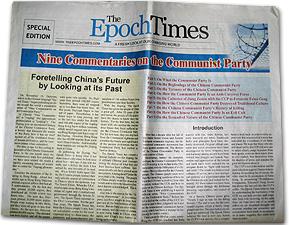
The government has banned a Chinese language publication for carrying negative reports about China and affecting bilateral relations between the two nations.
The government has banned a Chinese language publication for carrying negative reports about China and affecting bilateral relations between the two nations.
But the weekly's Indonesian-based spokesperson is wondering why Malaysia had resorted to such a drastic move when even China allows the sale of the newspaper.
Contacted today, Xie Menghan said among 30 countries, Malaysia is the only one to prevent the sale of the Falun Gong related publication, Epoch Times.
 "Even Communist China has not banned it," he exclaimed.
"Can the paper be judged as 'not neutral' just because its reports do not accord with certain countries' policies?" he asked.
In a letter to local distribution agency DZY Marketing last week, the Home Ministry said Epoch Times was banned due to negative reports on the Beijing government.
It added that the ban was enforced under sections 9(A) and 9 (1) of the 1984 Printing Presses and Publications Act.
"In the letter, they said upon investigating thoroughly the first two June issues, they found it was not neutral and contained reports that gave a negative impression of the Chinese government," said the agency's spokesperson Chay Siew fong when contacted later.
17,000 copies seized
It was reported that authorities had earlier prevented 17,000 copies of the paper's Southeast Asian edition imported from Indonesia since February 2004, from being taken out of the Kuala Lumpur International Airport.
Banned since July 1999 by the Chinese government, the regime has dismissed the Falun Gong as a cult and persecuted its 60 million members in China for alleged 'anti-China political activities'.
With about 400 practitioners in Malaysia, the group's attempts to register with the Registrar of Societies (ROS) have been turned down at least three times over the past six years in three different states.
The Home Ministry has defended the rejection as resulting from the expressed opposition of the Chinese embassy in Kuala Lumpur.
The ministry also attributed the rejection to the group's distribution of pamphlets that criticise the persecution of Falun Gong members in China, as such public criticism amounted to 'interfering in the politics of another country.'
Despite official assurances to the contrary, Malaysian Falun Gong practioners allege that persecution of the group has extended to this country.
Late May, nine directors of a research centre founded by Falun Gong practitioners were charged by the Companies Commission of Malaysia (CCM) with six violations of the Companies Act 1965.
The charges include failure to print the name and company number of the Falun Dafa Research Centre on its official receipts in Roman letters and failure to convene an annual general meeting in the state where the centre was registered.


Are you sure you want to delete this comment?
This action cannot be undone.