




Overcrowding at immigration depots - a ridiculous charge
Overcrowding at immigration detention centres is a 'ridiculous' allegation, according to Immigration Department enforcement director Ishak Mohamed.
Overcrowding at immigration detention centres is a 'ridiculous' allegation, according to Immigration Department enforcement director Ishak Mohamed.
He said it was impossible since the number of detainees is well below the maximum capacity of 15,000 inmates.
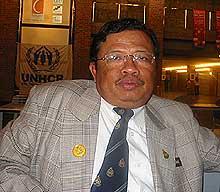 "How can the detention centres be overcrowded, there are only 3,400 detainees throughout the country," he added when met at the sidelines of a photo exhibition on refugees in Kuala Lumpur recently.
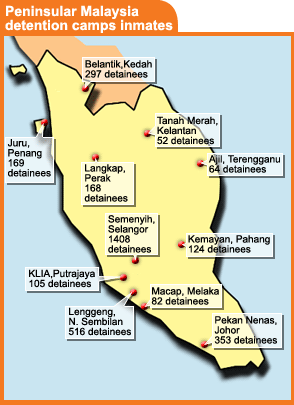
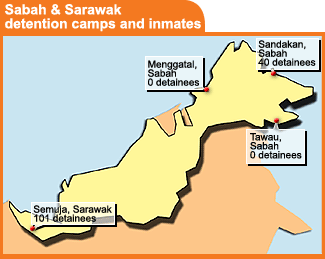
The latest statistics obtained from the department yesterday showed that there are currently 3,479 detainees held in the various immigration depots nationwide, the largest concentration (1,408) is in Semenyih, northern Selangor.
While the other detention centres hold inmate populations of between 52 to 522 detainees, most contain around 100 to 170 inmates.
"Despite Semenyih depot's maximum capacity being 3,000, it is currently holding only 1,400 detainees, that being because it is the nearest in distance to the Kuala Lumpur International Airport," said Ishak.
The statistics also indicate that eight of the detainees at Semenyih are children. There are 34 children detained in the 14 other immigrtion depots. Most of them are from Indonesia.
Yesterday, malaysiakini reported Ishak as saying that foreign children identified as having entered or stayed in the country without valid documents would have to face the same detention conditions as adults charged for the same offence.
Deterrent measure
Ishak also said that detention conditions may not be palatable to certain people, but insisted that such conditions serve as deterrence to those planning on entering or staying in Malaysia without valid documents.
"It is part of the concept of deterrence, where we have the element of punishment when we detain people in these camps, so that people would think twice before doing anything wrong.
 "Can you imagine what would happen if we were without such an element of punishment?" he asked.
"'No problem, Pak,' I've heard some Indonesians say.'If you get caught by the authorities, you'd just get detained in their camps, and you get to eat three meals a day'.
'If they send you back to Indonesia, you just enter Malaysia once more and the cycle starts all over again.' These are the things I've heard them say about our camps!" he added.
Ishak said advocacy groups and the media often exaggerate the negative while disregarding positive achievements on the part of the immigration authorities.
He insisted that detainees enjoy the services of regular visits by medical officers, regular meals, and the hard work put in by immigration personnel to ensure their safety and well-being.
Ishak said the safe return of about 400,000 undocumented migrants to their home countries during the amnesty period granted before the crackdown beginning March had been ignored, while critics focused on the plight of the misfortunate few.
"You don't report on the thousands whom we sent back well. My boys worked 24 hours a day to ensure that people return safely to their countries. Instead, you highlighted the case of those few who could have gotten sick or injured.
"What about the 400,000 who have gone back safely? What about them? Why didn't you report on such people?" he added.
Cost factor
On the subject of refugees, Ishak suggested that among the reasons Malaysia has not ratified the 1951 United Nations Convention Relating to the Status of Refugees was the tremendous costs involved in abiding by the Convention.
Malaysia, meanwhile, still had a significant number of its own citizens who were languishing in poverty and in need of such resources, he said.
"If we signed the Convention, can you imagine the amount of resources to be spent on providing the facilities to refugees? There's shelter to think of, food and clothes, the provision of work. We still have a lot of our own people who need these things.
"In the meantime, rich third countries that are at the moment accepting these refugees for resettlement would be happy. Countries in conflict (forcing their citizens to flee) would also be relieved since they have less problems to deal with," he added.
 More importantly, he claimed that ratifying the Convention on Refugees would open the floodgates for migrants into Malaysia as people in neighboring countries flock into the "heaven" to be found here.
"We're not merely looking at the 40,000 refugees in Malaysia. We're looking beyond them to the 300,000 Thais, Indonesians and Filipinos waiting at our borders. Recognising the Convention would be akin to opening the floodgates to such people.
"Once we do that, every Indonesian, for instance, would claim to be an Acehnese fleeing from the conflict (in northern Sumatra)," he said.
When asked how the photo exhibition had affected his views of the issue of refugees in Malaysia, Ishak said it had only strengthened his resolve to enforce the country's immigration laws more strictly.
"Firstly, I'm more grateful that Malaysia is such a peaceful country, unlike those places of conflict that these refugees are coming from. Secondly, it has strengthened my resolve to keep this country peaceful by working harder to enforce our laws.
"People may well say I am arrogant. I just love my country, even more so when I see these pictures (of refugees). I feel even more strongly about protecting this country from such conflicts," he added.


