


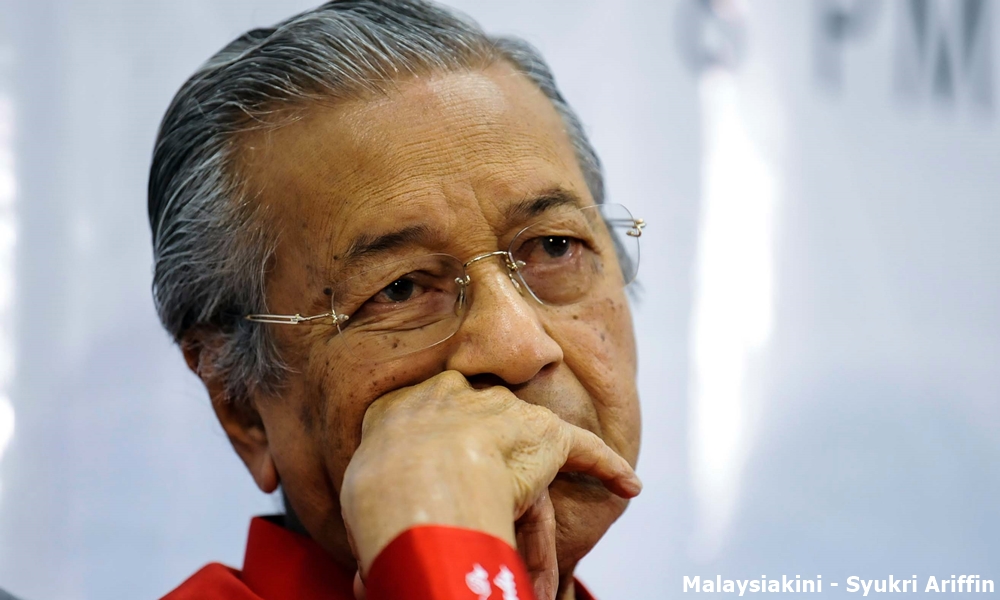

Mahathir mum on Bersatu co-founder's resignation during ceramah
The resignation of Parti Pribumi Bersatu Malaysia (Bersatu) co-founder Kamarulazman Habibur Rahman was completely ignored by party chairperson Dr Mahathir Mohamad at a ceramah in Kampung Pandan Dalam, Selangor last night.
Instead Mahathir spoke at length on several issues, mostly criticising Prime Minister Najib Abdul Razak and accusing him of being a thief.
But not once in his speech to a crowd of 200 did he acknowledge the proverbial elephant in the room, Kamarulazman's resignation...
The resignation of Parti Pribumi Bersatu Malaysia (Bersatu) co-founder Kamarulazman Habibur Rahman was completely ignored by party chairperson Dr Mahathir Mohamad at a ceramah in Kampung Pandan Dalam, Selangor last night.
Instead Mahathir spoke at length on several issues, mostly criticising Prime Minister Najib Abdul Razak and accusing him of being a thief.
But not once in his speech to a crowd of 200 did he acknowledge the proverbial elephant in the room, Kamarulazman's resignation.
It was only later when met by the press did Mahathir address the matter, but remained brief and vague.
"Maybe his cronies didn't choose him," Mahathir said, before proceeding to his car.
Kamarulazman quit Bersatu yesterday, claiming the party had lost its way and had been inundated by cronyism.
Bersatu, registered last September, has yet to hold a party election, and all current leaders are appointed.
Bersatu vice president Abdul Rashid Asari, who was present at the ceramah, denied Kamarulazman’s allegation of cronyism.
Abdul Rashid - who is also Selangor Bersatu chief - cited how he did not know the Subang Bersatu division chief Ishak Husain until after the latter was appointed.
"I did not know him until he became division chief. How can you say there is cronyism?
"When he (Ishak) was appointed division chief, only then did we unite, cooperate, and get to know each other," he told reporters.
He also said Kamarulazman's departure would have little impact on the party, and that such incidents were a regular part of politics.


