



Don: Investigative journalism expensive, editors don't encourage
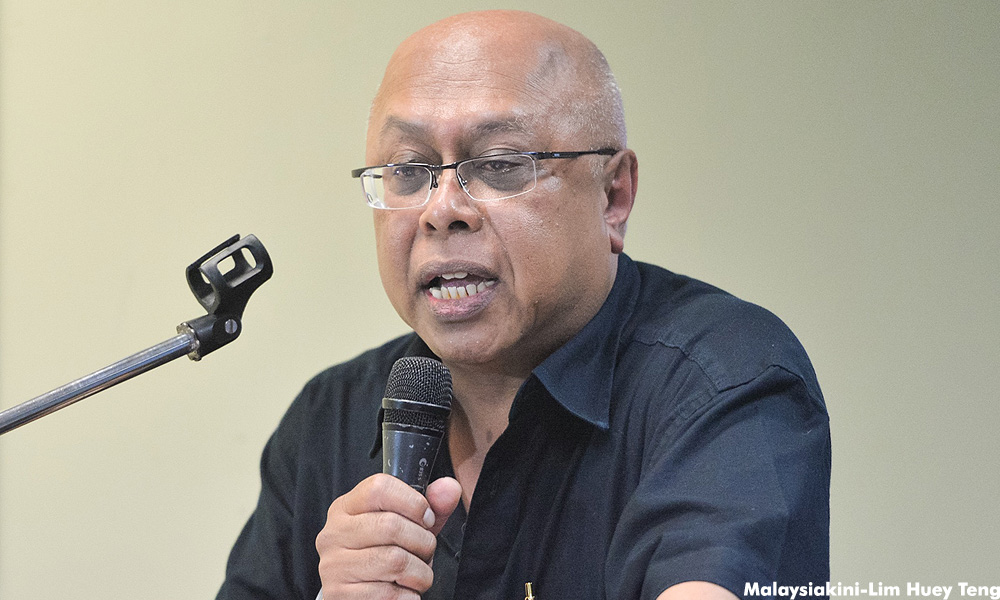
Change in political ownership of the media and the repeal of "draconian" laws may be necessary to lift the curbs on investigative journalism, says well-known communications professor, Zaharom Nain.
Most people tend to forget "who owns the media” when discussing whether investigate journalism exists in the country, he added.
However, more than structural or legal barriers, “investigative journalism is expensive and most editors do not encourage it”, said Zaharom, who lectures at Nottingham University Malaysia in Kuala Lumpur.
“Is there a tradition in Malaysia for investigative journalism? Is it easy to do, but do we have journalists with calibre to do it?” he asked at the Freedom of Information forum organised by the Center to Combat Corruption and Cronyism (C4) held in Penang on Sunday...
Change in political ownership of the media and the repeal of "draconian" laws may be necessary to lift the curbs on investigative journalism, says well-known communications professor, Zaharom Nain.
Most people tend to forget "who owns the media” when discussing whether investigate journalism exists in the country, he added.
However, more than structural or legal barriers, “investigative journalism is expensive and most editors do not encourage it”, said Zaharom, who lectures at Nottingham University Malaysia in Kuala Lumpur.
“Is there a tradition in Malaysia for investigative journalism? Is it easy to do, but do we have journalists with calibre to do it?” he asked at the Freedom of Information forum organised by the Center to Combat Corruption and Cronyism (C4) held in Penang on Sunday.
Unlike in the Philippines, journalism schools in Malaysia do not produce critical journalists, who later go on to ask hard questions or practise investigative journalism, said Zaharom.
“Believe me, we can shout until the cows come home, (but) unless there is a structural change, nothing else will change,” said Zaharom, who is also one of the directors of C4.
Accompanying Zaharom were C4 executive director Cynthia Gabriel, veteran NGO activist Anwar Fazal, state Gerakan acting Youth chief Jason Loo, and senior Malaysiakini journalist Low Chia Ming.
Zakiah Koya, the former deputy editor of the now defunct Heat Malaysia, moderated the event.
Low said without access to information, reporters find it a challenge to perform their basic duty, which is to report facts.
“Don’t talk about investigative journalism. It is already very challenging even to verify facts presented by politicians without proper access to government data,” Low said.
He added that the ideal situation would be for governments to practice “maximum disclosure”, which to a certain extent is already covered under Penang’s Freedom of Information (FOI) Enactment.
“But the state must take the initiative to publish the information it has, instead of waiting for the layperson to apply for the documents, as we mostly do not know what information the state has,” Low added.
“Also, not many Penangites know about the FOI Enactment and how it functions. They do not know how to use it,” he stressed.
To improve the enactment, Low proposed that Penang should launch an inventory of documents that are regularly updated; train professional officers to assist the public in applying for documents; reduce the fees (of RM100 per application) to make it more affordable; submit a report on FOI to the state legislative assembly annually; and practise an open data system for more transparency.
Meanwhile, Cynthia asked if the Official Secrets Act (OSA) and the FOI Enactment could co-exist, citing the case of India, where it is possible.
“We are not just saying you have to abolish the OSA because you may need secrecy laws for national security and various other things, but you cannot use that as an overriding paradigm,” she said.
“What do you do if there is a tall building coming up next to your house? I have a right to ask the local government for the minutes of its meeting, to find out how much the building cost, and who are the contractors. Those things are not national security,” she pointed out.
Cynthia said the situation in Penang and Selangor has become “complicated” because of the OSA, as the "draconian" law supersedes the FOI Enactment, barring information from being released.
'FOI meaningless if SD has to be signed'
Gerakan's Loo said had a taste of the OSA when he tried to apply for information on the Penang undersea tunnel agreement, which the present state government signed with private firm Consortium Zenith BUCG.
“I always thought the OSA protects the powerful and government wrongdoings. When I applied for the agreement, I was told by state executive councillor Lim Hock Seng that the documents cannot be disclosed due to the OSA,” Loo said.
“It is a bit confusing but the conclusion is, there are a lot of excuses given by the state government to reject our applications,” he added.
“The FOI is not relevant, and it is meaningless the moment we are required to sign a statutory declaration (SD) before obtaining the document, or when the state claims that the agreements have a confidentiality clause and therefore cannot be released,” he stressed.
“How then do you justify the importance of Section 11 of the FOI Enactment, where it states that information can be declassified by the state government if public interest overrides the harm that can happen by releasing the information?” he asked.
Chief Minister Lim Guan Eng has blamed the previous state administration, led by Gerakan, for including the clause in contracts involving reclamation that were inked with private companies.
Deputy Chief Minister II P Ramasamy had previously urged Loo not to politicise the FOI, and to sign the SD before obtaining the documents, to ensure that the information is not used for commercial purposes.


Are you sure you want to delete this comment?
This action cannot be undone.