



Private firms must reveal contracts inked with Penang gov't
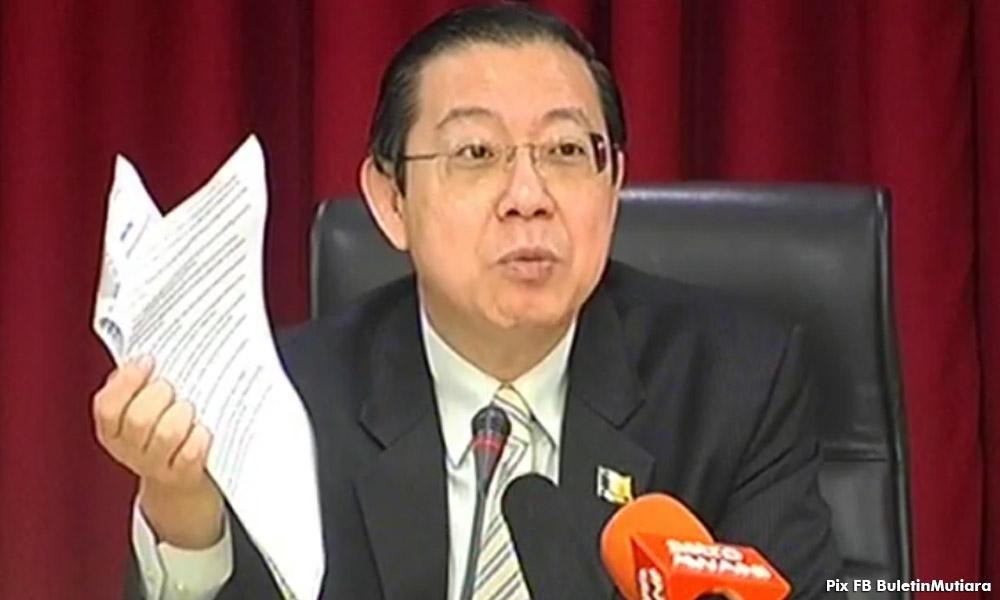
In a written reply to the Penang Legislative Assembly, Chief Minister Lim Guan Eng said the private sector will be asked to reveal agreements they ink with the state government, despite the confidentiality clause.
Lim said the confidentiality clause is part of a “standard format” for agreements signed with the state government.
“All agreements signed with the state government have followed the standard format so far,” Lim, who is also DAP secretary-general, said.
“With the Freedom of Information Enactment, and to ensure that information is not restricted by the confidentiality clause, the state government will ask the private sector that signs agreements with the state government to agree to reveal the documents,” he added...
In a written reply to the Penang Legislative Assembly, Chief Minister Lim Guan Eng said the private sector will be asked to reveal agreements they ink with the state government, despite the confidentiality clause.
Lim said the confidentiality clause is part of a “standard format” for agreements signed with the state government.
“All agreements signed with the state government have followed the standard format so far,” Lim, who is also DAP secretary-general, said.
“With the Freedom of Information Enactment, and to ensure that information is not restricted by the confidentiality clause, the state government will ask the private sector that signs agreements with the state government to agree to reveal the documents,” he added.
Lim has insisted that the previous BN-Gerakan government was to blame for inserting the confidentiality clause in all agreements signed with private firms.
 Lim’s opponents have of late been urging him to reveal certain documents related to the Penang undersea tunnel and Penang Transport Master Plan, in the spirit of public interest.
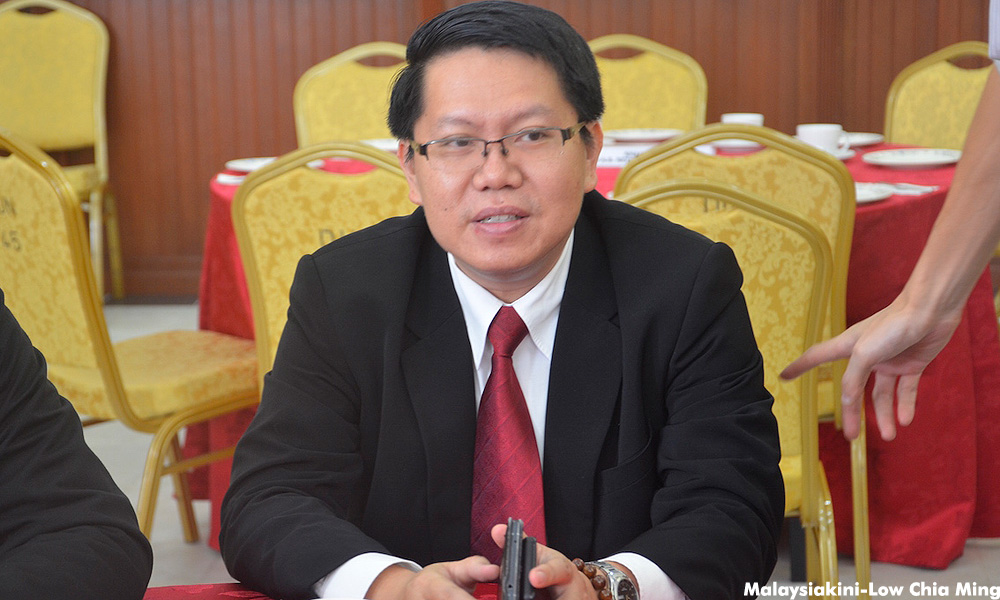
Lim issued the written reply in response to a question from Ong Chin Wen (PKR-Bukit Tengah, photo above) who asked the chief minister to list the agreements signed by the Penang government that have included the confidentiality clause.
'State reasons for confidentiality clause'
Ong also asked Lim to state the reasons for including the confidentiality clause, since it goes against the spirit of freedom of information.
In his motion of thanks to the May 19 speech of the Yang di-Pertua Negeri, Ong asked for further clarification on the confidentality clause, and whether it is required under any law or state enactment.
“If it is not required under any Act or enactment, why is the confidentiality clause still included in all the agreements?
“Does the private sector have the absolute power to reject the request of the state government to agree to reveal the agreements?” he queried.
“If the answer is yes, this means that, in truth, the confidentiality clause still restricts the free flow of information, and this is against the objective of the Freedom of Information Enactment.”
Penang’s Freedom of Information Enactment, which the state government was praised for, was passed in 2011.
Without elaborating, Ong said only a small category of information should be kept secret but almost all agreements on development infrastructure involving government or state agencies included the confidentiality clause.
“With this clause, the public is prevented from obtaining information about these agreements. This is not in line with the spirit of freedom of information and the principle of transparency,” he added.
Most deals involved Umno 'big guys'
Meanwhile, at a press conference at the sidelines of the state assembly, Lim explained that contracts which were signed between the previous BN government and private firms were all conducted in an “abang-adik” (elder brother-younger brother) style.
He said most of the deals, which were signed with a non-disclosure clause, involved Umno “big guys”.
“They have to go through Umno divisions before they can get the contracts. So they are not easy to handle,” Lim told reporters.
“We cannot touch previous government contracts. These are not simple contractors, they have solid backing and are even more powerful than state governments.
“Those we conducted via open tenders are different. Our contracts are 99 percent tenders, most are genuine contractors, they are more reasonable,” he added.
“Genuine contractors, I am sure, are more amenable to full disclosure.”
On how he would go about it, Lim said the contractors would be “persuaded and cajoled” into agreeing with a full disclosure agreement, instead of non-disclosure.
Asked if the contractors disagreed with the move, Lim replied: “Then they should not be doing business with us”.
After all, he added, most of the contracts signed with the Penang government, worth RM35 billion since 2008, were conducted via an open tender system.
“What is there to hide?” said the DAP secretary-general.
On game changers like the RM2 billion Island Hospital expansion project and IKEA in Batu Kawan, Lim said these two can be persuaded to reveal their contracts as well once their licenses are approved.
Asked if this policy would also apply to giant companies like Alibaba, he said it would not pose a problem.
“I do not think these companies can grow big without being transparent”.


