



Two years on, still no accountability for mass graves in M'sia
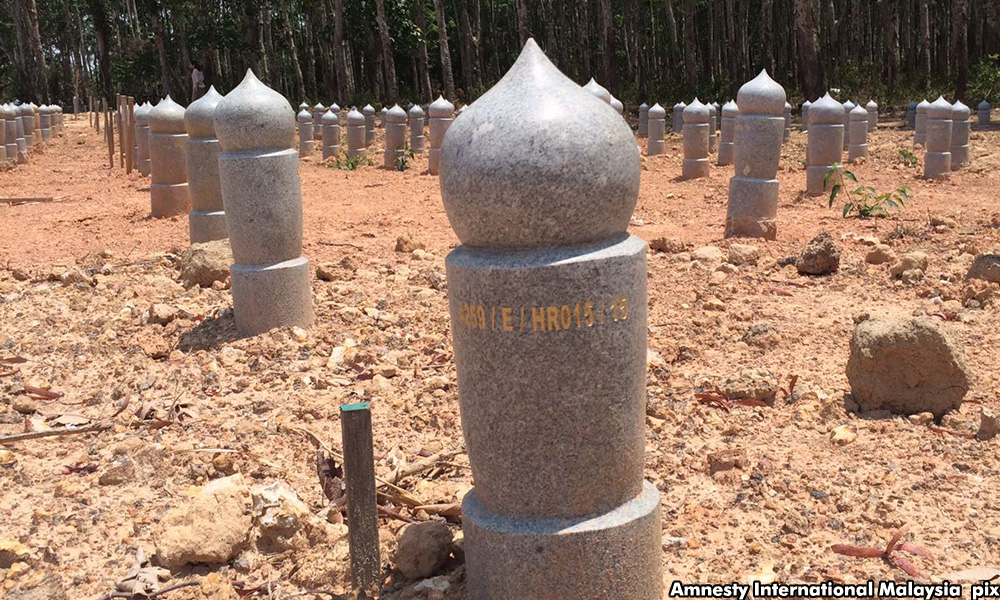
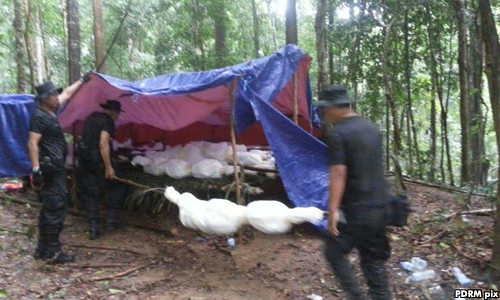
FOCUS | Two years ago, on May 24, 2015, the Malaysian authorities uncovered more than 100 bodies in multiple mass graves about 500 metres from the country’s northern border as well as numerous human trafficking camps.
Many believed the remains were those of young Bangladeshi migrants seeking work and Rohingya refugees fleeing persecution in Myanmar.
According to the Malaysian police they had died due to torture and starvation. The discovery of their bodies re-ignited regional concerns about people smuggling and trafficking across the Thai-Malaysia border.
The incident also highlighted the scale and profitability of criminal human trafficking operations at the border, which were long denied by the Malaysian authorities.
At the time of discovery, Malaysian Prime Minister Najib Abdul Razak claimed he was deeply concerned by this and asserted that he would find those responsible.
The Home Minister, Ahmad Zahid Hamidi, stated he suspected that the camps have been operating for at least five years and that Malaysian citizens were involved in the trafficking networks...
FOCUS | Two years ago, on May 21, 2015, the Malaysian authorities uncovered more than 100 bodies in multiple mass graves about 500 metres from the country’s northern border as well as numerous human trafficking camps.
Many believed the remains were those of young Bangladeshi migrants seeking work and Rohingya refugees fleeing persecution in Myanmar.
According to the Malaysian police they had died due to torture and starvation. The discovery of their bodies re-ignited regional concerns about people smuggling and trafficking across the Thai-Malaysia border.
The incident also highlighted the scale and profitability of criminal human trafficking operations at the border, which were long denied by the Malaysian authorities.
At the time of discovery, Prime Minister Najib Abdul Razak claimed he was deeply concerned by this and asserted that he would find those responsible.
The Home Minister, Ahmad Zahid Hamidi, stated he suspected that the camps have been operating for at least five years and that Malaysian citizens were involved in the trafficking networks.
The Health Ministry deployed dozens of pathologists to conduct post-mortems on the human remains recovered and Health Minister Dr S Subramaniam assured that forensic experts would do their best to identify the bodies’ gender, age range and cause of death.
At the urging of Muslim religious groups, many of the bodies were then taken and buried in numbered graves near the town of Sungai Petani in the northern state of Kedah.
On 27 May, the arrests of a dozen police officers suspected of collusion with human traffickers offered a glimmer of hope that there may be truth and accountability for families and victims.
 However, despite various efforts to obtain further information about investigations into the mass graves, it was almost two years before Zahid, who is also deputy prime minister, informed the public that all 12 men had been released due to lack of “strong evidence”.
This information was only revealed because a question had been raised in Parliament in March 2017 by an opposition member.
Zahid also stated that four foreigners had been arrested and charged with human smuggling - one Bangladesh national, two from Myanmar and one from Thailand. All were convicted and sentenced to jail terms of three to 10 years each, with the exception of the Thai accused, who is still on trial.
Therefore, not a single Malaysian national was charged for their involvement in the trafficking camps. This is despite the fact that some people who had been trafficked interviewed by Amnesty International in 2015 explicitly said that Malaysians were involved in transporting and harbouring them at later stages of the trafficking process. Additionally, no information was disclosed on the efforts undertaken to identify the bodies found in the graves.
Makeshift prison camps in jungles
This organised trafficking and ill-treatment of migrants and refugees is a major crime that continues to be unaddressed in the region. Human rights groups have long raised concerns about trafficking camps on the Thai-Malaysia border and the collusion between law enforcement officials and human trafficking networks.
It is widely believed that those trying to make their way into Malaysia would be handed to traffickers operating makeshift prison camps in the jungle, where they were often subjected to brutal treatment until their families back home paid a ransom, usually RM6,000 (according to families of people who have been trafficked). Those whose families could not pay would end up in shallow graves.
As highlighted in the cases above, all the individuals have been investigated and charged for ‘smuggling’ rather than ‘trafficking’. While the lines between smuggling and trafficking can be blurred, the ongoing failure to bring to justice the perpetrators behind these deaths raises serious questions about the willingness of the Malaysian authorities to go after the masterminds of such activities or to really try and uncover the trafficking networks behind this case.
This is in a context of longstanding culture of impunity within the Malaysia police and the unwillingness to pursue investigations if there was suspicion that other officers are involved in a crime.
Very rarely are police and other law enforcement officials held to account for numerous cases of unlawful killings, torture and other ill-treatment, as well as excessive use of force in Malaysia. In the rare instances where it happens, the officials implicated are only given a slap on the wrist.
More disturbing has been the lack of transparency around the forensic investigations to identify the victims of these mass graves. Malaysian NGOs who have tried to seek answers to these investigations with the police or with the Council for Anti-Trafficking in Persons and Anti-Smuggling of Migrant (MAPO) have often been told that these investigations are confidential.
The continued unwillingness to make these findings public has meant that the families of these victims have no idea whether their loved ones are alive or dead.
It is time the international community, and in particular the US government, which upgraded Malaysia in its 2015 Trafficking in Persons report, increase pressure on the authorities to undertake an effective investigation into these deaths and bring the perpetrators to justice.
Similarly, Asean, which recently saw its Convention against Trafficking in Persons (ACTIP) come into force, must not turn a blind eye to these crimes.
The Malaysian authorities must also come clean on the findings of the investigations into the deaths so that, hopefully, we can identify some of the victims and return their remains to their families. Two years is an agonisingly long time. They should not have to wait any longer.
JOSEF BENEDICT is Amnesty International’s deputy director of Campaigns for Southeast Asia and the Pacific.


Are you sure you want to delete this comment?
This action cannot be undone.