



‘Some secondary school students still illiterate in English’
The serious lack of English proficiency among students was a key issue raised at the Transformasi Nasional 50 (TN50) dialogue held in Subang Jaya last night.
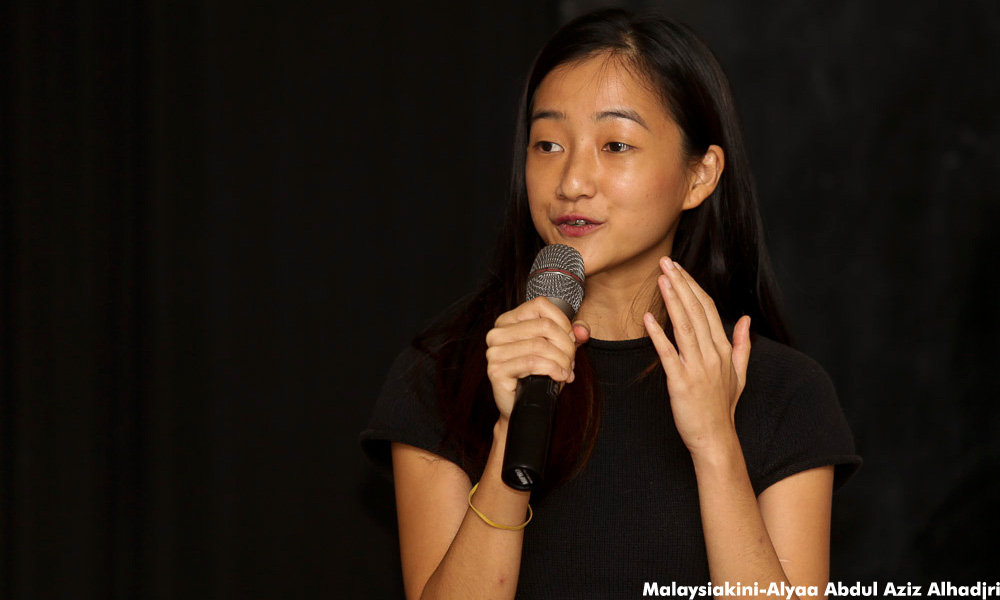
One participant, My Readers literacy programme founder Charis Ding, said there are still secondary school students who are illiterate in the English language.
As an example, she cited a 13-year-old student who could only read eight words out of a 77-word passage set for a Standard One student - highlighting a literacy gap of six years...
The serious lack of English proficiency among students was a key issue raised at the Transformasi Nasional 50 (TN50) dialogue held in Subang Jaya last night.
One participant, My Readers literacy programme founder Charis Ding, said there are still secondary school students who are illiterate in the English language.
As an example, she cited a 13-year-old student who could only read eight words out of a 77-word passage set for a Standard One student, highlighting a literacy gap of six years.
"This is not an isolated problem. It happens in many national schools," she noted.
According to Ding, My Readers is a comprehensive reading intervention programme designed to get students from illiteracy to literacy in 27 weeks.
Meanwhile, Project Fearless founder Nurul Ashiqin Shamsuri, who was the night's first speaker, said speaking English, particularly among students in the rural areas, is still often regarded as a pretentious act.
The mindset, it was noted, is often linked to a perceived notion that mastering English would somehow pose a threat to national identity and the national language.
Nurul Ashiqin said English proficiency in the country should not be "politicised", and speaking the language should be encouraged even if their pronunciation or grammar is not perfect.
"English shouldn't be viewed as an identity threat. You can't take away the Malaysian in us.
"Some say English will erode our national identity. Some politicians are going strong on that notion to gain popularity," she said.
"My personal belief is that you should not politicise education," she said, citing her experience of living in Europe and communicating with other non-native English speakers.
Participants and audience members at the session, organised by education group Teach For Malaysia, comprised social entrepreneurs and volunteers from various education NGOs, mostly working with underprivileged school-aged children on improving their English proficiency.
Each speaker was given about 10 minutes for their presentation, followed by a short question and answer session.
An audience member who stood up in response to Ding said her aspiration for TN50 would be for teachers to be allowed to focus on teaching, rather than being bogged down with other responsibilities.
‘Get creative in teaching’
During a sharing session for audience members, former writer Nik Jassmin Hew meanwhile said she decided to move to Muar, Johor, two years ago and met with two women who are running English language classes for primary school students.
It was there that the former senior writer for Astro's "Oh My English!" programme discovered how the children did not have a platform to speak English, and so she came up with a programme called "Speak It".
"I did it on my own, but I came here and now I see what others are doing," she said.
Noting the influence of social media, TV producer Ally Iskandar suggested that more pop culture-based English language programmes be created to encourage more Malaysians to embrace the language.
"We have to think about how to make English as part of pop culture in social media.
"Let it be a culture, and you realise you would want to learn English more and more," he said, citing as example a social media contest to translate lyrics of popular Malay songs.
Meeting of like minds
When met after the session, Teach For Malaysia founder Dzameer Dzulkifli said he was encouraged by the number of people who shared the same passion for promoting English proficiency in Malaysia.
"Now we know there are so many like-minded individuals and organisations who want to see changes happen," he said, adding that future sessions could also be organised on teaching of science, technology, engineering and mathematics (STEM) subjects.
Umno senator Khairul Azwan Harun, who was present at the event, urged all the social entrepreneurs and volunteers present to use him as a bridge to connect with the government.
Aside from noting their concerns to be shared with Education Minister Mahdzir Khalid, the Umno Youth deputy chief also promised to arrange a meeting between the participants and the minister in charge.


Are you sure you want to delete this comment?
This action cannot be undone.