



Focus on 1MDB allows other abuses to go unnoticed, economist warns
For the past several years, the 1MDB corruption scandal has dominated headlines both at home and abroad.
However, economist Jomo Kwame Sundaram now warns that the focus on 1MDB has allowed other excesses to go relatively unnoticed.
As an example, the former United Nations assistant secretary-general for economic development pointed to Felda Global Ventures Holdings Bhd’s (FGV) low stock prices.
“Felda settlers were encouraged to buy shares in this thing called FGV. They paid for it, and now the value of those shares are slightly over a third of what they paid for.
“They have been taken for a ride. Given that elections are imminent, they are given reassurance that they won’t lose their money, et cetera, et cetera, but clearly this is one example of abuse. Whether you call it corruption or not, we can get into those details later,” Jomo told a forum in Petaling Jaya...
For the past several years, the 1MDB corruption scandal has dominated headlines both at home and abroad.
However, economist Jomo Kwame Sundaram now warns that the focus on 1MDB has allowed other excesses to go relatively unnoticed.
As an example, the former United Nations assistant secretary-general for economic development pointed to Felda Global Ventures Holdings Bhd’s (FGV) low stock prices.
“Felda settlers were encouraged to buy shares in this thing called FGV. They paid for it, and now the value of those shares are slightly over a third of what they paid for.
“They have been taken for a ride. Given that elections are imminent, they are given reassurance that they won’t lose their money, et cetera, et cetera, but clearly this is one example of abuse. Whether you call it corruption or not, we can get into those details later,” Jomo told a forum in Petaling Jaya.
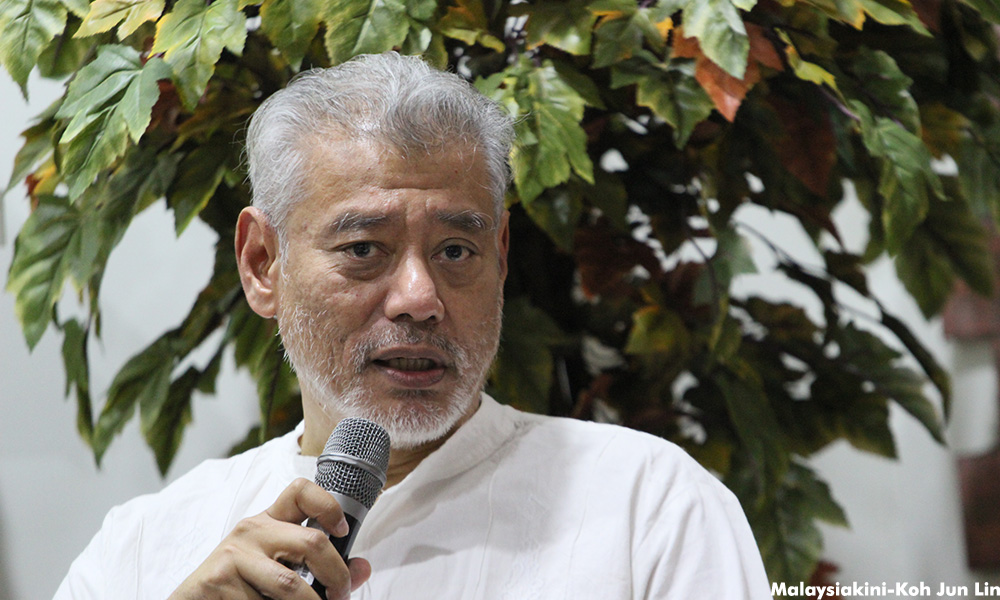
The professor, who holds the Tun Hussein Onn Chair in International Studies at the Institute of Strategic and International Studies Malaysia, was speaking at a forum themed “Electoral Reforms Before GE14”, which was organised by the Bersih steering committee at Malaysiakini’s office last night.
As a panelist in the forum, he was asked to comment on the extent of corruption in Malaysia.
Jomo replied that the entire system was corrupt, and what was legal was not necessarily free of corruption, else it would be acceptable to the public.
“So the line where you say something is corrupt is very, very difficult to draw, because it might be legally perfectly acceptable.
“The former president of South Africa Thabo Mbeki, for example, published a report three years ago where he talks about illicit financial flows. Illicit does not necessarily mean it is illegal, but obviously it is beyond the pale of public acceptability,” he said.
Unaddressed corruption
While an ongoing government campaign to tackle corruption should be taken seriously because it is addressing some types of corruption, he cautioned that the most serious forms of abuse are still not being addressed.
FGV had raised over RM10 billion went it went public in 2012, in what was billed as the second largest initial public offering in the world that year after Facebook.
Shares were offered at RM4.55 per share for institutions and RM4.45 per share for retail offerings. Many Felda settlers took loans at the time to purchase the shares.
After an initial boost however, FGV’s stock prices have been on a steady downtrend in the years since. Its price was RM1.90 per share when markets closed yesterday.
Meanwhile, Deputy Minister in the Prime Minister’s Department Razali Ibrahim told the parliament last month that Felda settlers owe RM5 billion in various debts as of December 2015, including loans for buying FGV shares among others.
He had previously said that the Federal Land Authority (Felda) itself had suffered RM1.21 billion in unrealised losses due to its stake in FGV.
It was also reported last month that the Employees’ Provident Fund (EPF) recorded a realised loss of RM203.18 million when it sold its shares in FGV in August last year.
Increasing foreign ownership
Meanwhile on a separate matter, Jomo urged the government to provide an explanation about Chinese carmarker Geely Automobile Holdings Ltd’s plans for Proton Holdings Bhd, and why Geely had been allowed to buy a stake in Proton instead of going into a joint venture.
He expressed his concerns about Malaysia’s future, given that the country’s economy - particularly its shrinking manufacturing sector - was being owned increasingly by foreign interests, who he claimed were being treated better than local investors.
Meanwhile as its manufacturing sector diminishes, Malaysia has little to show besides empty talk about becoming a service economy, he said.
Proton’s 49.9 percent acquisition by Geely is part of the problem, even though the deal could still prove beneficial to Proton depending on what Geely has in mind, Jomo told reporters after the forum.
He was asked whether the deal was beneficial to Proton, and whether protectionist policies such as high excise taxes for the automotive industry were still necessary.
“To be the question is not this tax or that tax. The question is, what is the strategy for the car, so I would like to know what Geely has in mind for Proton, and why Malaysia has not gone into a joint venture with Geely instead,” he said.
He said Geely and a number of other Chinese companies had been experiencing problems penetrating US and other Western markets, and it would be beneficial to Proton if Geely used it as a platform to overcome the hurdle. This would force Proton to become more internationally competitive.
“But a lot depends on the deal. Nobody knows the details – just Geely taking over doesn’t mean very much one way or the other. It can be abused, it can be asset-stripping, many things can happen. We just don’t know the details,” he said.


Are you sure you want to delete this comment?
This action cannot be undone.