



Will Selangor become a ‘smart state’ by 2025?
Since last September, the Selangor government has been collecting data from traffic smartphone application (app) Waze on one of the most common complaints of road users - potholes.
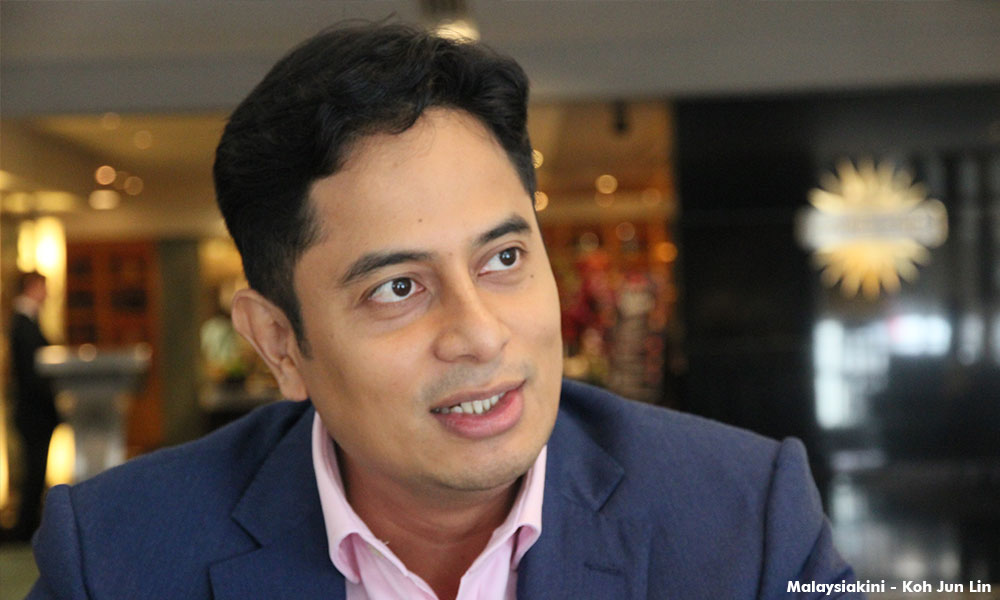
At its inception, the scheme involved seven out of 12 of Selangor’s municipalities and local governments. According to Smart Selangor delivery unit deputy director Fahmi Ngah, the response has been phenomenal.
“You can report the location of potholes through Waze. Information comes to us in the delivery unit. We then look and analyse that and dispatch rectification sheets for local authorities to go and patch it."...
Since last September, the Selangor government has been collecting data from traffic smartphone application (app) Waze on one of the most common complaints of road users - potholes.
At its inception, the scheme involved seven out of 12 of Selangor’s municipalities and local governments. According to Smart Selangor delivery unit deputy director Fahmi Ngah, the response has been phenomenal.
“You can report the location of potholes through Waze. Information comes to us in the delivery unit. We then look and analyse that and dispatch rectification sheets for local authorities to go and patch it.
“This data comes in like every second, and every day we get at least 200 to 300 reports from seven local authorities within Selangor. The two interns who had to (process the reports) got very frustrated because it’s manual, so we coded up the whole thing to make it automated and make everyone happier,” he said.
However, the work does not end there. The partnership between the Selangor government is one of many initiatives under its Smart Selangor blueprint launched last December.
With Waze, the state wants to develop software to help it analyse the raw data coming in from Waze and understand the road conditions. It also wants to leverage on that information to make a better case for more road maintenance allocations from the federal government.
As examples, he said it would help the state figure out whether certain roads are overused, and keep track on the complaints on roads that are supposed to be maintained by the federal government or the latter's Public Works Department (JKR).
For now, about 40 percent of the pothole complaints originate from roads that are not maintained by the state government and its local authorities, he said.
Under the Smart Selangor initiative, the state government has also revamped its garbage collection system in Klang and introduced an app for residents to file complaints about garbage, and it plans to roll out the plan in other municipalities as well.
In June, it will be launching a new smartphone app-based platform to facilitate citizen engagement, such as to garner feedback on whether development should take place in a park.
It is also mulling to install air quality monitors in public places and to install sensors to track whether its bus stops are being used, and is collecting health data from its welfare recipients as they visit their panel doctors in hopes of detecting emerging epidemics.
In all, there are 12 areas the state wants to improve to achieve ‘smart state’ status by 2025, similar to how Barcelona and Taipei are branded as ‘smart cities’.
Ten ‘quick wins’
As part of the blueprint launched last year, there are also 10 ‘quick wins’ that the state wants to score by the end of this year, including the partnership with Waze.
On May 11 in Petaling Jaya, state-linked company Invest Selangor Bhd signed a partnership with Barcelona-based agency MediaUrban to host the Smart City Convention 2017 in Shah Alam in September.
The conference will serve as a platform for governments, developers, and technology companies to discuss problems and solutions to urban challenges, said MediaUrban CEO Maria Sisternas.
Sisternas told reporters in a separate interview the morning of the signing, that Barcelona requires any public works involving its street furniture to take into account its smart city infrastructure and open data platform.
This means an otherwise mundane bench in Barcelona may have sensors embedded in it to feed data to the city and its residents.
“The city (of Barcelona) provides a platform that integrates and produces big data in real time. This allows citizens to access any point of the city at any time and see what’s the noise (level) at that point of the city, or how polluted is the city in that area, or how many parking lots are available, and this happens now,” she said.
One of the challenges that Barcelona needs to overcome is to collect more data on its citizens for planning purposes, she said, such as matching the city’s residency records with the Spanish government’s tax records to find out where people live and work, to aid mobility planning.
When asked whether this would amount to creating a surveillance state reminiscent of the author George Orwell’s book ‘1984’, Sisternas countered that the public sector has the means and legitimacy to collect the data for planning purposes.
However, the former Barcelona City Council director of projects cautioned that such data collection should be done anonymously.
Such data collection would save a lot of money, Sisternas said, as cities already spend vast amounts of money on surveys that could only capture data from a small subset of its residents.
According to a press release, the Smart City Convention 2017 would bring Barcelona’s experiences to Asia, with City Transformation Agency of Barcelona’s CEO Antoni Vives as the convention’s chief adviser.
Will Selangor look more like Barcelona, Amsterdam, Taipei and other smart cities in 2025? Only time will tell.


Are you sure you want to delete this comment?
This action cannot be undone.