


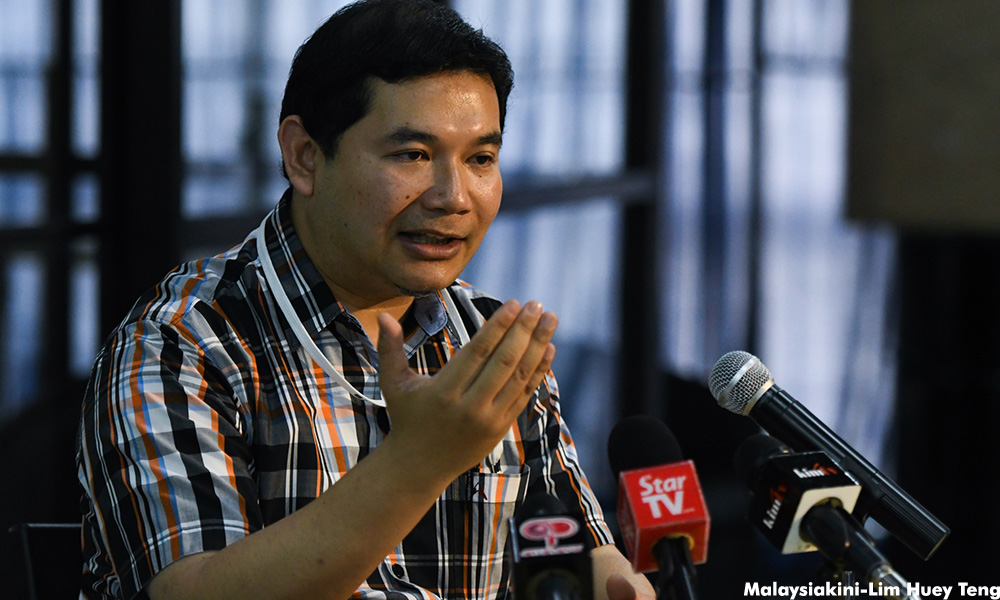

Rafizi: Mock me on oil prices but my warning is real
The declining of fuel prices in recent week has led some to mock PKR vice president Rafizi Ramli over his warnings of sky-rocketing fuel prices but the Pandan MP is firm that his warning is very real.
Rafizi said in the absence of a fuel price ceiling and the unpredictability of global oil prices, the trends can quickly reverse.
"They (critics) do not understand that the crude oil market is unpredictable and is subject to profit taking strategies by the global commodity traders...
The declining of fuel prices in recent week has led some to mock PKR vice president Rafizi Ramli over his warnings of sky-rocketing fuel prices but the Pandan MP is firm that his warning is very real.
Rafizi said in the absence of a fuel price ceiling and the unpredictability of global oil prices, the trends can quickly reverse.
"They (critics) do not understand that the crude oil market is unpredictable and is subject to profit taking strategies by the global commodity traders.
"When crude oil price goes down, traders will sell forward contracts causing a further decline, but at the same time purchase new contracts at highers prices in future as they know oil price which had fallen (to a low base) will climb again," he said.
After five weeks of fuel price decline, Rafizi projected that the trend is expected to reverse tomorrow and will continue to climb.
Only with a price ceiling can consumers have a peace of mind, he said in a statement today.
As such, the PKR lawmaker proposed fuel subsidy be reintroduced but through a quota-based system that can help control the runaway cost which plagued the previous fuel subsidy system.
Based on the system, Rafizi said fuel subsidy will only kick in if the market price exceeds a fixed ceiling price, which he proposed to be set at RM1.80 per litre for RON95.
The subsidy system, which will have a monthly maximum usage cap, will operate based on Mykad at petrol stations.
"The government can develop a software which stores information on consumers' fuel subsidy.
"Every time a user buys fuel, he will insert the MyKad which and his usage of subsidised fuel will be recorded," he said.
Furthermore, Rafizi proposed that the total subsidy is capped at 20 percent of the country' total fuel usage.
"Based on a parliamentary reply in 2014, the annual petrol and diesel usage by Malaysians was estimated at 27 billion litres.
"Therefore, a subsidy will be provided for 5.4 billion litres of petrol and diesel to Malaysians every year and the monthly cap can also be determined based on this figure," he said.
Through this mechanism, Rafizi said based on a global price of US$50 per barrel for Brent crude oil, it is expected to only cost the government RM1 billion in 2018.


Are you sure you want to delete this comment?
This action cannot be undone.