


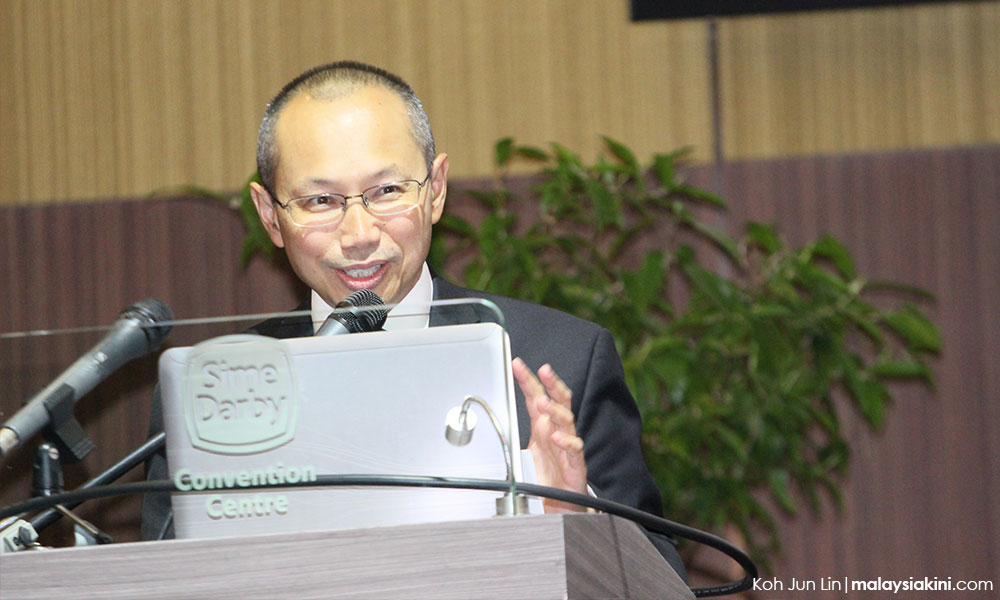

'M'sia on track for high-income status, but civic mindedness needs a boost'
Malaysia would be on track to become a high-income nation if it maintains its present growth rate, said Permodalan Nasional Berhad (PNB) chairperson Abdul Wahid Omar.
However, he reminded that there are other measures on whether a country has become a developed nation apart from economic performance.
"In my view, if we continue to grow by an average of five percent in real terms, we should be able to reach that threshold set by the World Bank in 2020.
"But I think there are other measures of what constitutes a developing economy - in terms of civic mindedness of people; I think this is something that we need to work a lot harder at," he said during a talk with media practitioners today...
Malaysia would be on track to become a high-income nation if it maintains its present growth rate, said Permodalan Nasional Berhad (PNB) chairperson Abdul Wahid Omar.
However, he reminded that there are other measures on whether a country has become a developed nation apart from economic performance.
"In my view, if we continue to grow by an average of five percent in real terms, we should be able to reach that threshold set by the World Bank in 2020.
"But I think there are other measures of what constitutes a developing economy - in terms of civic mindedness of people; I think this is something that we need to work a lot harder at," he said during a talk with media practitioners today.
He was speaking at an event organised by the Malaysian Press Institute in Kuala Lumpur, where he was asked to comment on the state of Malaysia's economy, and whether the country would be able to attain its goal of becoming a developed nation by 2020.
This includes attaining a gross domestic income of US$15,000 per capita, which is the World Bank criteria Wahid referred to.
Wahid, who is also the former minister in charge of the Economic Planning Unit, added that Malaysia's GDP growth this year is projected to be better than the last.
This is reflected by improved consumer sentiment and higher sales figures for motor vehicles.
He said he hopes that as corporate gains improve, the pay for the people would also improve, thus driving more consumer demand.
Meanwhile, Wahid also revealed that PNB plans to increase its overseas investments, but is still waiting for an opportune moment to do so.
He said PNB is hoping to invest in public equities and real estate abroad and cited the weak ringgit as among the factors preventing PNB from doing so.
"It is our view that at the moment, the ringgit is weak compared to the US dollar. The last thing we want is when we invest and made seven percent returns, but when you compute back to ringgit and if the ringgit were to strengthen by, say five percent, then your net return is only two percent.
"So we have to make sure that when we invest, we do need to account the expected (changes in the) exchange rate. So (we will invest) at the right time, at the right opportunity," he said.
According to Wahid, the state-run fund currently has RM260 billion under management, of which foreign investments constitutes only two percent.


