



Amnesty International lauds M’sia’s ongoing assistance to Rohingya
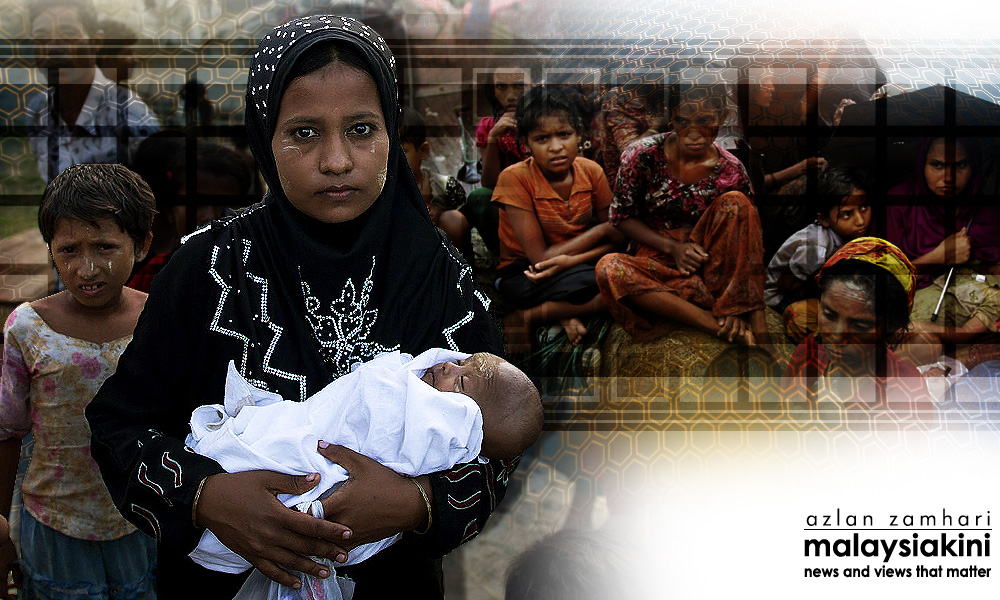
In the background of a heightened conflict in Myanmar's Rakhine state, the Australian chapter of the global human rights watchdog Amnesty International has credited Malaysia's ongoing assistance for Rohingya refugees who are already in the country and waiting to be resettled.
Among others, Amnesty International-Australia refugee coordinator Graham Thom highlighted the Malaysian government's efforts to provide legal employment as well as offer better protection for refugees registered with the United Nations High Commissioner for Refugees (UNHCR).
Contrary to the Malaysian government's stand that it is unable to meet international standards for rights of refugees, Thom said that it would be "quite easy" for Malaysia to become a signatory to the UNHCR 1951 Convention Relating to the Status of Refugees and its 1967 protocols.
"It would be quite easy for Malaysia to meet the convention requirements… and generally they do," he told a group of journalists and editors at the Amnesty International-Australia office in Sydney yesterday.
The media personnel were there under an international media visit sponsored by the Australian government's Department of Foreign Affairs and Trade...
In the background of a heightened conflict in Myanmar's Rakhine state, the Australian chapter of the global human rights watchdog Amnesty International has credited Malaysia's ongoing assistance for Rohingya refugees who are already in the country and waiting to be resettled.
Among others, Amnesty International-Australia refugee coordinator Graham Thom highlighted the Malaysian government's efforts to provide legal employment as well as offer better protection for refugees registered with the United Nations High Commissioner for Refugees (UNHCR).
Contrary to the Malaysian government's stand that it is unable to meet international standards for rights of refugees, Thom said that it would be "quite easy" for Malaysia to become a signatory to the UNHCR 1951 Convention Relating to the Status of Refugees and its 1967 protocols.
"It would be quite easy for Malaysia to meet the convention requirements… and generally they do," he told a group of journalists and editors at the Amnesty International-Australia office in Sydney yesterday.
The media personnel were there under an international media visit sponsored by the Australian government's Department of Foreign Affairs and Trade.
 In March 2015, Minister in the Prime Minister’s department Shahidan Kassim had reportedly told the Dewan Rakyat that Malaysia does not intend to become a signatory to the UNHCR conventions as the government would be unable to execute its necessary duties pertaining to refugee issues.
Since then, Malaysia has yet to accede to global calls for it to ratify the conventions.
Referring to Malaysia's current approach towards dealing with refugees, Thom said among issues that must be urgently addressed would be to provide all refugees with their legal rights.
'Next step is to provide them legal rights'
"I think now that they (Malaysia) have come together with a card that the police and others understand, this accords the people (refugees) with some level of protection, the next step is to provide them legal rights," he said.
In the past, concerns were raised over the fact that refugees who have been issued with UNHCR cards remained victims of harassment by authorities or risked being caught in an Immigration crackdown on undocumented migrants.
"I don't think Malaysia is a million miles away from what the refugee convention could require them to do and I think they could make those steps very quickly, if they wanted to.
"Again, it goes back to leadership," Thom said when asked for comments on Malaysia's stand that it would not be a party to the UNHCR's convention, while continuing to offer humanitarian assistance for a majority Rohingya and Syrian refugees.
"It would be fantastic if Malaysia were to sign the convention, but I think they can do a number of these other things before they do that, and I think it would be particularly important, especially for the Rohingya...," he added.
Once Malaysia has taken steps to address issues surrounding Rohingya refugees, Thom pointed out, it would only be left with a small number of refugees from other countries, who can be managed through regional cooperation with other countries, including Australia.
Earlier this month, deputy home minister Nur Jazlan Mohamed reportedly said that some 150,000 UNHCR cardholders in Malaysia have until Sept 30 to apply for the special MyRC identity card after registering themselves with the Tracking Refugees Information System (TRIS).
Nur Jazlan had also said the MyRC initiative was implemented under the "Proof of Concept" (POC) programme on April 1, to enable the government to have information and biometric data of refugees and asylum seekers who are currently in the UNHCR database.
As of Dec 31, 2016, there were reportedly about 150,000 UNHCR cardholders from 62 countries in Malaysia and it was estimated that 90 percent are from Myanmar, of whom some 56,000 are Rohingya.
However, local migrant rights groups have raised concerns about a higher number of undocumented refugees.
According to reports, the latest crisis in Myanmar's Rakhine state erupted after Rohingya insurgents attacked 30 police stations last Friday, triggering a military response.
Since then, some 100 were reportedly killed while some 18,000 ethnic Rohingya had attempted to flee to neighbouring Bangladesh.


