


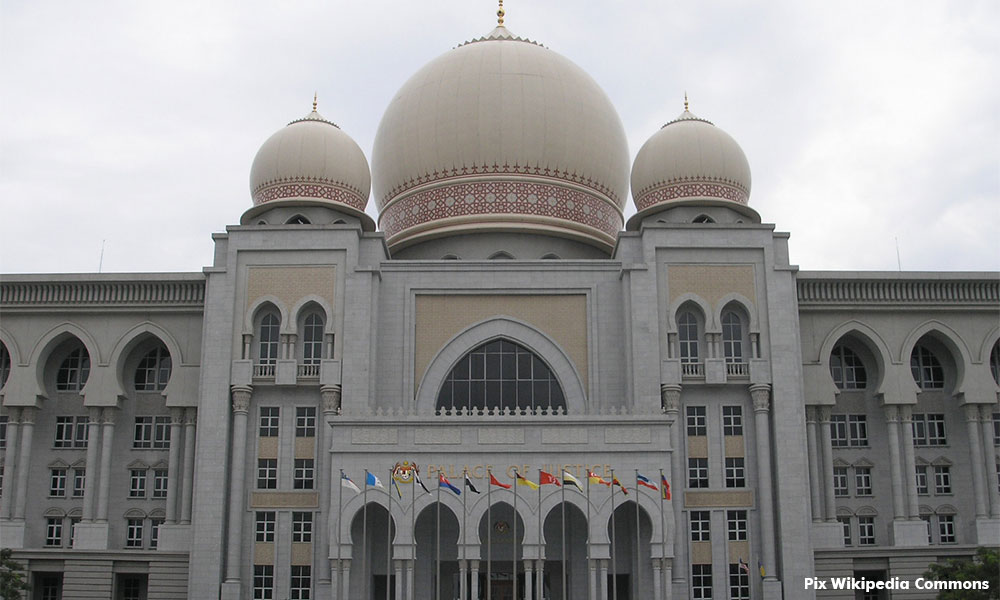

Plight of stateless children now reaches Federal Court
The plight of stateless children - children born in Malaysia but not given citizenship here or in any other country - has now finally made its way to the Federal Court, the highest court in the country, for possible final determination.
This follows the apex court granting leave today for three separate cases of stateless children to be appealed. The adoptive parents or the biological parents want the court to determine the terms for granting those affected their citizenship.
A three-member bench led by Federal Court judge Hasan Lah granted leave for the three cases today...
The plight of stateless children - children born in Malaysia but not given citizenship here or in any other country - has now finally made its way to the Federal Court, the highest court in the country, for possible final determination.
This follows the apex court granting leave today for three separate cases of stateless children to be appealed. The adoptive parents or the biological parents want the court to determine the terms for granting those affected their citizenship.
A three-member bench led by Federal Court judge Hasan Lah granted leave for the three cases today.
The other two judges were Justice Zainun Ali and Justice Abu Samah Nordin.
The bench also allowed the application by parties for a joint case management.
This is the first time that the apex court will decide on the issue of stateless children or people in Malaysia, based on questions of law.
The outcome of these three cases will have a major impact on the rights of stateless children or people, whom Padang Serai MP N Surendran said are in the thousands in Peninsular Malaysia alone.
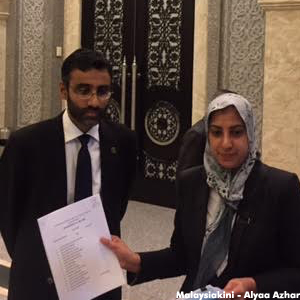 Two of the cases were brought by senior lawyer and former Federal Court judge Gopal Sri Ram, who appeared together with Surendran and Latheefa Koya.
In the case of the application by Lim Jen Hsiang and that of another applicant, who now wants to remain anonymous, the apex court allowed one question of law to be posed.
The question from the two cases is whether the principle of jus sanguinis, or reference to blood or lineage, is a requirement under Section 1(e) of Part II of the Second Schedule of the Federal Constitution.
Section 1(e) of Part II states "every person born within the Federation who is not born a citizen of any country otherwise than by virtue of this paragraph".
In Lim's case, he is the biological father of the child, who was not given the citizenship because of the boy's mother, who is a Thai national. Meanwhile, the other case handled by Surendran saw the adoptive parents being unsuccessful in registering their child as a citizen.
In both cases, the appellate court dismissed their appeals six months ago.
Federal counsel withdraws objection
The other cases were brought by senior lawyers Cyrus Das and Raymond Mah, where the court allowed seven questions of law is to be decided.
Some of the questions are:
- Whether a child who was born in Malaysia and did not acquire citizenship of any other county, within one year from his birth date, is a citizen of Malaysia by the operation of law pursuant to Article 14(1)(b) and Section 1(a) and 1(e) and Section 2(3) of Part II of Second Schedule.
- Whether the words “not born a citizen of any country” in Part II Section 1(e) of the Second Schedule of the Federal Constitution requires a child to prove the identity of his or her biological parents and that they are not foreign citizens or whether, pursuant to Part II Section 2(3) of the Second Schedule, it is sufficient for the child to prove that he/she does not require citizenship.
Initially, senior federal counsel Maisarah Jauhari objected to the leave application, after she apologised for handing over the submission only today.
However, after a short break, Maisarah and senior federal counsel Shamsul Bolhassan indicated they would not object to the application on all three cases.
Apart from these cases, Mah is also representing another parent posing the same seven questions by referral from the High Court in Shah Alam to the Federal Court, based on provisions of Section 84 of the Courts of Judicature Act.
The case had not been reported before by the media.
Meanwhile, lawyer Ranee Sreedharan held a watching brief for another set of parents who were successful in their citizenship bid for their eldest child, after the Court of Appeal allowed the appeal. The government has filed an application for leave to appeal this case.
In this case, which was also not reported, the father is a Malaysian while the mother is a foreigner, and they got married two months after the child was born. The child did not get the Malaysian citizenship, unlike the siblings.
Lawyers Goh Siu Lin and Annou Xavier held watching briefs for the Bar Council and Suhakam respectively.
Meanwhile, Cyrus told reporters that these are not cases of challenging the constitution but one of claiming their constitutional rights.
Surendran said it was necessary for the Home Ministry and its minister to change the priority and recognise the affected persons as citizens, and added that others have remained stateless due to poor documentation.
“Many of them have remained stateless, especially the children. These cases were highlighted before in Parliament,” he said.


Are you sure you want to delete this comment?
This action cannot be undone.