


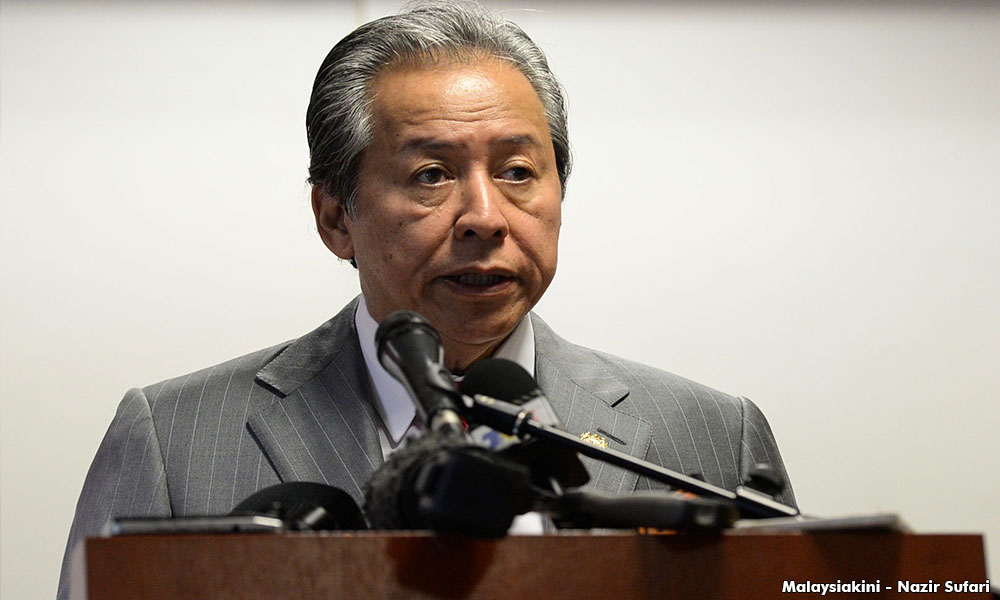

My reply to Foreign Minister Anifah Aman
COMMENT | On Sept 17, 2017, Foreign Minister Anifah Aman affirmed that the Malaysian Maritime Enforcement Agency (MMEA) will "arrest any illegal fishing vessel" that intrudes into the Malaysian waters.
Thus, they claim there is no alleged Malaysian "pivot" to China. That Malaysian foreign relations have always been based on fair treatment and engagement with all countries.
Now the issue is: MMEA falls under the Prime Minister's Department, and not the Prime Minister's Office. Indeed, the Ministry of Foreign Affairs has a marginal relationship with MMEA. The Ministry of Defence, for obvious reasons, has a deeper structural relationship with MMEA.
Then why is the Foreign Ministry using MMEA as an indicator that Malaysia's foreign relations are still intact? Clearly, Anifah has either stepped on the turf of the Prime Minister's Department, or, indirectly, the Defence Ministry.
There is one serious immediate implication here. If Anifah is trying to deny that Malaysia has pivoted to China, then he should have all the facts at hand. The focus is on "all" – he should also understand all lines of authority in Malaysia. In both cases, he didn't have any. Take Malaysia's response by MMEA, for example.
In reality, MMEA has gone beyond arresting illegal Chinese vessels, albeit belatedly. The Sun daily in an Aug 30 report categorically affirmed that MMEA had had to take an even more drastic step. How? The MMEA, in final recognition of the serious problem of illegal fishing vessels from China and elsewhere, had begun "burning" these vessels at sea in the Malaysian waters.
If the problem of illegal Chinese and non-Chinese vessels was not serious, would MMEA have burned these vessels? In the Sept 17 press statement of Anifah to challenge my Malaysiakini article, which denotes the seriousness of the issue, the eminent minister did not even know that MMEA had gone further than what he himself had attested, which is merely to "arrest."
No, the MMEA had started "burning" illegal Chinese and non-Chinese vessels at sea, of course in Malaysian waters.
Indeed, The Sun further reported that the problem of illegal fishing vessels from neighbouring countries, including China, had been a serious issue since early 2016. Illegal fishing vessels in Malaysian waters are not new. As the foreign minister of Malaysia, Anifah should have known the issue at the back of his hand, rather than to try to deny it.
Invariably, if Anifah had seen it fit to finally release a press statement on Sept 17 to deny that Malaysia is now in the orbit of China's military and commercial influence, why have two distinct inconsistencies emerged in Malaysia's policy responses?...
COMMENT | On Sept 17, 2017, Foreign Minister Anifah Aman affirmed that the Malaysian Maritime Enforcement Agency (MMEA) will "arrest any illegal fishing vessel" that intrudes into the Malaysian waters.
Thus, they claim there is no alleged Malaysian "pivot" to China. That Malaysian foreign relations have always been based on fair treatment and engagement with all countries.
Now the issue is: MMEA falls under the Prime Minister's Department, and not the Prime Minister's Office. Indeed, the Ministry of Foreign Affairs has a marginal relationship with MMEA. The Ministry of Defence, for obvious reasons, has a deeper structural relationship with MMEA.
Then why is the Foreign Ministry using MMEA as an indicator that Malaysia's foreign relations are still intact? Clearly, Anifah has either stepped on the turf of the Prime Minister's Department, or, indirectly, the Defence Ministry.
There is one serious immediate implication here. If Anifah is trying to deny that Malaysia has pivoted to China, then he should have all the facts at hand. The focus is on "all" – he should also understand all lines of authority in Malaysia. In both cases, he didn't have any. Take Malaysia's response by MMEA, for example.
In reality, MMEA has gone beyond arresting illegal Chinese vessels, albeit belatedly. The Sun daily in an Aug 30 report categorically affirmed that MMEA had had to take an even more drastic step. How? The MMEA, in final recognition of the serious problem of illegal fishing vessels from China and elsewhere, had begun "burning" these vessels at sea in the Malaysian waters.
If the problem of illegal Chinese and non-Chinese vessels was not serious, would MMEA have burned these vessels? In the Sept 17 press statement of Anifah to challenge my Malaysiakini article, which denotes the seriousness of the issue, the eminent minister did not even know that MMEA had gone further than what he himself had attested, which is merely to "arrest."
No, the MMEA had started "burning" illegal Chinese and non-Chinese vessels at sea, of course in Malaysian waters.
Indeed, The Sun further reported that the problem of illegal fishing vessels from neighbouring countries, including China, had been a serious issue since early 2016. Illegal fishing vessels in Malaysian waters are not new. As the foreign minister of Malaysia, Anifah should have known the issue at the back of his hand, rather than to try to deny it.
Invariably, if Anifah had seen it fit to finally release a press statement on Sept 17 to deny that Malaysia is now in the orbit of China's military and commercial influence, why have two distinct inconsistencies emerged in Malaysia's policy responses?
First, MMEA has clearly taken a strong response (i.e., by burning the illegal vessels in Malaysian waters). Yet, the Foreign Ministry in the Sept 17 press statement appears to suggest that the MMEA will only "arrest" illegal fishing vessels in Malaysian waters. Clearly, the ministry either does not know that MMEA has taken it a step further, or, is in denial that there is a problem at hand with illegal Chinese and non-Chinese fishing vessels.
Second, if the ministry did not oppose MMEA's methods – an exact replication of what Indonesia has done in its own waters – does that imply that MMEA has learned from Indonesia the seriousness of the illegal fishing vessels problem, while the Foreign Ministry in Malaysia is still asleep at its desk?
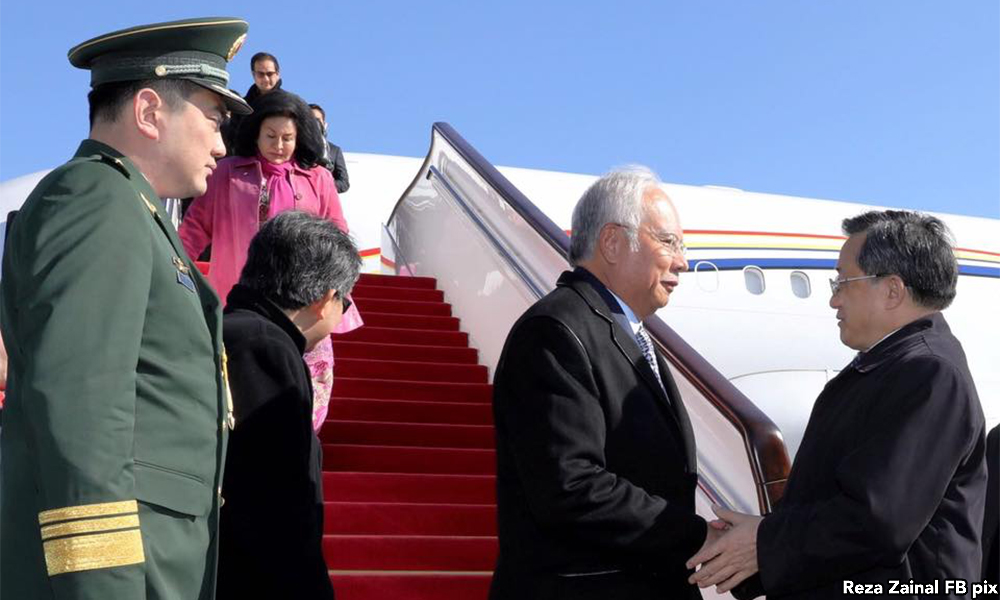 Now, if the issue at heart is whether Malaysia has entered into the "orbit of China's military and commercial influence," why did Prime Minister Najib Abdul Razak travel to China on Oct 30, 2016, to buy "10 Littoral Mission Ships (LMS)" from China? Indeed, reports from the Straits Times of Singapore on Oct 26, 2016, clearly affirmed below:
"Littoral Mission Ships are fast patrol vessels that can be equipped with a helicopter flight deck and carry missiles. They are primarily used for coastal security, maritime patrol and surveillance, but can also be deployed for disaster relief and search and rescue operations."
The same report in the Singaporean Straits Times further stated that the purchase of the LMS was a key part of Prime Minister's Najib's trip to China. But no one in the Prime Minister's Office rebutted the narrative. Four days later, Najib proceeded to Beijing for a week-long trip anyway, and further went ahead with the purchase of the LMS.
Malaysia has pivoted to China
More interestingly, while Anifah has tried to rebut my article in Malaysiakini that Malaysia has pivoted to China, none of his officers in the Foreign Ministry, including the Malaysian mission in Singapore, has tried to challenge the above narrative on LMS too. Why not?
If Anifah is trying to deny that Malaysia has pivoted to China, militarily and commercially, the Straits Times report should have been denied in total. That was the red line that a top regional daily in the world has crossed.
Indeed, with a daily readership of nearly 13 million people, it would have mattered more to rebut the article in the Straits Times! But Anifah and the Foreign Ministry, as well as the Defence Ministry, opted for sheer silence.
Even Minister of Defence Hishammuddin Hussein, in a Facebook video, celebrated the LMS purchase as a key part of Najib's trip. Indeed, Najib, who is friendliest to China so far at the risk of compromising Malaysia's sovereignty in the South China Sea, was the quietest. He was blind and deaf to what a major regional daily had reported – that Malaysia was drifting into China's influence.
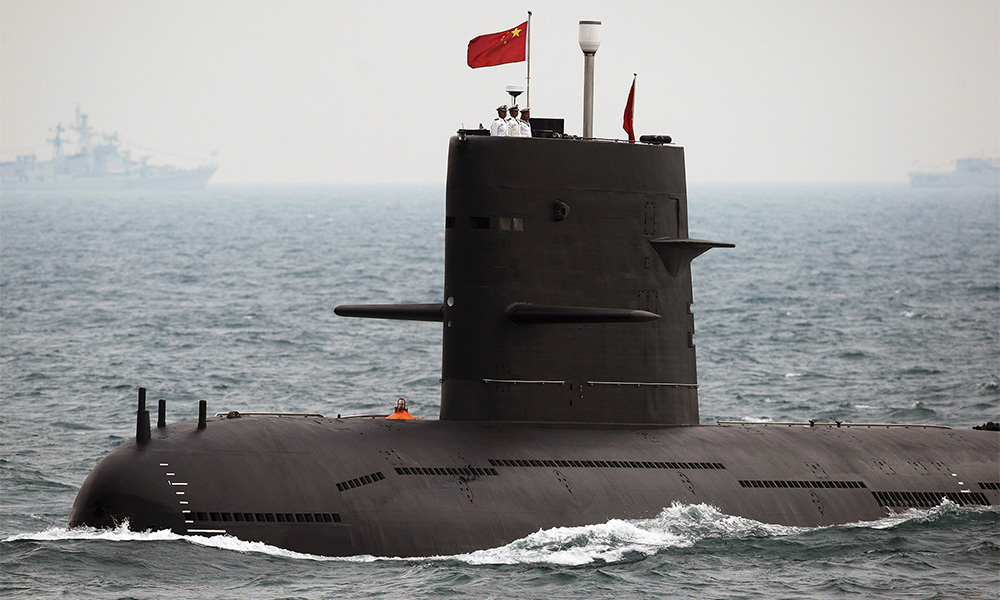
In fact, in the same Straits Times article, DAP's think tank Refsa authoritatively argued that LMS can be bought from "10 other countries, not necessarily China." So, the issue is, why should Malaysia buy its defence equipment and LMS from China, even allowing Chinese submarines to dock in Kota Kinabalu twice, which Anifah did not deny.
As the foreign minister, when illegal fishing vessels are stealing the livelihood of Malaysian fishermen at sea, shouldn't he be sending signals or summoning Chinese ambassadors to his office for a dressing-down? Malaysia can't. Neither can the prime minister nor the foreign minister, as Malaysia has leaned on too many Chinese projects and exorbitant loans, even defence purchases.
 If one has to be crude about it, the issue of whether Malaysia has pivoted to China is now an intense intra-agency and intra-government struggle.
Why? First, while the frequency of Chinese illegal vessels in Malaysian waters has finally drawn a response from MMEA, the Defence Ministry has not challenged the purchases of LMS from China. Second, while the friendly reception of Chinese submarines in Sabah are deemed as normal naval protocol by Anifah, he did not explain how Malaysia can maintain its leverage against China on the disputed features of Malaysia in China's Nine-Dash Line.
All of the above are a true reflection of a government where the right hand does not know what the left hand is doing. MMEA, for example, falls under the Prime Minister's Department. It does not fall under the Prime Minister's Office.
In the Prime Minister's Department, the Minister in charge of national security is Shahidan Kassim, who has been vocal of the threat posed by illegal Chinese and non-Chinese vessels. The special functions minister on the threat of terrorism emanating from the Philippines and the surrounding waters, on the other hand, is concurrently defence Minister Hishammuddin.
Hishammuddin has been quiet almost to the point of being clueless. Invariably, Shahidan's MMEA, the Foreign Ministry and the Defence Ministry are not sure how to handle China, thus, orbiting between being friendly to China, and occasionally, assertive to it.
Chinese commercial and military influence
To be sure, if the point is whether Malaysia has already entered the "orbit" of Chinese commercial and military influence, which Anifah seeks to deny, why didn't Najib instruct either Shahidan or Hishammuddin to reply in their respective press statements? Why is the Foreign Ministry alone denying it, when MMEA and the Defence Ministry have taken a categorically different approach vis-a-via illegal fishing vessels of China and other countries in Malaysian waters?
Clearly, Najib cannot understand the extent to which his dependence on China has finally and comprehensively undermined the structural integrity of the Malaysian government, and the foreign policy of equidistance laid down by his own father, Abdul Razak Hussein. How can we forget the Zone of Peace, Freedom and Neutrality – a declaration signed by the foreign ministers of Asean member states – in 1971 when Kuala Lumpur under the very watch of Najib’s father? The intent of the declaration was to keep Southeast Asia “free from any form or manner of interference by outside powers” and “broaden the areas of cooperation.”
It is also worth mentioning that Anifah was one of those cabinet members who accompanied Prime Minister Najib to meet with President Donald Trump in Washington on Sept 12. If the goal is to deny that Malaysia has pivoted to China, wouldn't it be more appropriate to reassure the US that Malaysia has not been unduly influenced by China?
Yet, there is no evidence that Anifah has done this in the Cabinet Room of the White House, where Secretary of State Rex Tillerson and National Security Advisor HR McMaster were in attendance.
Instead, Anifah sought to deny the essence of my Malaysiakini article in a Sept 17 press statement. Thus, the fact stands that even Anifah himself cannot state the obvious to the US, let alone Najib, who was leading the delegation to the disastrous US trip that has become to be known as the most expensive photo opportunity trip ever in the history of Malaysian politics.
Even more strangely, on the same day when Anifah was in Washington DC, he affirmed that a second Chinese submarine was, as a matter of fact, allowed to dock in Kota Kinabalu.
While Anifah defended the submarine move as normal, he didn't explain if the Defence Ministry and the MMEA also shared his view. He couldn't have been that candid, precisely because the Foreign Ministry, the Defence Ministry and the MMEA, including the prime minister himself, are unable to coordinate their policies.
Losing track of national interest
Entering China's military and commercial orbit of influence does not mean Malaysia belongs to Beijing per se, or even immediately. It merely means that Malaysia is spinning like a proverbial top closer and closer to China, unclear of its national interest, even as Malaysia and China are still locked in a dispute over various features in the Exclusive Economic Zone (EEZ) in the South China Sea.
The more Malaysia spins, and becomes nauseated, the more Malaysia will lose track of its true national interest. Thus, it was decided during the time of Abdul Razak, and former foreign minister Ghazali Shafie that Malaysia shall be a friend to all, and an enemy to none. It was active neutrality at work, based on strong principles of amity and friendship.
During Najib’s tenure and Anifah's tenure as the foreign minister, Malaysia no longer knows how to handle China and other great powers at the same time. If anything, Anifah argued that more interaction with China is the result of globalisation. If globalisation is the key, why not more foreign direct investment from US? Indeed, why should Malaysia be pledging billions to US as it did in the recent trip?
The confounding nature of Malaysia's defence and foreign relationship with China – with some agencies being hawkish – suggests a condition where the Malaysian prime minister and foreign minister are indeed orbiting to China, admittedly with some of their officers resisting.
To those who are resisting the lure and temptation of being bought over by China's generosity and huge loans, which can be the future debts of Malaysia – clear manifestations of debt entrapment – most Malaysians would like to take their hats off to salute these patriots. Thus, Malaysians are glad to know that MMEA has finally taken a serious policy measure, even if this is a policy response that is learned from Indonesia, rather than due to the active instruction of Najib, let alone Anifah or the clueless Hishammuddin.
I argue in my recent article that Malaysia has entered the Chinese military and commercial orbit. Of course it has. Because Malaysia can’t be taking loans and money from China – even when offered at zero interest rate for first seven years, say, for the East Coast Railway Link (ECRL) project – when Malaysia has an outstanding conflict with China on six features of South China Sea that exist in the Exclusive Economic Zone of Malaysia.
It is important to note that in Anifah's rebuttal, the good minister did not even once mention the South China Sea, or, international maritime legal order, nor did he speak about the illegality of the Nine-Dashed Line.
Why is Anifah so quiet on these three issues? Because Malaysia has indeed entered the orbit of Chinese influence? Certain words like the South China Sea, international maritime order, or, Nine-Dashed Line, are no longer politically correct for Malaysia to say out loud.
Also, the minister replied that, per globalisation, Malaysia should have trade with all. Yes, trade. But when Malaysia has a strategic conflict with China over the South China Sea – an issue that has been militarised by China – then it falls on the duty of Malaysia, i.e., Najib, to exercise a great degree of caution. In fact, Malaysia may even need to lean on the US, and Japan, if not India as well, to counter-balance China.
Therefore, suitable to a policy of balancing, Malaysia cannot be allowing Chinese submarines to dock in Malaysian ports, let alone the far away ports in Sabah, unless Beijing has reined in their illegal Chinese fishing vessels, or, illegal Chinese Coast Guards in Malaysian waters.
To the degree, China hasn't controlled or contained their illegal fishing or law enforcement vessels, then why should Malaysia allow their submarines to dock? Comparing Chinese submarines with submarines or vessels from Australia, New Zealand and Singapore, are simply puerile. Why? As these are vessels from the Five Power Defence Pact, of which Malaysia is a signatory. Of course, they have to be pre-approved.
If whatever the China Navy asks is whatever China gets – which is the logic of Anifah – then by the din of this standard, why not allow Israeli navy to dock in Sabah too? Perhaps Israel wants to catch some Islamic state terrorist, or Hamas of PLO too? Better yet, why not let North Korean vessels come to Sabah too?
Moving on, Anifah also said Malaysia was an excellent chair of Asean in 2015. Oh really? To which he also added, Malaysia is but a "facilitator." First, you praised yourself as an excellent chair. Then you said, Malaysia is only a facilitator. My point being, an excellent chair and facilitator can go hand in hand. But to do the dual roles well, Malaysia has got to know its strategic interest and the strategic interest of the whole of East Asia.
In 2015, when Obama was the president, for example, he allowed three freedom of navigation exercises to challenge Chinese supremacy in the South China Sea. Malaysia was quiet like a mouse. Malaysia, for the lack of better word, chaired over an Asean that was mild, meek, and moribund – even as the US was trying its best to flex its muscle to keep China at bay. And, Japan, too, was trying to push China back.
But, in each case, Malaysia zipped its lips, and asked Asean to keep quiet too; as if Laos and Cambodia were not doing enough to ask everyone to shut up on the South China Sea.
Until and unless Anifah himself is clear of the situation at sea, and the extent to which MMEA has responded to the gravity of the problem of illegal Chinese and non-Chinese vessels in Malaysian waters, there is no need to further engage in a tit-for-tat in the press. The government is in the dark, period. And, if the government is in a confused state of mind, why should I respond point by point? Doing the latter would be akin to teaching the duck how to swim.
I must laud Anifah for his willingness to engage, albeit by press statement. This is a good start. A debate will be better. Now I am thinking whether I should write a deep piece on 1MDB or Felda. Maybe, just maybe, finance minister Najib may reply, even if it is viay press statement. I may yet succeed where members of parliament have failed!
Yes, I speak the truth to the power. And, as they say, lies sprint and truth marathons.
RAIS HUSSIN is Parti Pribumi Bersatu Malaysia (Bersatu) supreme council member and head of policy and strategy.
The views expressed here are those of the author/contributor and do not necessarily represent the views of Malaysiakini.


Are you sure you want to delete this comment?
This action cannot be undone.