



Opposition fails to capitalise on discontent among the youth
Despite being highly dissatisfied with the BN government, polls show that the youth in the country are also dispirited with the political system as a whole - perhaps pointing to the failure of the Opposition to present a formidable alternative to capture their imagination.
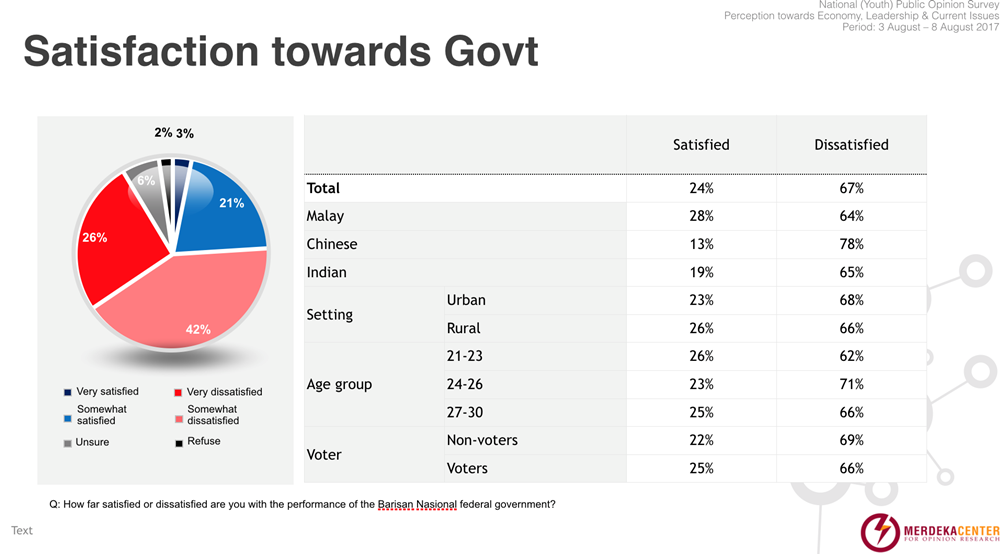
The recent National (Youth) Opinion Survey conducted by opinion research firm Merdeka Center asked youths how satisfied or dissatisfied they were with the performance of the BN federal government, to which two-thirds - 67 percent - answered that they were dissatisfied.
Only 24 percent said they were satisfied with the government’s performance.
High dissatisfaction rates were registered by respondents across race, urban and rural divides as well as between those registered to vote and those not registered.
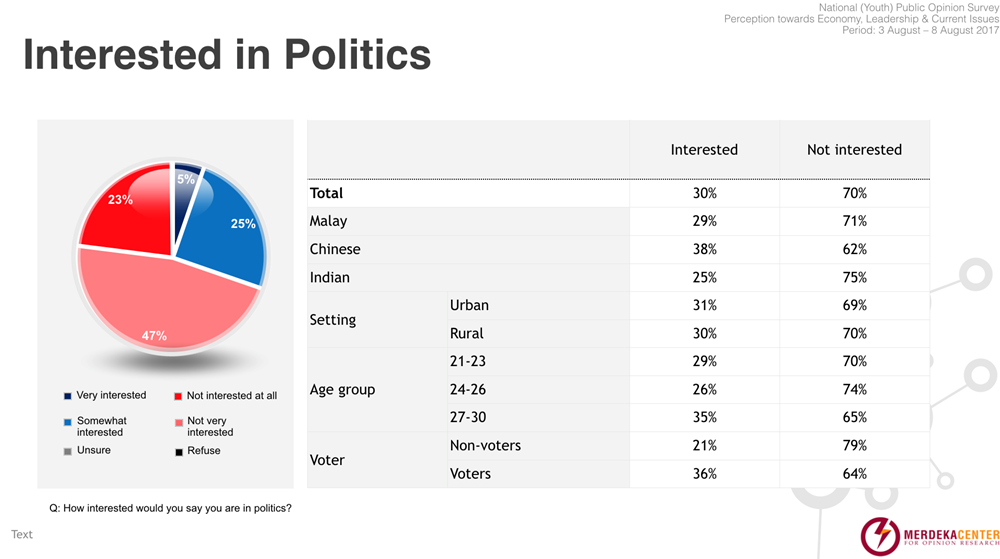
The survey, which looked at perceptions of the youth towards the economy, leadership and current issues, also asked respondents about their attitudes towards politics and found that an overwhelming majority (70 percent) were not interested in politics while a similar number of them (71 percent) felt they did not have any influence on the government of the day.
Some 75 percent of them felt that politics was “too complicated” for them to understand while more than half (54 percent) felt that most politicians did not care about the people...
Despite being highly dissatisfied with the BN government, polls show that the youth in the country are also dispirited with the political system as a whole - perhaps pointing to the failure of the Opposition to present a formidable alternative to capture their imagination.
The recent National (Youth) Opinion Survey conducted by opinion research firm Merdeka Center asked youths how satisfied or dissatisfied they were with the performance of the BN federal government, to which two-thirds - 67 percent - answered that they were dissatisfied.
Only 24 percent said they were satisfied with the government’s performance.
High dissatisfaction rates were registered by respondents across race, urban and rural divides as well as between those registered to vote and those not registered.
The survey, which looked at perceptions of the youth towards the economy, leadership and current issues, also asked respondents about their attitudes towards politics and found that an overwhelming majority (70 percent) were not interested in politics while a similar number of them (71 percent) felt they did not have any influence on the government of the day.
Some 75 percent of them felt that politics was “too complicated” for them to understand while more than half (54 percent) felt that most politicians did not care about the people.
Most of those interviewed (66 percent) also did not think that politicians, in general, were trustworthy and the same percentage believed politicians were, in fact, the “main problem in Malaysia”.
Another key finding from the poll was some 40 percent of respondents were not registered as voters despite being eligible, saying they did not have time to register or they felt that voting did not make a difference.
Not translating into Opposition support
Commenting on the results, Merdeka Center programme director Ibrahim Suffian deduced from the low interest shown in politics despite disaffection with BN that the Opposition has not been able to offer a formidable alternative to youth.
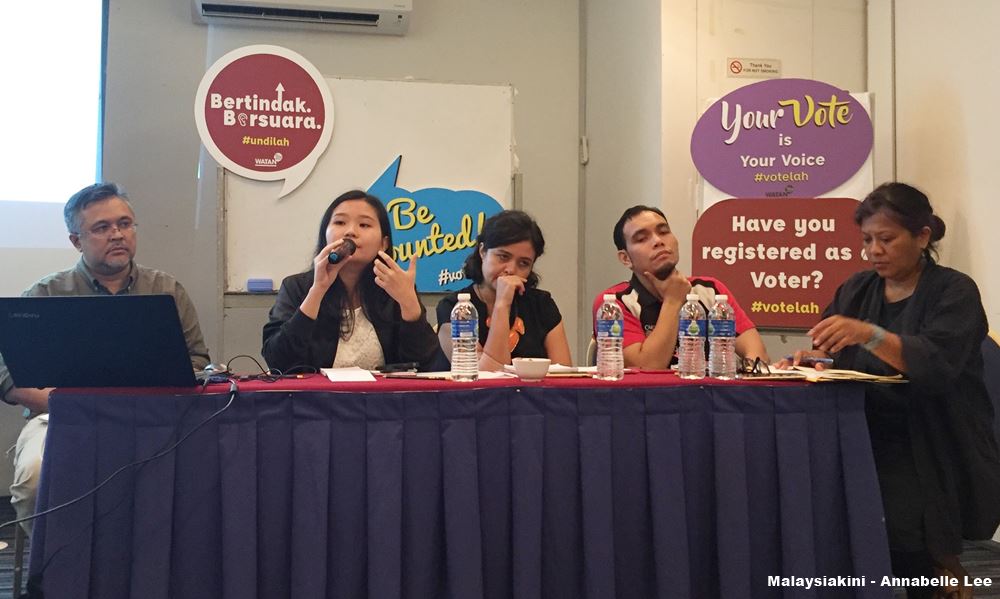
 “Opposition parties have not come together in a united way,” Ibrahim (photo) said at an ensuing panel discussion on the poll results at a hotel in Petaling Jaya last night.
Young voter and debating champion Jasmine Ho observed that much is needed to be done to engage young voters.
“Dissatisfaction with the government does not directly translate to support for the Opposition, as seen from their disinterest in politics and lack of faith in the existing political system.
“Politics should be more about issues and policies, not just about highlighting scandals,” Ho said.
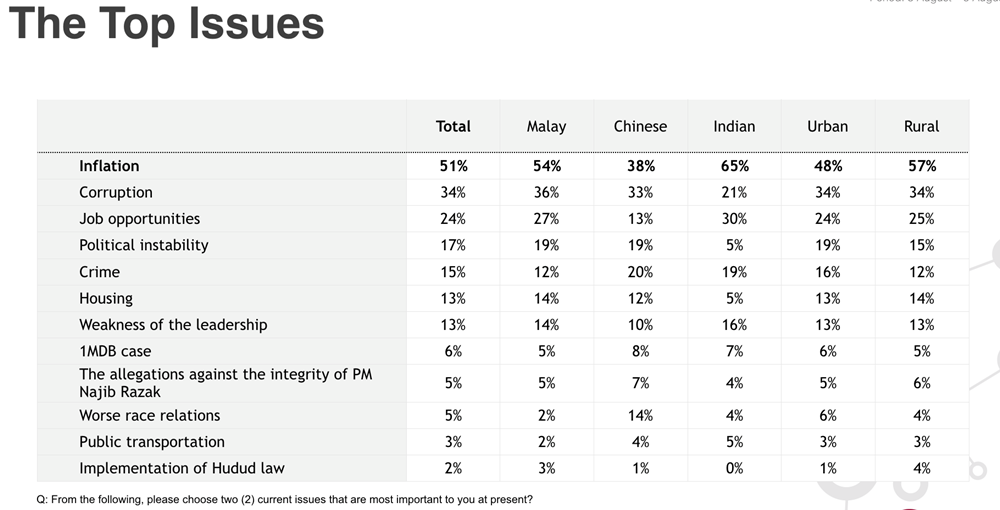
The poll also showed that at the top of concerns among the youth were economic issues, not politics.
Many said issues such as cost of living, inflation and job opportunities were causes for concern, compared with the six percent who said that the 1Malaysia Development Bhd (1MDB) affair was a “top issue”.
Lawyer Syahredzan Johan added that the failure of Opposition parties to capture this sentiment would serve as an advantage to BN, while Ibrahim questioned if voters would trust the Opposition enough to vote for them.
“Why do people vote for political parties? Government performance is but one reason.
“Political parties are also arenas where inter-communal interests are fought over, and issues of race and religion come into play. Identity politics.
“Therefore, despite being unhappy with the government, do young voters trust the Opposition to run the country?
“They might make trade-offs between race and religion, with economic issues when voting,” Ibrahim argued.
According to the Election Commission (EC), two-thirds of the 3.8 million (as of March 31) eligible Malaysians not registered to vote are between the ages of 21 and 30, making them the largest bank of non-voters in the country.
The poll, conducted over the phone between Aug 3 to 8 this year, involved 604 respondents between the ages of 21 and 30 from 165 parliamentary constituencies in 11 states and one federal territory in Peninsular Malaysia.
Jointly organised by the pollster and voting rights NGO Watan, this discussion was attended by more than 40 people.
Also on the discussion panel was gender activist and Musawah programme manager Suri Kempe and Watan executive director Masjaliza Hamzah.


Report this comment
Are you sure you want to delete this comment?
This action cannot be undone.