
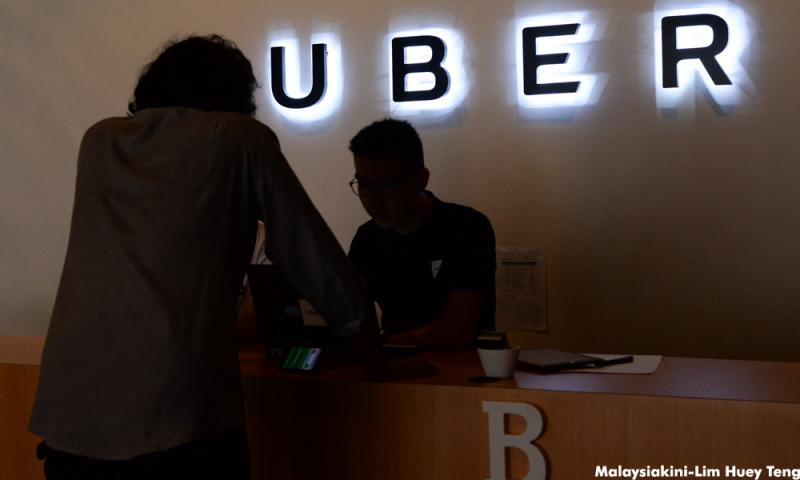
Report: Uber probes dealings in M'sia as potential DOJ suit looms
Faced with a potential criminal probe on overseas bribery in the US, e-hailing company Uber is conducting an internal investigation into whether any form of quid pro quo occurred in Malaysia.
Bloomberg reported that Uber’s lawyers are currently reviewing a series of financial deals and transactions purportedly tied to the Malaysian government that may have influenced lawmakers here, according to people with knowledge of the matter.
The lawyers are looking at a corporate donation of tens of thousands of dollars, announced in Aug 2016, to the Malaysian Global Initiative and Creativity Centre, which is a government-backed entrepreneur hub.
Around the same time, Retirement Fund Incorporated (KWAP) supposedly invested US$30 million in Uber, said people familiar with the deal, as reported by Bloomberg.
About a year later, Parliament passed a bill on ride-hailing laws that were favourable to Uber and others like it...
Faced with a potential criminal probe on overseas bribery in the US, e-hailing company Uber is conducting an internal investigation into whether any form of quid pro quo occurred in Malaysia.
Bloomberg reported that Uber’s lawyers are currently reviewing a series of financial deals and transactions purportedly tied to the Malaysian government that may have influenced lawmakers here, according to people with knowledge of the matter.
The lawyers are looking at a corporate donation of tens of thousands of dollars, announced in Aug 2016, to the Malaysian Global Initiative and Creativity Centre, which is a government-backed entrepreneur hub.
Around the same time, Retirement Fund Incorporated (KWAP) supposedly invested US$30 million in Uber, said people familiar with the deal, as reported by Bloomberg.
About a year later, Parliament passed a bill on ride-hailing laws that were favourable to Uber and others like it.
As such, lawyers are trying to determine whether there was any form of quid pro quo in this situation.
People familiar with the matter also reportedly said that Emil Michael and Eric Alexander, two former business executives at Uber, had key roles in these deal negotiations.
“Uber’s law firm is also asking questions about how Alexander came into possession of an India rape victim’s medical records, a document he regularly carried around with him for several months in 2015,” Bloomberg reported.
Malaysiakini is awaiting a response from Uber Malaysia.
Alexander declined to comment through a spokesperson, the international news agency said, while Michael did not immediately respond to requests for comment.
Uber has undertaken this review of its Asia operations as the US Department of Justice (DOJ) is conducting a federal probe into whether it broke laws against overseas bribery.
The company’s lawyers are examining suspicious activities in at least five Asian countries, Bloomberg said, that are China, India, Indonesia, Malaysia and South Korea.
An example of these activities includes an incident in Jakarta, Indonesia where an employee made multiple, small payments to police to continue operating in a space outside city zoning for businesses.
These transactions show up on the employee’s expense reports as “payments to local authorities”.
The employee has since been fired and the company’s head of Indonesia business Alan Jiang, who approved the expense report, was placed on a leave of absence and has since left Uber.
People with knowledge of the matter told Bloomberg that at least one senior member of Uber’s legal team decided not to report the incident to US officials when he learned of it late last year.
It is only after the DOJ approached Uber about possible violations of the Foreign Corrupt Practices Act that Uber informed officials about what happened in Indonesia.
The DOJ may be more lenient when a company voluntarily discloses information. It is also common for companies to conduct internal investigations in corporate fraud cases and report their findings to the DOJ.
Similarly, Reuters has also reported that a source familiar with the matter has confirmed that the Bloomberg report is accurate.
In late July this year, the Dewan Rakyat passed two bills amending the Land Public Transport (LPT) Act and the Commercial Vehicles Licensing Board (CVLB) Act to regulate e-hailing services such as Uber and Grab.


Are you sure you want to delete this comment?
This action cannot be undone.