



Selangor's voter discovery application dismissed, review to proceed
The Selangor government was denied a discovery application to have the addresses and localities of 136,272 dubious voters and to cross-examine the chairperson of the Election Commission (EC), Hashim Abdullah.
This follows a decision today by a three-member Federal Court bench led by Chief Justice Md Raus Sharif in refusing to grant leave to the state government.
"This is an interlocutory matter and the threshold under Section 96 of the Courts of Judicature Act 1964 is dismissed," the chief justice said...
The Selangor government was denied a discovery application to have the addresses and locality of 136,272 dubious voters and to cross-examine the chairperson of the Election Commission (EC), Hashim Abdullah.
A three-member Federal Court bench led by Chief Justice Md Raus Sharif refused to grant leave to the state government.
“We find there are no special circumstances to grant leave as there are no novel issues with regard to the seven questions posed before the court.”
"This is an interlocutory matter and the threshold under Section 96 of the Courts of Judicature Act 1964 and hence this application is dismissed," the chief justice said.
Despite the decision today, the hearing of the merits of the judicial review application to challenge the present redelineation exercise will continue, with case management fixed for tomorrow at the High Court in Kuala Lumpur.
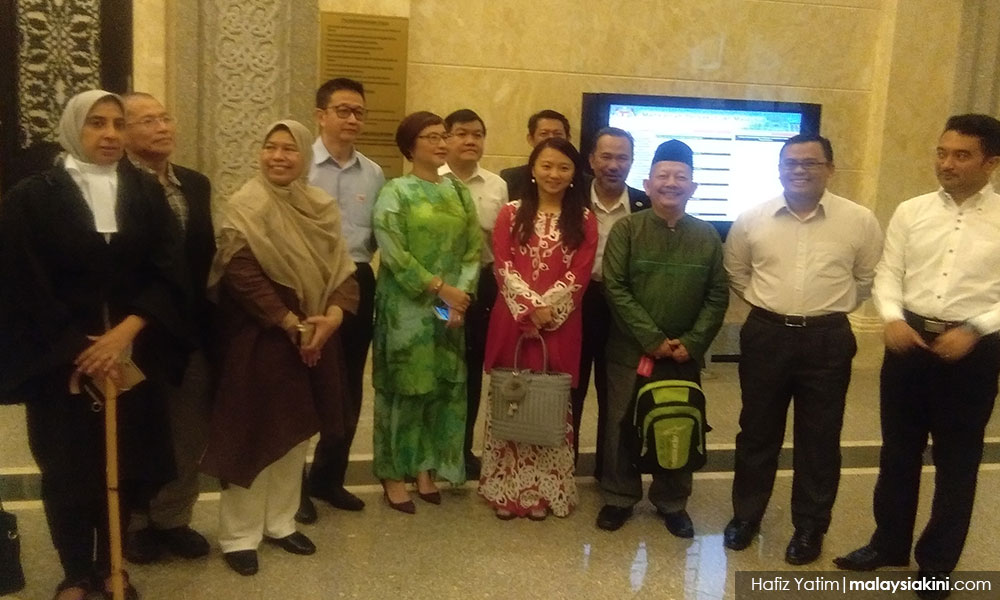
This was also affirmed by Selangor exco member Teng Chang Khim, who was present in court with other exco members, including Elizabeth Wong and state legislative assembly speaker Hannah Yeoh, state assemblyperson Dr Abdul Rani Osman from PAS and Ampang MP Zuraida Kamaruddin.
The EC is also appealing against an injunction granted by the High Court to prevent it from submitting its redelineation report to the prime minister by excluding the Selangor state.
This appeal has been fixed for hearing at the Court of Appeal on Oct 30.
Besides Raus, the other judges were Court of Appeal President Zulkefli Ahmad Makinuddin and Federal Court judge Zaharah Ibrahim.
EC won cases on appeal
With the decision today, it appears that the EC has won in all appeals at the Court of Appeal and Federal Court, despite an earlier decision by the High Court having gone the other way.
The Selangor government was represented by lawyers Cyrus Das, Ambiga Sreenevasan, Latheefa Koya and Lim Wei Kiet, while senior federal counsel Alice Loke and Azizan Md Arshad appeared for EC.
The Selangor government had filed the judicial review application to challenge the present redelineation exercise by the EC, and for the EC to publish a new notice. The KL High Court had on Dec 16 last year granted it leave to do so.
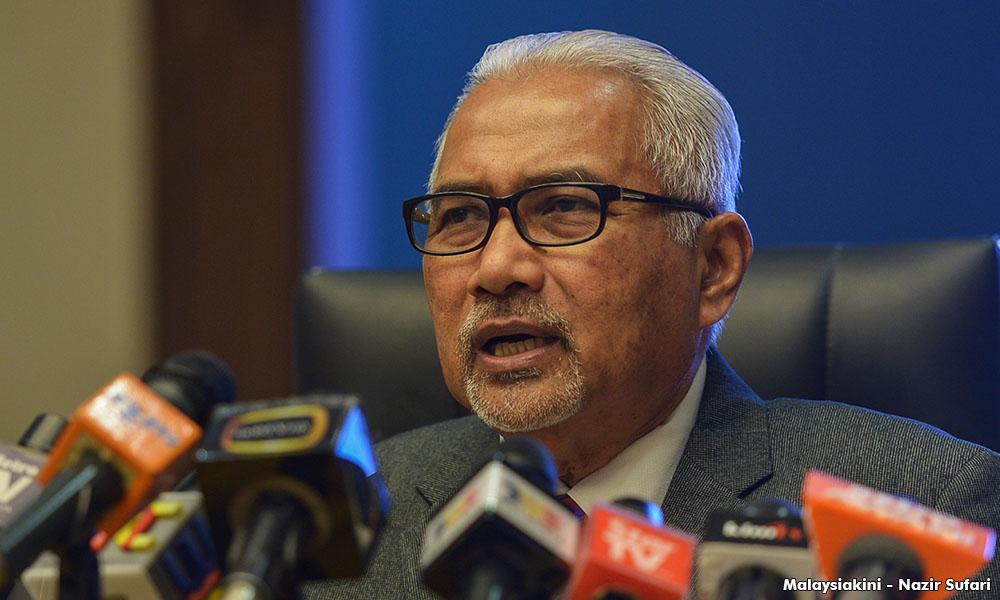 It filed the discovery application on Jan 13, this year and one of the applications made by the Pakatan Rakyat-led Selangor government to file the review was the existence of 136,272 voters, which only stipulated their localities but not the full addresses, and it also questioned Hashim (photo) on inconsistencies in his affidavit.
High Court judge Justice Azizul Azmi Adnan had, on March 9, partially granted the Selangor government discovery application by ordering the EC to furnish documents related to the 136,272 dubious voters for the year 1993 and 2004, for the state to study whether there had been a shift of voters.
However, the judge disallows the Selangor government's application to cross-examine Azmin.
The Court of Appeal then allowed EC's appeal on July 20, when senior federal counsel Amarjeet Singh told the court in his submissions that the EC does not possess the data of the 136,272 voters as the electoral roll for the 1993 and 2004 were destroyed as government documents are disposed of after seven years.
With that, the three-member bench led by Justice Mohd Zawawi Mohd Salleh allowed the EC's appeal not to hand over the documents and also dismissed the Selangor government's appeal to cross-examine Hashim.
Teng, who is a Selangor senior exco member, admitted that the dismissal of the discovery application would affect the state's judicial review application but pledged to shoulder on.
“I cannot understand how such an important evidence as to the data on the 136,272 voters could be destroyed by the EC. Nevertheless, we will try to resolve the problem as this involves the Federal Constitution and also the voters' rights to ensure their votes are cast in a fair judicial system,” he said.
Part of the declaration sought, as stipulated under Section 4 of the Thirteenth Schedule of the Federal Constitution, is that there must be an equal number of voters in a constituency and that the size of the constituency should roughly be the same.


Are you sure you want to delete this comment?
This action cannot be undone.