



'Allah' ban: BM-speaking Christians no threat to public order, argues lawyer
The Bahasa Malaysia-speaking native Christian community would not pose a threat to public order by using the word "Allah" as part of their religious practice, the Kuala Lumpur High Court heard today.
Lawyer Lim Heng Seng argued that instead, the ones who were threatening public order were those who protest against such practices or are attacking Christian places of worship.
"If there is any threat to public order, it is that fraction of the Muslim who is threatening public order and not the Christian community, said Lim, the leading counsel for Jill Ireland Lawrence Bill. For instance, (they make) accusations, holding demonstrations or attacking Christian holy places because of the use of the word 'Allah' by Christians in peace and harmony.
The Bahasa Malaysia-speaking Christian community would not pose a threat to public order by using the word "Allah" as part of their religious practice, the Kuala Lumpur High Court heard today.
Lawyer Lim Heng Seng argued that instead, the ones who were threatening public order were those who protest against such practices or are attacking Christian places of worship.
"If there is any threat to public order, (it is) by a (small) fraction of the Muslim community. For instance, (they make) accusations, hold demonstrations or attack Christian holy places because of the use of the word 'Allah' by Christians in peace and harmony.
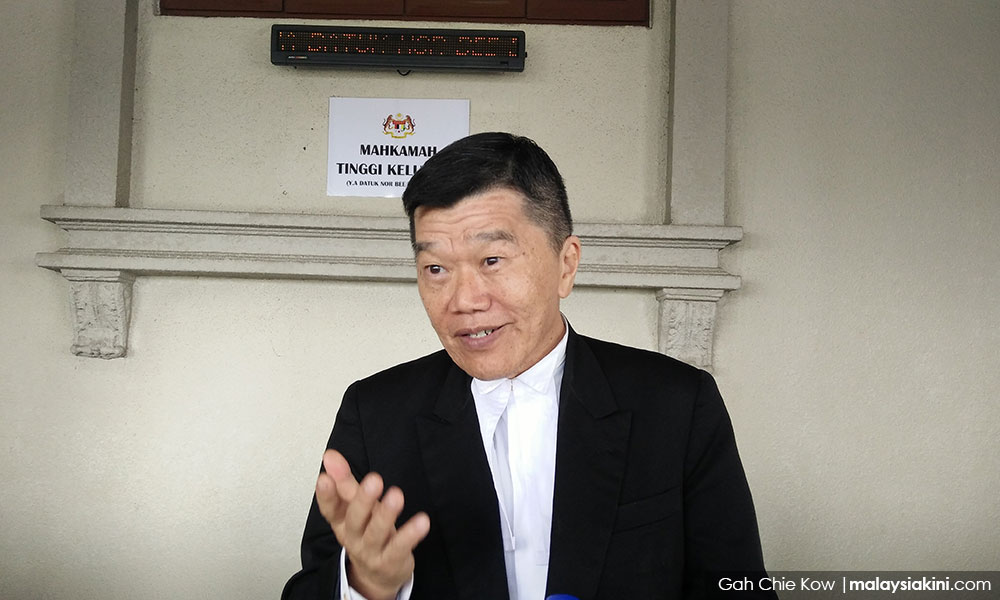
"It is that fraction of Muslims who are threatening public order and not the Christian community," said Lim (photo), who is representing Jill Ireland Lawrence Bill.
Jill Ireland, from Sarawak, is suing the government for seizing eight CDs containing the word "Allah" in 2008.
The CDs were returned to her on Sept 2015 following the decision of the Court of Appeal.
She, however, decided to continue with the trial and is seeking the court to quash the 1986 government directive which led to the seizure of her CDs.
She wants the court to declare that the native Bumiputra Christians from Sabah and Sarawak have a right to use all religious terminologies.
Lim told the court that Christians in Sabah and Sarawak have been using the word "Allah" for over 400 years as part of their worship.
"(Now) someone decided this is offensive and held demonstrations. Who is the one posing the threat?
"Is that what the rule of law is? For us (the minority) to give in?" he asked Justice Nor Bee Arifin.
Rule of law vs 'little Napoleons'
Lim told the court that the 1986 government directive banning the use of the word "Allah" by non-Muslims on the grounds of causing confusion and problems for public order was unconstitutional.
"If there is such confusion, the objective to deal with confusion must lie inadequate education by state religious authorities rather than prohibiting the religious rights of other faith communities," he said.
"It infringes (my client's) right to worship in Bahasa Malaysia, to practice their religion as guaranteed under Article 11 (1) and equality stipulated under Article 8 of the Federal Constitution.
"It impacts negatively on their freedom to practice their Christian faith in peace and harmony in any part of the federation as guaranteed by Article 3 of the Federal Constitution when their Christian publications were seized, detained and impounded by officers," he added.
Under the same Article of the Federal Constitution, he said, the government could not even formulate laws in Parliament in relation to religions professed by non-Muslims.
He questioned which laws allowed the government to impose a ban on other religions.
"It was these 'little Napoleons' who maintained that this directive is law. Is it not? Everything seems to be done by these 'little Napoleons' and where is the respect for rule of law?
"Where is the trust the people can place in the government?" Lim asked.
He also argued that home ministry had no basis to formulate such directive.
Arguing further, he said Allah is not exclusive to Islam and the word is not a personal name associated with God.
"This is not a copyright case. So do not argue if we have exclusive right and others who copied us had infringed our rights," he said, stressing that one religion should not dictate another faith.
The word "Allah" has become part and parcel of the faith that "Allah", for God, cannot be replaced by "Tuhan" for the Lord, according to him.
The word "Allah" not only appears in the Alkitab but also the native language, which includes Iban, Lunbawang, Tagal, Saban, Kayan, Kenyah, Penan and Berawan, he added.
"Prohibiting the word is tantamount to abolishing the Holy Scriptures which are fundamental to their religion together with illegalising all Christian Bahasa publications," he said.
Lim also emphasised that the 10-Point Solution which allowed the use of the word should have superseded the government directive, a circular issued by the home ministry.
By continuing to implement the government directive, he said, would penalise the younger generation of Christians who complied with the education policy prioritising Bahasa Malaysia.
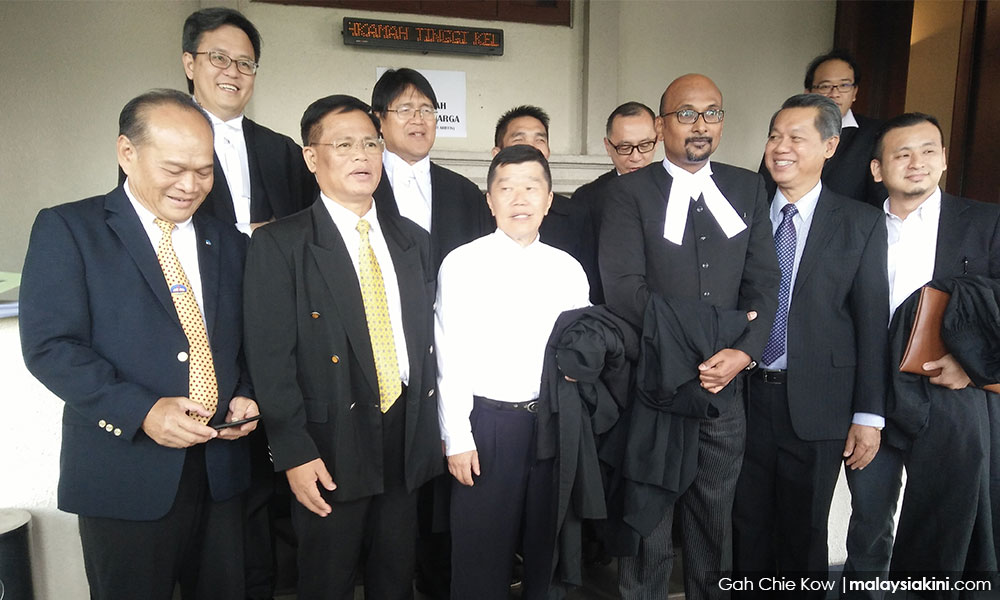
Also appearing in court were Jill's counsel Annou Xavier, Mansor Saat and Tan Hooi Ping while Shamsul Bolhassan represented the home ministry and the government.
Nine religious NGOs and churches, the MCA and the Bar Council held a watching brief.
The next hearing date is on Nov 2, where Shamsul will present his submission.


Report this comment
Are you sure you want to delete this comment?
This action cannot be undone.