



Budget 2018 must address inflation rate
MP SPEAKS | We expect Prime Minister Najib Abdul Razak to wax lyrical about the higher than expected economic growth as reflected in the recent GDP figures. Bank Negara Malaysia (BNM) has said given the strong growth in the first half of 2017 at 5.7 percent, the economy is expected to expand by more than 4.8 percent in 2017.
Thus, the corollary question to be asked by all, if Malaysia’s economy is doing so well, why are ordinary Malaysians on the streets feeling the pinch?
The answer is obvious. While BN leaders sing themselves praises over their supposed achievements, Malaysia’s inflation rate – which reflects the cost of living in the country, has been hitting record levels unseen since the global financial subprime crisis a decade ago...
MP SPEAKS | We expect Prime Minister Najib Abdul Razak to wax lyrical about the higher than expected economic growth as reflected in the recent GDP figures. Bank Negara Malaysia (BNM) has said given the strong growth in the first half of 2017 at 5.7 percent, the economy is expected to expand by more than 4.8 percent in 2017.
Thus, the corollary question to be asked by all, if Malaysia’s economy is doing so well, why are ordinary Malaysians on the streets feeling the pinch?
The answer is obvious. While BN leaders sing themselves praises over their supposed achievements, Malaysia’s inflation rate – which reflects the cost of living in the country, has been hitting record levels unseen since the global financial subprime crisis a decade ago.
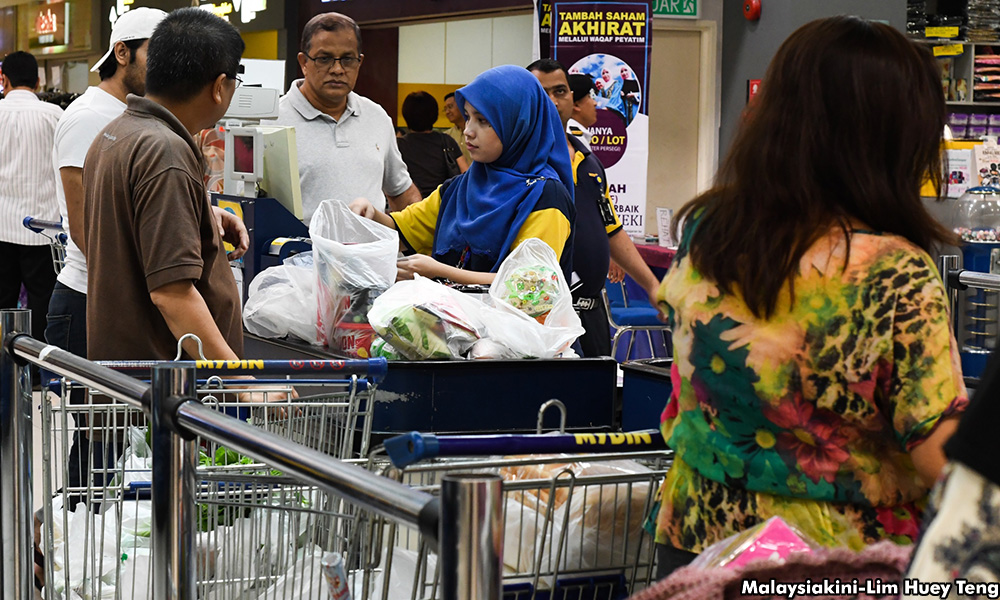
Malaysia recorded inflation of 4.3 percent year-on-year in September, the highest since March, due mainly to the rise in transportation costs and prices of food and non-alcoholic beverages.
According to the latest the consumer price index (CPI) released by the Statistics Department on Friday, the transportation segment has increased by 15.8 percent due to costlier fuel while the food and non-alcoholic drinks group rose by 4.6 percent.
To put the above figures in context – despite the implementation of GST in April 2015 which resulted in a spike in inflation, the CPI had only increased to 2.1 percent. In 2016, the inflation rate remained at 2.1 percent.
Back then, the BN ministers argued that the rising inflation was only a temporary “one-off,” and assured that the inflation rate would decline about a year after the implementation of the GST. However, the CPI not only remained stubborn, it has accelerated to four percent a year to date in 2017, demonstrating how wrong the BN administration has been.
In fact, Malaysia is currently suffering from negative real interest rates. A survey of local banks would show that they are only paying up to interests of 3.05 percent for one-month fixed deposits. If one keeps cash in a current or savings account as most Malaysians do, the gap would be even bigger.
This means our hard-earned savings kept in the banks are worth less tomorrow than they are worth today.
Hence, not only have Malaysians gotten markedly poorer globally as a result of the massive depreciation of the ringgit over the past four years, our wealth is shrinking even in local ringgit terms.
Therefore, the single biggest economic threat which must be addressed in this Friday’s 2018 Budget is Malaysia’s inflation rate. If Najib decides to gloss over the issue by pulling the wool over the people’s eyes in an election year, the consequences for the people will be dire as Malaysians will be faced with even higher cost of living, in an environment of stagnant wages and rising unemployment, especially among youths.
TONY PUA is the DAP national publicity secretary and Petaling Jaya Utara MP.
The views expressed here are those of the author/contributor and do not necessarily represent the views of Malaysiakini.


