



Custodial death autopsies: A process in dire need of reform
COMMENT | It has long been established as common law that deaths occurring while a person is in the custody of the state are of particular concern, as they happen behind closed doors, and involve persons who are exceptionally vulnerable.
All such cases must be investigated carefully and thoroughly, for the burden is on detention authorities to account for the treatment of the deceased.
This is an urgent call for reform of the medico-legal death investigative procedure in cases of custodial death.
Police lock-ups, prisons, and immigration detention centres must be safe places for every human being and should not be turned into potential crime scenes. All such deaths are extremely serious and affect social order.
Custodial death strikes at the very heart of the rule of law and is one of the most heinous human rights violations imaginable.
Pathologists who conduct post-mortem forensic investigations have an obligation to ensure that their medical observations and conclusions are valid, and do not breach the trust and confidence of the public.
However, the lack of accountability in the preparation of the post-mortem report – the deal-breaker for investigating authorities to decide if a death is suspicious or criminal – has in some cases allowed detention authorities to dodge liability.
Whenever such a case arises, it is not uncommon to find the post-mortem report citing a “heart attack” or other natural causes as the deceased’s cause of death – which exonerates detention authorities from any blame, even if there are injuries on the body and other suspicious circumstances...
COMMENT | It has long been established as common law that deaths occurring while a person is in the custody of the state are of particular concern, as they happen behind closed doors, and involve persons who are exceptionally vulnerable.
All such cases must be investigated carefully and thoroughly, for the burden is on detention authorities to account for the treatment of the deceased.
This is an urgent call for reform of the medico-legal death investigative procedure in cases of custodial death.
Police lock-ups, prisons, and immigration detention centres must be safe places for every human being and should not be turned into potential crime scenes. All such deaths are extremely serious and affect social order.
Custodial death strikes at the very heart of the rule of law and is one of the most heinous human rights violations imaginable.
Pathologists who conduct post-mortem forensic investigations have an obligation to ensure that their medical observations and conclusions are valid, and do not breach the trust and confidence of the public.
However, the lack of accountability in the preparation of the post-mortem report – the deal-breaker for investigating authorities to decide if a death is suspicious or criminal – has in some cases allowed detention authorities to dodge liability.
Whenever such a case arises, it is not uncommon to find the post-mortem report citing a “heart attack” or other natural causes as the deceased’s cause of death – which exonerates detention authorities from any blame, even if there are injuries on the body and other suspicious circumstances.
Post-mortem irregularities
On Feb 8, 2017, S Balamurugan was found dead in police custody at the North Klang police district headquarters. The 44-year-old suspect had been taken to the magistrate’s court the day before for a remand order, where he was seen to be badly bruised, in a weakened state and unable to walk.
When offered a sip of water by his lawyer, he had blood flowing out of his mouth and nose. Upon seeing this, the magistrate ordered Balamurugan to be released and taken to the hospital. However, the police took him back to the police station, where he later died.
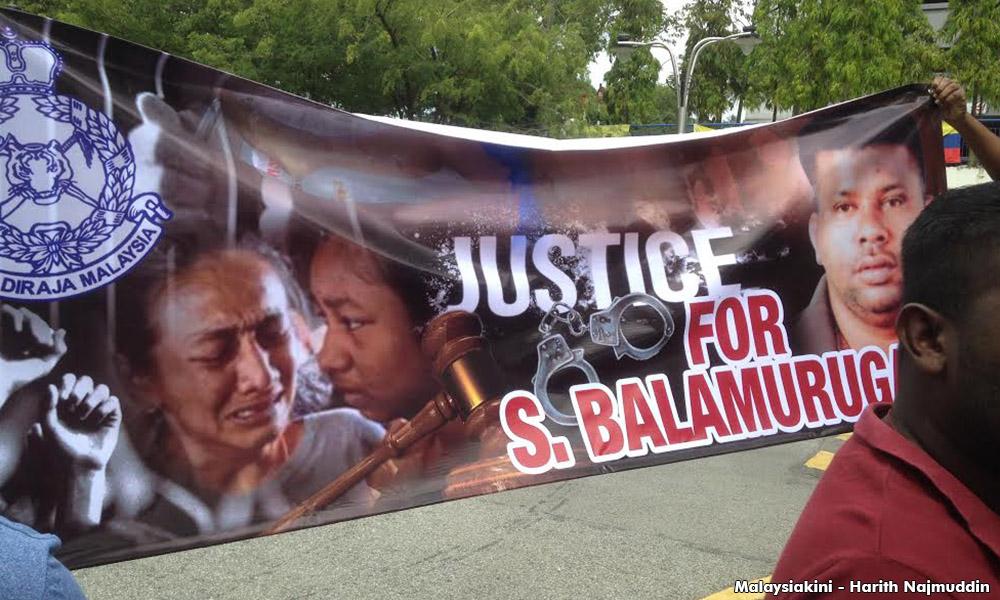
The next day, the pathologist from the Tengku Ampuan Rahimah Hospital in Klang, Dr Kartini Md Arif, concluded that Balamurugan had died from “heart problems”.
After much public uproar and protest – and an application by the deceased’s family to the High Court in Shah Alam – a second post-mortem was conducted at the Kuala Lumpur Hospital, which concluded that the cause of death was “coronary artery disease with multiple blunt force trauma”.
A similar pattern of events took place in the case of A Kugan, arguably the most infamous custodial death case to date. On Jan 20, 2009, the 22-year-old died while in the custody of the Taipan police station in Subang Jaya.
The initial post-mortem conducted by Dr Abdul Karim Tajudin at Serdang Hospital stated that Kugan had “22 categories of external wounds,” but it was concluded rather dubiously that the cause of death was acute pulmonary edema (fluid accumulation in the lungs).
As in the case of Balamurugan, after much public uproar and protest, a second post-mortem was conducted at the Universiti Malaya Medical Centre, which revealed that Kugan had “45 categories of external injuries,” a wide range of internal injuries, with death being caused by “acute renal failure due to rhabdomyolysis due to blunt trauma to skeleton muscle”.
In other words, he was beaten so badly until the skeletal muscle damage he sustained resulted in acute kidney failure, causing his death.
It should also be noted that Dr Abdul Karim, the pathologist who conducted the initial post-mortem, was subsequently found guilty of professional misconduct by the Malaysian Medical Council for the preparation of the post-mortem report and was reprimanded.
Accountability for post-mortem process
Over the years, there have been many requests from families of those who died in custody for a second post-mortem to be conducted, when the initial post-mortem report makes inexplicable conclusions that ignore injuries and the warning signs of custodial death.
It must be emphatically stated that this state of affairs cannot be allowed to become an established pattern.
The protracted process in determining the true cause of death, the public outrage, and the demands for a second post-mortem speak volumes of the credibility of the post-death forensic investigative procedure. It is also a waste of time and resources on all fronts, and unnecessarily extends the victim’s family’s period of grief and sense of injustice.
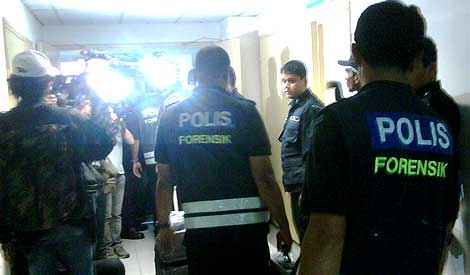
One way to maintain the integrity and credibility of the post-mortem reports is to subject them to an audit process – such as recommended by the Shipman Inquiry in the United Kingdom. The inquiry’s investigation into the deaths caused by Dr Harold Shipman, who was convicted of murdering about 250 of his patients, prompted reforms of the coronial system, including the death certification process.
One could consider the establishment of a panel of qualified doctors, who could be recruited on a part-time or sessional basis to act as second-level certifiers in dealing with custodial death cases. The panel doctors should also be from different hospitals, to ensure that they are independent of one another.
Panel doctors may also be tasked to perform retrospective checks on documentation relating to custodial deaths. It is feasible, for example, to audit at least one death among the deceased for every prison, lock-up facility and immigration detention centres every two to three years, and up to 10 percent of deaths occurring in each institution. Checks may be targeted where certain institutions record an unusually high number of deaths.
One crucial issue revealed by the Shipman Inquiry was that pathologists were often supplied with inadequate information to allow them to place their findings in context.
The inquiry thus recommended that adequate background information about the death should be made available to the pathologist, who are also encouraged to liaise with the family of the deceased and persons who last saw the deceased.
In short, the post-death forensic investigative procedure should be made in light of the surrounding circumstances – not what is “officially” said to have happened to the deceased.
Next: Are Malaysian pathologists trained to 'think dirty'?
ERIC PAULSEN is the executive director of Lawyers for Liberty. LFL lawyers have represented the families of A Kugan, Karuna Nithi and S Balamurugan in civil claims and inquiries into their deaths.
The views expressed here are those of the author/contributor and do not necessarily represent the views of Malaysiakini.


Are you sure you want to delete this comment?
This action cannot be undone.