




Foreign markets provide better yield for EPF
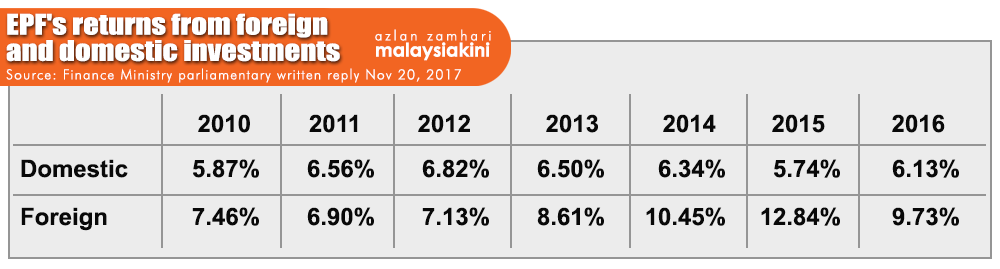
EPF's investment abroad has been providing higher returns than domestic investments since 2010, said the Finance Ministry.
In a parliamentary written reply, the ministry said EPF's foreign portfolio annual yield was between 7.13 percent and 12.84 percent between 2010 to 2016.
In contrast, the returns on EPF's domestic portfolio provided between 5.74 percent and 6.82 percent during the same time period.
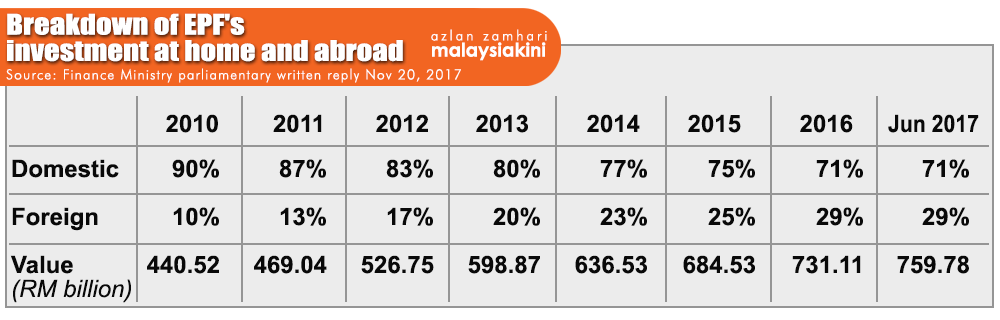
EPF's exposure abroad has been increasing incrementally. In 2010, 10 percent of its assets were held abroad. As of June this year, the figure stood at 29 percent or RM220.34 billion.
This means that EPF's exposure abroad has increased fivefold since 2010 (RM44.05 billion at the time).
The investments are spread across 40 countries, in 25 currencies...
EPF's investment abroad has been providing higher returns than domestic investments since 2010, said the Finance Ministry.
In a parliamentary written reply, the ministry said EPF's foreign portfolio annual yield was between 7.13 percent and 12.84 percent between 2010 to 2016.
In contrast, the returns on EPF's domestic portfolio provided between 5.74 percent and 6.82 percent during the same time period.
EPF's exposure abroad has been increasing incrementally. In 2010, 10 percent of its assets were held abroad. As of June this year, the figure stood at 29 percent or RM220.34 billion.
This means that EPF's exposure abroad has increased fivefold since 2010 (RM44.05 billion at the time).
The investments are spread across 40 countries, in 25 currencies.
The MOF also said foreign investments allowed EPF to spread its risk.
"Apart from decreasing the risks (involved in) the concentration of assets domestically, (investing abroad) allows EPF to access various quality investments.
"Foreign markets also allow better liquidity," it said.
The ministry also stated that this did not mean that the EPF was neglecting the local markets as the fund's domestic portfolio has been increasing by seven percent on average during the same period.
However, it was unable to specify what EPF does abroad.
"Disclosure of positions in a certain company could potentially affect market movements and cause an unfair perception of that investment," it said.
The ministry was responding to Kuala Langat MP Abdullah Sani Abdul Hamid, who sought the details of EPF's foreign investments from 2013 until July 31, 2017.
EPF's portfolio abroad came under scrutiny after Prime Minister Najib Abdul Razak pledged to the White House in September that the fund will invest more money to the United States.


Are you sure you want to delete this comment?
This action cannot be undone.