


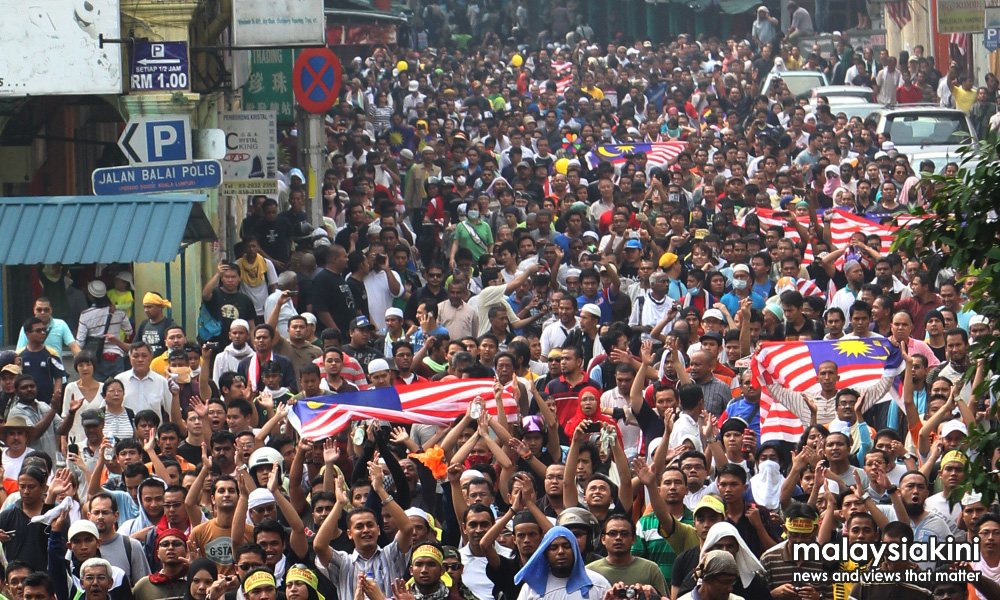

Electoral manipulation will impede development, says researcher
Electoral manipulations in Malaysia will hamper the country's growth in the long-run.
Political science researcher Kai Ostwald said this is due to the direct and indirect costs entailed by the electoral manipulations in the country.
Direct costs include inefficient budgetary allocations and resultant fiscal burdens, while indirect costs are disillusionment and subsequent disengagement with the political system among a substantial portion of the electorate.
"Ultimately, these costs impede Malaysia's efforts to attain higher levels of development," Ostwald said in his academic paper titled "Malaysia's Electoral Process: The Methods and Costs of Perpetuating Umno Rule" published last month.
He noted that Malaysia's rapid development and lack of credible opposition in the first few decades after independence enabled BN to secure legitimacy and strong support from segments of the electorate.
However, he said this model is difficult to sustain over the long run.
As Malaysia becomes more developed, he said the growth curve will flatten and the previously large strides in development will become more modest...
Electoral manipulations in Malaysia will hamper the country's growth in the long-run.
Political science researcher Kai Ostwald said this is due to the direct and indirect costs entailed by the electoral manipulations in the country.
Direct costs include inefficient budgetary allocations and resultant fiscal burdens, while indirect costs are disillusionment and subsequent disengagement with the political system among a substantial portion of the electorate.
"Ultimately, these costs impede Malaysia's efforts to attain higher levels of development," Ostwald said in his academic paper titled "Malaysia's Electoral Process: The Methods and Costs of Perpetuating Umno Rule" published last month.
He noted that Malaysia's rapid development and lack of credible opposition in the first few decades after independence enabled BN to secure legitimacy and strong support from segments of the electorate.
However, he said this model is difficult to sustain over the long run.
As Malaysia becomes more developed, he said the growth curve will flatten and the previously large strides in development will become more modest.
The opposition today also presents a more credible alternative to Umno for significant parts of the electorate, he added.
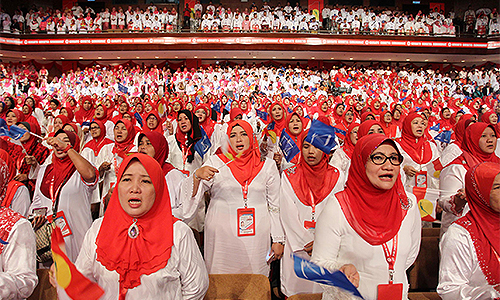
"BN's resilience despite these fundamental changes brings into sharp focus the extent to which manipulations of Malaysia's electoral process entrench BN's dominance.
"As argued by a growing body of research on electoral malpractice, such manipulations can impose substantial social, political and economic costs," he said.
For example, Umno's campaign during the 13th general election (GE13) where Islam played a central role further distanced minority communities from the government, he said.
The outcome of GE13 also caused disillusionment among some Malaysians, who felt more than ever like "second-class citizens", he said, resulting in them wanting to leave the country.
"As outward migrants are disproportionately highly educated, this exacerbates Malaysia's already serious brain drain problem, which the World Bank warned significantly impedes Malaysia's economic development," Ostwald said.
While some sought to leave Malaysia, others turned their attention towards inducing change through civil society activism, he said.
Ultimately, electoral malpractices in Malaysia threatens to deepen already substantial splits in the country, he said.

Ostwald earlier pointed out that Malay voters were disproportionately likely to support Umno which the ruling party has used to its favour through malapportionment, gerrymandering, its power over state apparatuses and various other means.
"As Umno's grip on power is ensured ever more exclusively by a narrow constituency whose electoral influence is amplified by malapportionment, its incentives to appeal to broader segments of Malaysia's population, predominantly the ethnic minorities and urban dwellers, diminish.
"Marginalised in electoral politics, these groups will either retract further from politics or engage in increasingly confrontational extra-institutional politics.
"Both avenues entrench the sense of differentiated citizenship in an already divided Malaysia," he said.


Are you sure you want to delete this comment?
This action cannot be undone.