


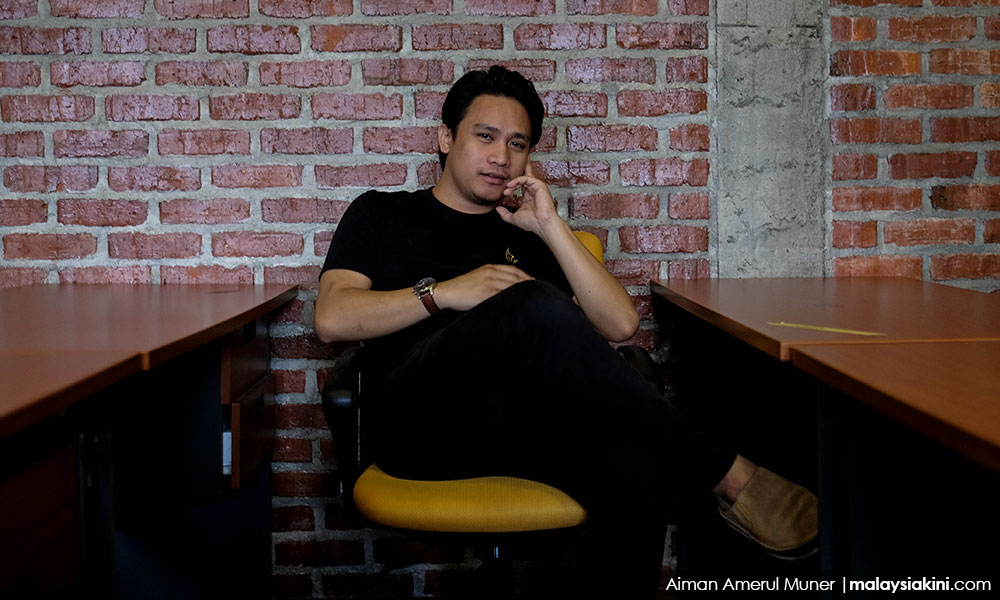

Empowering youths a labour of love for Englishjer founder
MALAYSIANS KINI | Conducting training programmes for English empowerment has grown to be a labour of love for 26-year-old Abdul Qayyum Jumadi.
Abdul Qayyum said he initially founded Englishjer in 2013 as a social impact movement targeted towards urban and sub-urban youths, launched on an online platform to fill what he felt at the time was a lack of content that could help encourage more Malaysians to learn the language.
The name itself - taken from a Malay colloquial slang, which translates to “just English” – reflected its fun and casual approach towards learning the language.
Now with nearly 300,000 followers on Twitter and 40 videos uploaded on their YouTube channel, Englishjer has since expanded offline to carry out camps and various training classes for teenagers and young adults.
Part of the programme’s attraction, the Universiti Malaya law graduate revealed, was in its branding as a fun way to train participants to be more comfortable speaking in English.
“I don’t really emphasise speaking properly or having the best vocabulary. I sometimes confuse my prepositions.
“Even my own sentence structure may be here, there and everywhere, but that’s what we are trying to tell people. It's not really about having a serious command of the language,” he said during a recent interview.
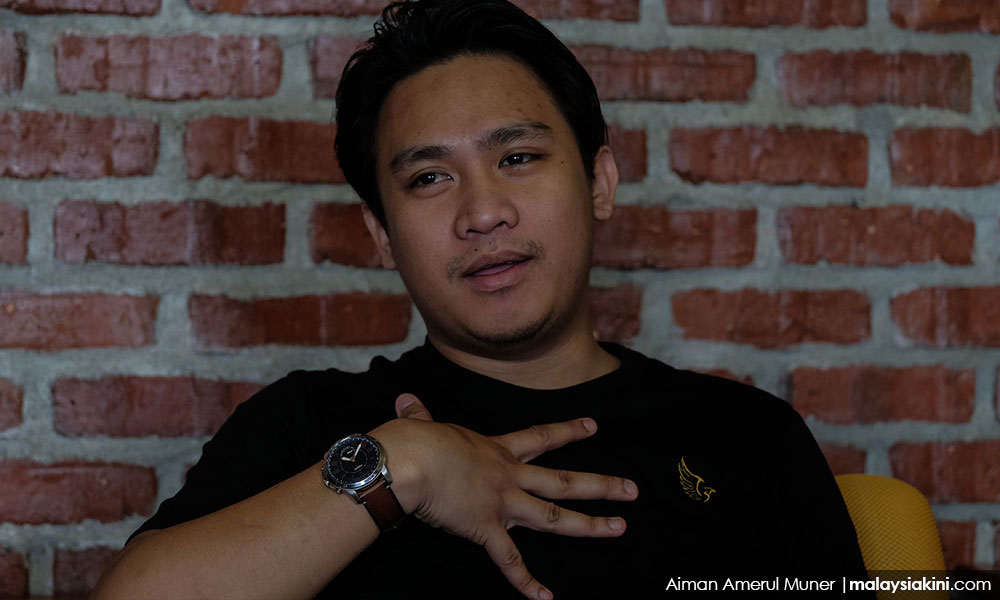
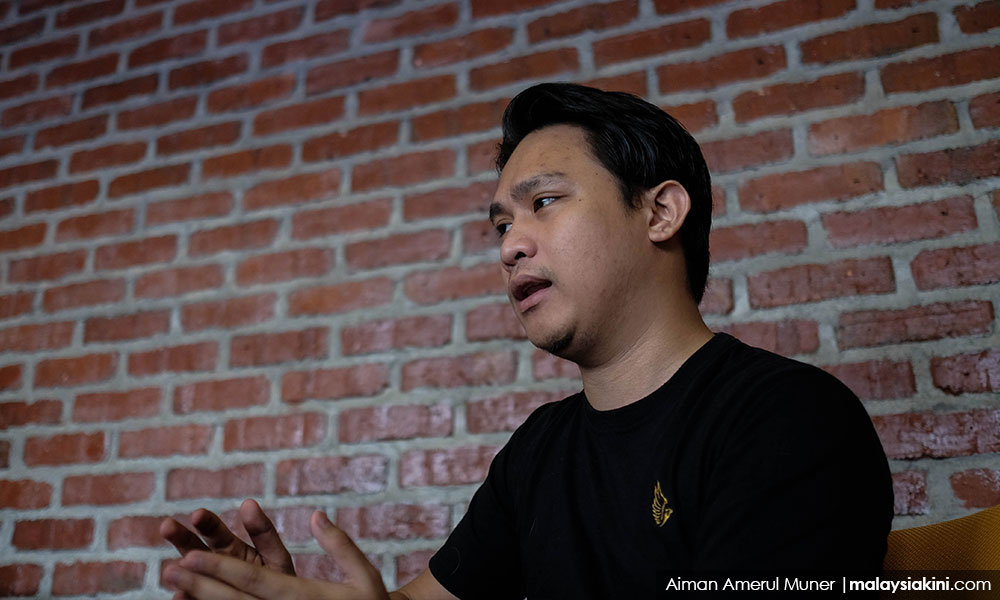
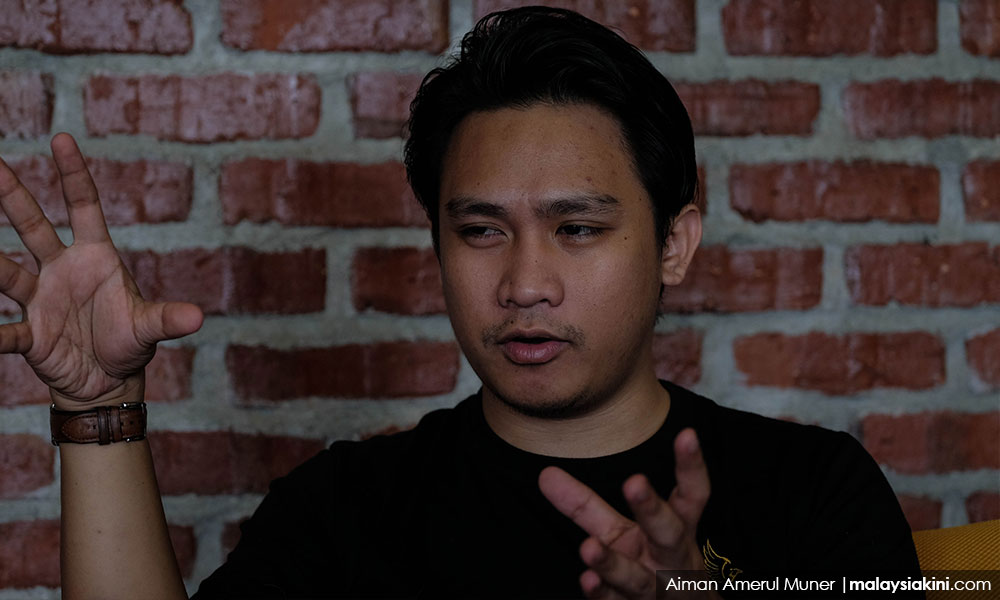
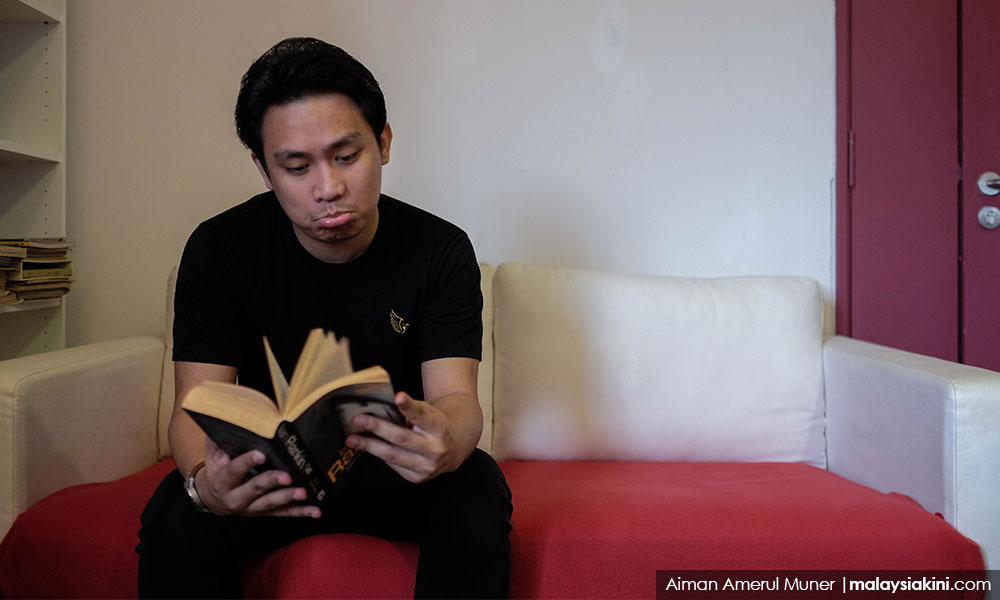
Growing up in Kota Kinabalu, Abdul Qayyum (photo) said his family did not speak much English at home. His parents, however, enrolled him in a school where the majority of the students were non-Malays, and so he was encouraged to pick up more of the language.
His personal love for the language was further developed through watching cartoons, some of which he admitted were "not very kid friendly,” as well as reading newspaper comic strips, including international publications like The Guardian.
With an underlying passion for communication, Abdul Qayyum said his main motivation to learn English was because he wanted to understand the world, looking at the language as a tool for connectivity.
The programme director for Englishjer shares his views on importance of the language, common challenges faced in the process of learning as well as their future plans, in his own words:
I WASN'T REALLY A GOOD STUDENT. I was just good in English. In school the teachers were really supportive.
I don’t know if I was special or they saw potential in me, but I remember when I was 10 and my teacher read my essay that I wrote for the class, for other UPSR students.
The students then came to me and asked for tips. It was wonderful for me to have a teacher like this.
ENGLISHJER STARTED WITH JUST ME FLEXING MY WRITING MUSCLES. I wanted to see if I could do something useful with it, and I was at the time involved with creating content for a local company.
They were looking for something to explore in terms of videos and social media, so I decided to create Englishjer and see how well it could go...
MALAYSIANS KINI | Conducting training programmes for English empowerment has grown to be a labour of love for 26-year-old Abdul Qayyum Jumadi.
Abdul Qayyum said he initially founded Englishjer in 2013 as a social impact movement targeted towards urban and sub-urban youths, launched on an online platform to fill what he felt at the time was a lack of content that could help encourage more Malaysians to learn the language.
The name itself - taken from a Malay colloquial slang, which translates to “just English” – reflected its fun and casual approach towards learning the language.
Now with nearly 300,000 followers on Twitter and 40 videos uploaded on their YouTube channel, Englishjer has since expanded offline to carry out camps and various training classes for teenagers and young adults.
Part of the programme’s attraction, the Universiti Malaya law graduate revealed, was in its branding as a fun way to train participants to be more comfortable speaking in English.
“I don’t really emphasise speaking properly or having the best vocabulary. I sometimes confuse my prepositions.
“Even my own sentence structure may be here, there and everywhere, but that’s what we are trying to tell people. It's not really about having a serious command of the language,” he said during a recent interview.
Growing up in Kota Kinabalu, Abdul Qayyum (photo) said his family did not speak much English at home. His parents, however, enrolled him in a school where the majority of the students were non-Malays, and so he was encouraged to pick up more of the language.
His personal love for the language was further developed through watching cartoons, some of which he admitted were "not very kid friendly,” as well as reading newspaper comic strips, including international publications like The Guardian.
With an underlying passion for communication, Abdul Qayyum said his main motivation to learn English was because he wanted to understand the world, looking at the language as a tool for connectivity.
The programme director for Englishjer shares his views on importance of the language, common challenges faced in the process of learning as well as their future plans, in his own words:
I WASN'T REALLY A GOOD STUDENT. I was just good in English. In school the teachers were really supportive.
I don’t know if I was special or they saw potential in me, but I remember when I was 10 and my teacher read my essay that I wrote for the class, for other UPSR students.
The students then came to me and asked for tips. It was wonderful for me to have a teacher like this.
ENGLISHJER STARTED WITH JUST ME FLEXING MY WRITING MUSCLES. I wanted to see if I could do something useful with it, and I was at the time involved with creating content for a local company.
They were looking for something to explore in terms of videos and social media, so I decided to create Englishjer and see how well it could go.
ENGLISHJER STARTED ON TWITTER. I felt people on Twitter are more open towards humour and towards discussing things.
On Twitter, people have direct access to one another, to argue and discuss a topic.
Twitter is also more concise so people tend to not go everywhere with their comments.
THE PEOPLE WE WANT TO TARGET ARE ALSO ON OTHER SOCIAL MEDIA such as WeChat, Facebook.
So we try to adapt our Twitter module to other platforms.
We go on YouTube for the videos, and on Facebook to explain things in more long form articles.

WE WANT TO CREATE A CONDUCIVE ENVIRONMENT for people who want to learn, who want to ask questions.
That's also partially why the programme was started.
WHAT IS MOST IMPORTANT FOR US, IS YOU ARE COMFORTABLE IN YOUR OWN TONGUE. However you speak, whether your English ada ‘lah’ or your English has this quirkiness, your English has a Kelantan accent, embrace that.
That’s what makes English actually great. That’s why English is the language used for everything…We can adapt it to the way we originally speak.
WE AT ENGLISHJER DON’T REALLY MIND OR CARE SO MUCH ABOUT PEOPLE PUTTING ON ACCENTS. It could be their personal feelings about what makes a good English speaker.
If you are already okay in the language, we don’t really care how you speak.
But it can be a dampener to people who want to learn, when they think they need to have an accent to be good.
WHAT WE WANT IS TO BREAK PEOPLE'S SHELL OF FEAR TOWARDS ENGLISH. We had our volunteers, professional lecturers and teachers who helped us out when we do camps or activities.
We had a poetry event and the participants said they liked poetry, but were afraid to perform in public. So we turned off the lights.
We also published a series of 100 articles by aspiring writers, so they would have a sense of accomplishment and be encouraged to write more.
MIMICKING SOMEONE YOU LIKE IS A GOOD WAY TO LEARN ENGLISH. But if you focus too much on that, you will miss out on the rules, the grammar, the sentence structure…if you focus too much on mimicking accents.
It helps if you want to improve fluency, but it wouldn’t help you technically.
So it’s always a balancing act.
IF YOU WANT TO IMPRESS A BOY BY SPEAKING ENGLISH, IT IS REALLY UP TO YOU. But we focus on the learners and we tell them, you have to be comfortable with yourself first.
Speak how you want to speak. Speak to reflect your ideals, your culture, your background, your education.
DON’T EVER FORGET WHY LANGUAGE IS THERE IN THE FIRST PLACE. It is to communicate. It is to make people feel things. It is to get your message across.
So that’s what we tell people.
I WOULD SOMETIMES USE MALAY AND ENGLISH TOGETHER, so our participants don't get intimidated. They (participants) would say, “Abang ni okay je. Dia cakap English dengan Melayu.” (This guy is cool, he mixes English and Malay).
Because like I said, there’s always a problem we would like to solve and a lot of it involves identity.
Identity in terms of, “If I learn English, would I be less Malay? Would it erode my Malay culture?”
WE NEED TO BE THAT EXAMPLE. I always tell my team of volunteers, these people have some insecurity with their identity. You must show them that you are still Malay. You don’t need to have an English accent or an American accent.
You must show them that you still enjoy things that they enjoy. Just that you have an extra edge.
You are still that boy from Kokdiang or Lahad Datu. But you can speak English. And it has opened up so many opportunities for you. And you can actually improve who you are, when you are exposed to more things.
IF YOU WANT TO BE A PART OF THAT BIGGER CONVERSATION, you have to learn English. Right now there is the issue surrounding Jerusalem. If you want to know more about that, you can’t just read the Malay language news on it.
You can expound and explore more knowledge with English. We always tell our participants that.
ACCESS TO ENGLISH MATERIALS IS THE LEAST OF OUR PROBLEMS. It is used everywhere on television, books, music, the Internet. The bigger issue is for educators to maximise use of these materials.
Our issue is when people say they don’t read, watch or listen to these materials.
We see that as a problem.
THE CHALLENGE NOW WITH YOUNGSTERS IS TO GET THEM TO WANT TO LEARN ENGLISH. There is a need for a stronger effort to make English really relevant for these people.
And it’s not just really people who don’t want to learn, it is also people who don’t want to improve themselves.
So when I talk about English empowerment, I want to make English interesting and bring people to open up when they learn English.
SOCIETY SHOULD CHANGE. It still happens in the Malay-centric media, people who speak English are mocked or portrayed as a funny character.
OUR IMMEDIATE PLANS include ongoing research. What we are doing is we are going to every state to find out what the issues in the informal system of learning English are.
We want to know what the problem is with your friends or your environment that prevents you from learning English.
MALAYSIANS KINI is a series on Malaysians you should know.
Previously featured:
Living life in the face of muscular atrophy
Lighting the way for neglected girls
The rebel educator who seeks to enlighten people
Rendering aid to the Rohingya through education
Bringing a ray of hope for refugee children


