


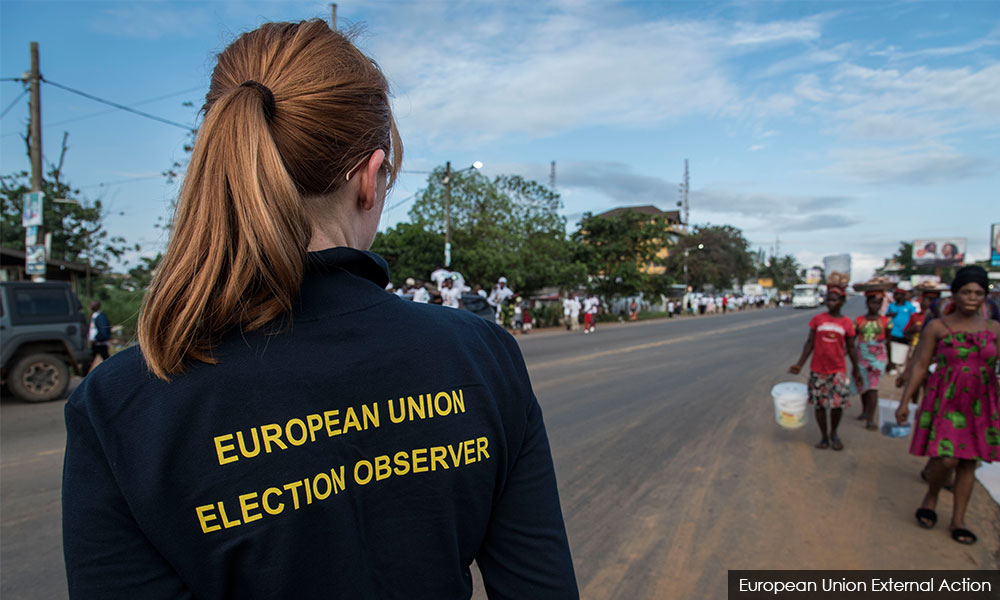

We help legitimise elections, build public trust, say observers
Malaysia is among the few Southeast Asian countries that do not welcome reputable international election observer groups to its shores.
Though the country is hardly a torchbearer of good electoral practices, this has not stopped reputable international election observer groups from recruiting Malaysians for their missions around the world.
For activist Adam Adli, he struggles with the thought of newer democracies, such as Myanmar, appreciating the help of international election observers more than Malaysia does.
Adam, who observed the elections in Myanmar in 2015 and 2017, said he and his colleagues felt appreciated by the stakeholders in the host country, who sought an independent assessment on the conduct of the election.
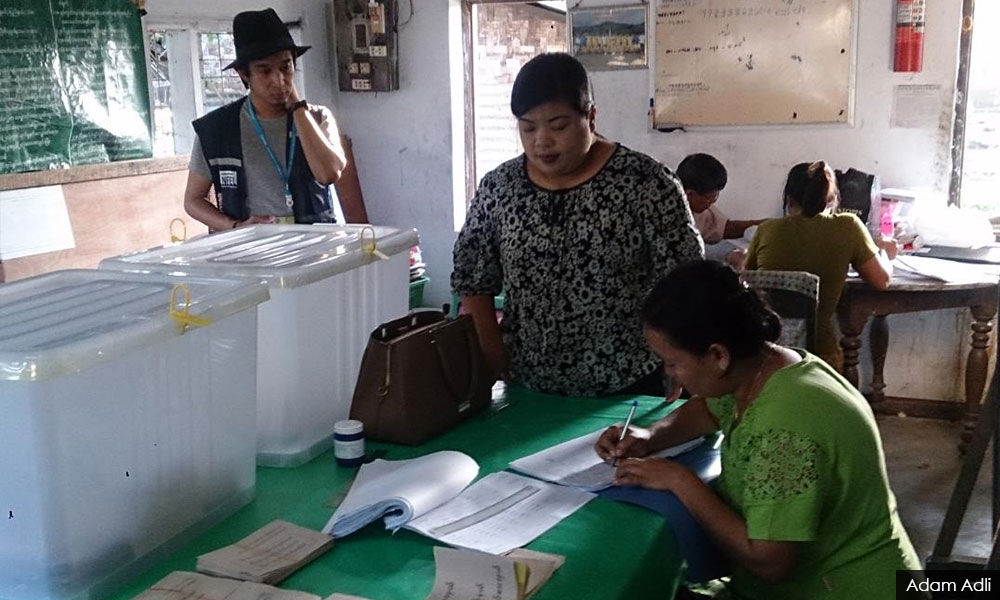
While exchanging pleasantries with an official from the Union Solidarity and Development Party – the party formed by the military junta – after the polls, Adam said the official had expressed his gratitude to observers, despite losing the elections.
"He told me: Was it fair? I hope it was. We don’t mind that we already lost. All we hope is that the people are happy with the election," Adam recalled...
Malaysia is among the few Southeast Asian countries that do not welcome reputable international election observer groups to its shores.
Though the country is hardly a torchbearer of good electoral practices, this has not stopped reputable international election observer groups from recruiting Malaysians for their missions around the world.
For activist Adam Adli, he struggles with the thought of newer democracies, such as Myanmar, appreciating the help of international election observers more than Malaysia does.
Adam, who observed the elections in Myanmar in 2015 and 2017, said he and his colleagues felt appreciated by the stakeholders in the host country, who sought an independent assessment on the conduct of the election.
While exchanging pleasantries with an official from the Union Solidarity and Development Party – the party formed by the military junta – after the polls, Adam said the official had expressed his gratitude to observers, despite losing the elections.
"He told me: Was it fair? I hope it was. We don’t mind that we already lost. All we hope is that the people are happy with the election," Adam recalled.
He was among 45 observers from 15 countries who were contracted by the Asian Network for Free Elections (Anfrel) to observe the Myanmar general and local elections in 2015, the first proper polls to be held since 1990.
According to a study, there were about 10,000 accredited domestic and international observers at the election, which included observers from Atlanta-based Carter Center and the European Union.
In 2013, the Election Commission here claimed it had invited “international” election observers from the region. Their identities, exact numbers, countries of origin or recommendations, however, remain unknown.
In contrast, the disclosure of such information is the de jure practice for reputable international election observation bodies such as the Carter Center, EU, National Democratic Institute (NDI), International Republican Institute (IRI) and Anfrel.
Adam recalled that Myanmar election regulators had publicised their names and provided them with full access to the elections, right down from visiting polling booths and even conflict zones.
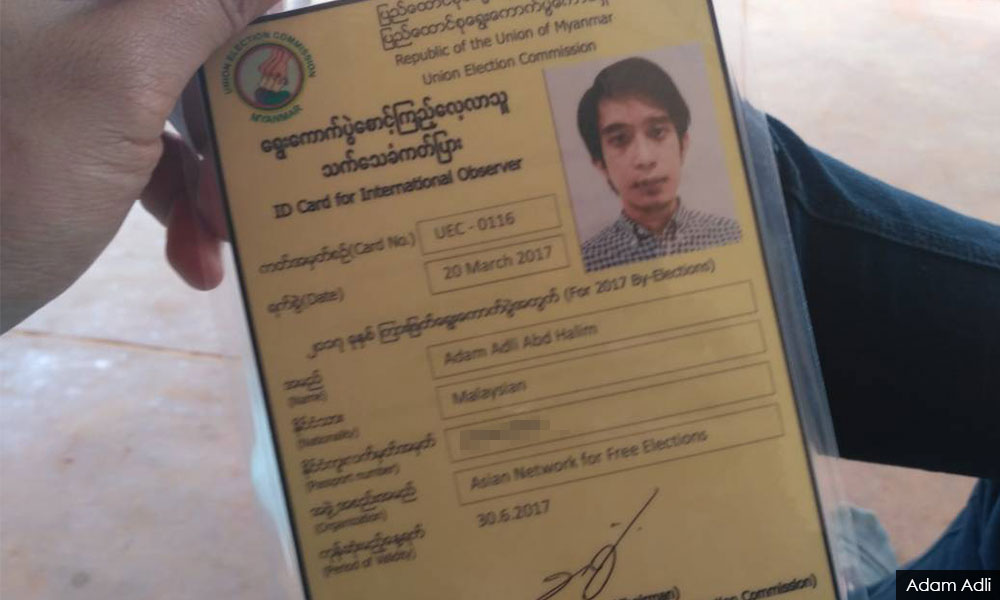
"In 2015, we could move around freely for the most part. Nobody kacau (disturbed) us although their version of the SB (Special Branch) was keeping an eye on us all the time.
"Their secret police would only harass our sources after we left. This was because the government was very paranoid in 2015.
"Despite that, they appreciated what we did for them and they invited us to come again in 2017.
"It got better in 2017. We could even access conflict zones. They treated the foreign observers like a big deal. They even put us on TV," Adam said.
Taking no sides
Kristina Uy Gadaingan, who has observed elections in eight countries, said international election observers are appreciated because their aim is to be a constructive force that helps promote the legitimacy of elections.
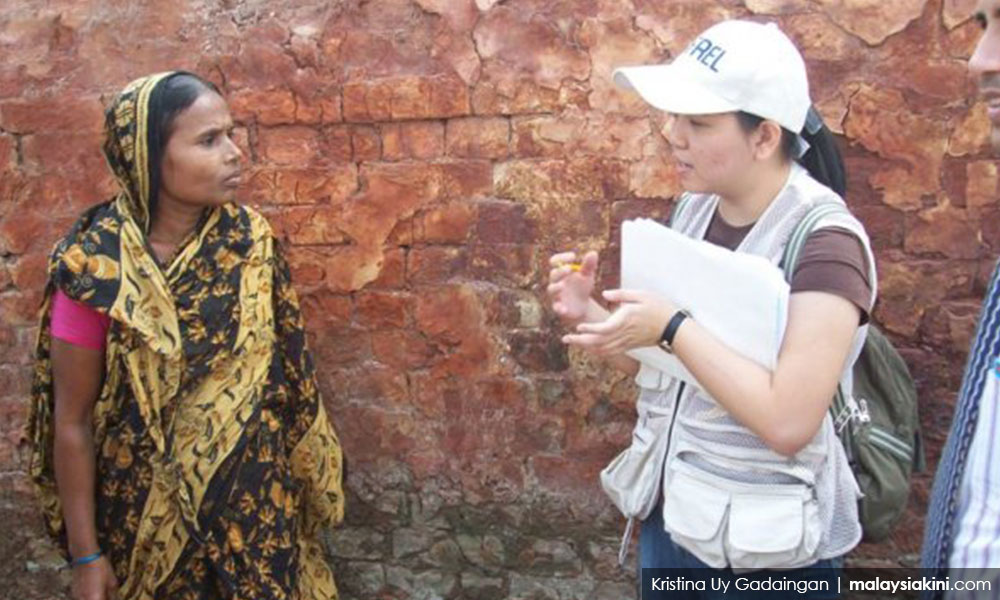
“We have to abide by a code of conduct – we do not disrupt, take sides or intervene in elections.
“We are able to assess elections in an objective way because we are outsiders… and our conclusions help boost the legitimacy of election results or point out flaws.
“We are not an antagonistic group, we just want to help them (election commissions). We are constructive and we are here to support the same cause – free and fair elections,” she explained.
Gadaingan, who hails from the Philippines, explained that legitimacy was key to successful elections and the presence of international observers would compel host countries to do their best to ensure that the elections are fair.
This, in turn, would help the electorate and competing parties to accept the results and minimise post-election conflicts, she explained.
Another key function of observers is to present recommendations on how to improve elections.
“After we observed the 2015 presidential elections in Sri Lanka, we gave the election commission recommendations on (how to manage) campaign financing.
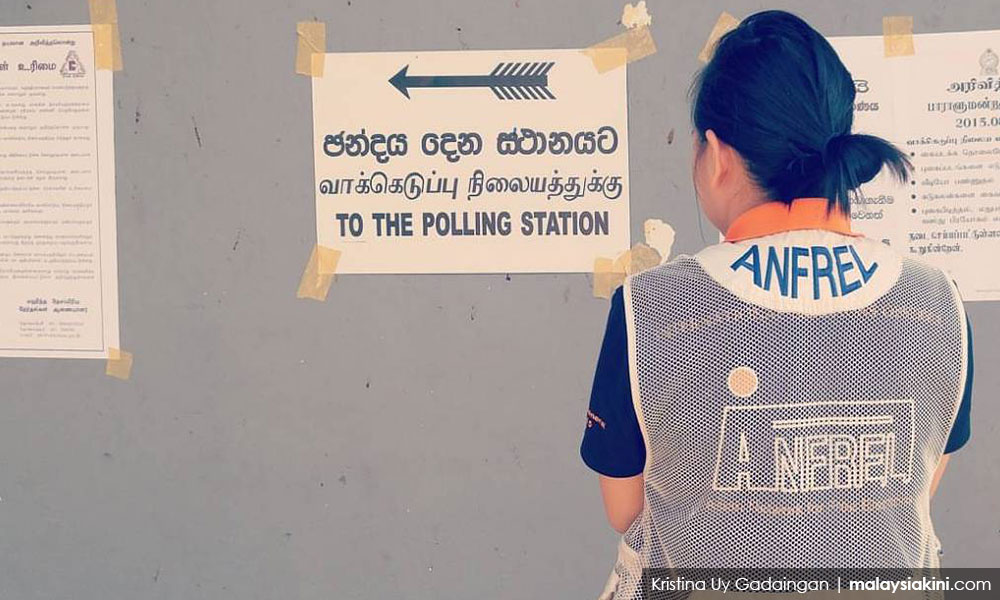
“The commission received our comments in a constructive manner.
“In the parliamentary elections later that year (in August), they regulated campaign financing more,” she said.
Building trust
Kuala Lumpur-based Tadzrul Adha, who has treated international election observation as a career over the past 10 years, said international observers had built trust in the election process for restive regions.
Among other areas, Tadzrul had been part of international election observation missions to places such as Egypt, Sudan, Mozambique and Timor Leste.
“Having experienced election observers from non-partisan outfits and from different countries is a good start to make voters gain trust in the election commission again.
“And this has many long-term benefits. It's about nation-building, good governance and becoming a more mature democracy,” he told Malaysiakini.
From his experience, election commissions from across the globe approach prominent election observation outfits on their own and help facilitate their stay.
“Our presence is guaranteed by the government and we are accorded full cooperation from the government of the host country,” Tadzrul said.
Observing GE14
So far, the EC here has promised to invite domestic and international election observers for the coming 14th general election, but details are scarce.
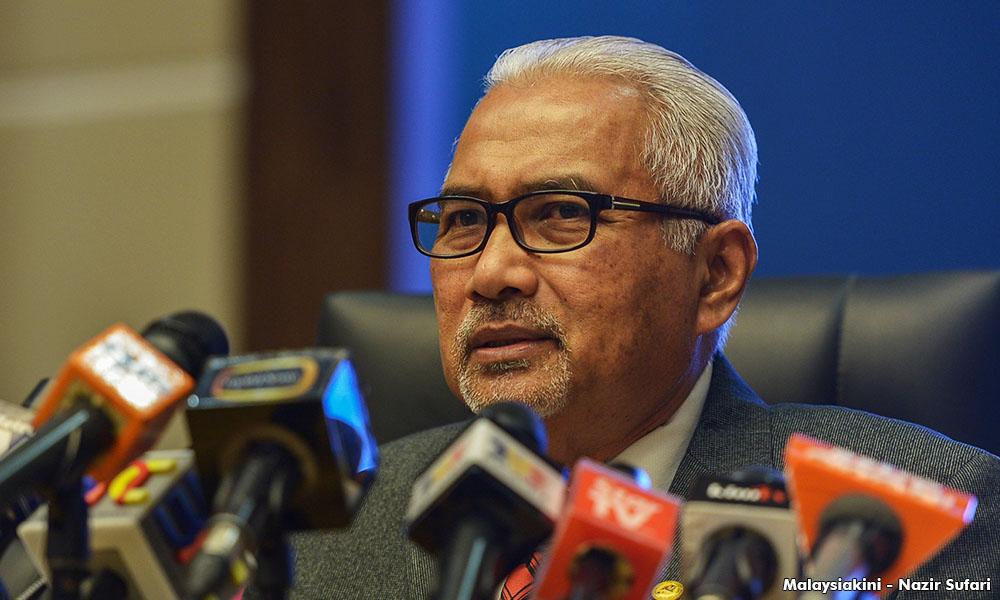
In September last year, EC chairperson Mohd Hashim Abdullah (photo) said Malaysia would only invite observers from EC’s counterparts from neighbouring countries on a reciprocal basis.
Anfrel chairperson Damaso Magbual has warned that such a practice could give room to collusion, while pointing out that similar efforts in the past were not done in a transparent manner.
In recent weeks, opposition Pakatan Harapan has repeatedly urged Putrajaya to invite accredited international election observation groups.
Putrajaya has yet to officially respond to this, although Prime Minister Najib Abdul Razak has said twice in public that Malaysia’s election system allowed no room for cheating.
RELATED REPORTS
Don't impose limitations on election observers, EC urged
Why M’sia needs credible int’l election observers
EC chief: Election observation efforts only on reciprocal basis


