


Wan Saiful - from Bangsar regular to reform advocate at night markets
INTERVIEW | Gone are the days where you would find former Institute of Democracy and Economic Affairs (Ideas) chief executive officer Wan Saiful Wan Jan having meetings at the upscale Bangsar Shopping Centre (BSC) in Kuala Lumpur with corporate figures, top civil servants and politicians alike.
Because, with his entry into Bersatu, the youthful and ever smiling Wan Saiful is now technically, as described in his own words, part of the statistics of the country's "unemployed graduates".
"From someone who headed an organisation with the title of CEO with a relatively comfortable life, I'm officially now in the statistics of unemployed graduates, so it's quite a big leap," Wan Saiful said, matter-of-factly, in an interview with Malaysiakini.
He hopes that his decision to join the party would spur others who know him to realise that he was, indeed, taking a big risk.
"So when are you going to do the same? I have a lot to lose; in order to do this, I had to leave the organisation that I set up.
"If someone like me can do it, those earning six-figure salaries, what's your excuse?...
INTERVIEW | Gone are the days where you would find former Institute of Democracy and Economic Affairs (Ideas) chief executive officer Wan Saiful Wan Jan having meetings at the upscale Bangsar Shopping Centre (BSC) in Kuala Lumpur with corporate figures, top civil servants and politicians alike.
Because, with his entry into Bersatu, the youthful and ever smiling Wan Saiful is now technically, as described in his own words, part of the statistics of the country's "unemployed graduates".
"From someone who headed an organisation with the title of CEO with a relatively comfortable life, I'm officially now in the statistics of unemployed graduates, so it's quite a big leap," Wan Saiful said, matter-of-factly, in an interview with Malaysiakini.
Read more: Bersatu’s new recruit Wan Saiful admits being forged by PAS
He hopes that his decision to join the party would spur others who know him to realise that he was, indeed, taking a big risk.
"So when are you going to do the same? I have a lot to lose; in order to do this, I had to leave the organisation that I set up.
"If someone like me can do it, those earning six-figure salaries, what's your excuse?"
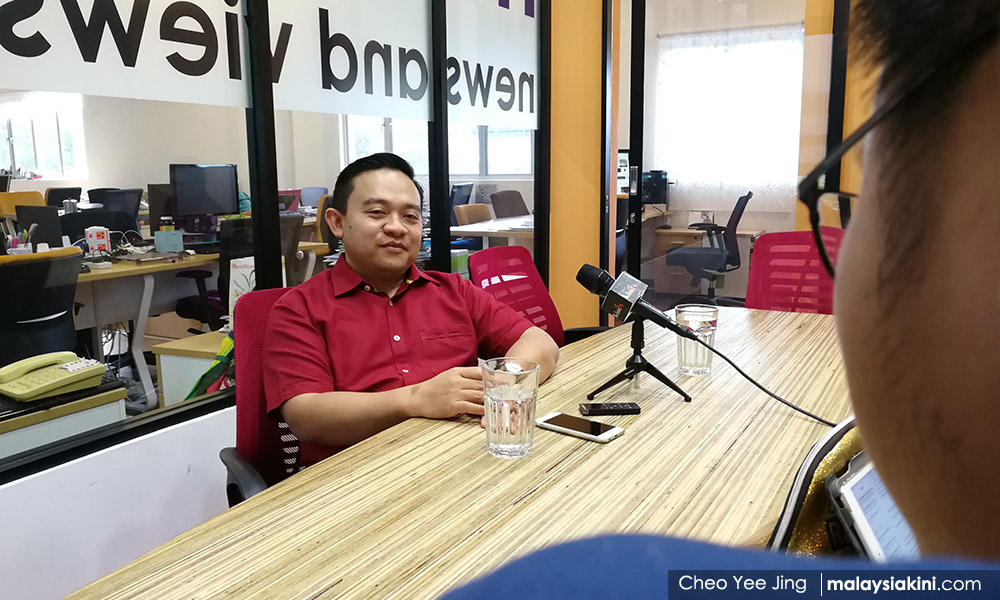
While Wan Saiful is used to churning out various analyses in relation to the country's political scenario, he admitted that his decision to join Bersatu makes him a newbie in partisan politics.
"I think I need to learn the ropes. There are many more experienced politicians. I need to quickly learn about how to adapt to the new working environment, it's just like anybody else taking a new job, really.
"I need to learn about the organisation, what it is about and how they work. The key phrase I keep repeating is that this is going to be a steep learning curve."
And this is not mere lip service on his part. To prove his seriousness to learn, Wan Saiful has sent messages to several politicians asking them to inform him if they were going on walkabouts.
"I have a new skill to learn. I have not done all these night market walkabouts. I go to buy stuff there, but not as somebody from the political world.
"It's not easy to describe the transition, but it's a very humbling experience. It tells you that you might be claiming you know how to improve the legal system in Malaysia, but in reality, that's just a small part.
"The bigger part is going out there, convincing the public your agenda is right. This is what politicians do. The transition made me realise there's a much bigger world out there."
Explaining the changes that need to happen in the country is even more difficult when so many people are fixated on the past, he noted.
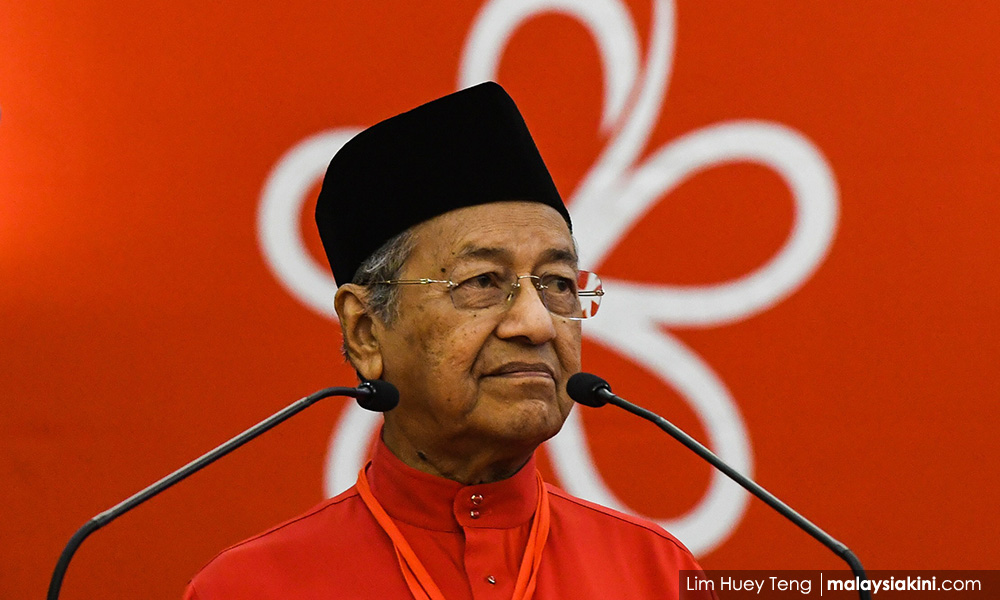
"As soon as the announcement came out that I was joining Bersatu, the immediate reaction was that I was joining (former prime minister) Dr Mahathir Mohamad's party.
"That needs to change because people are so fixated on individuals, about what certain individuals have done.
"We really need to move the conversation to how do we save the country in the future, what is the future you want to see, how do you move the country towards that direction when you know clearly that at the moment it's moving in the wrong direction.
"It's a bit tough and I don't have the answers. I'm still learning how to convey that message," he admitted.
The 43-year-old is therefore especially grateful for his family's support in his decision to formally join the political world.
"The kids are more excited about this than my wife, but my wife has been supportive as well.
"(Actually), the trigger point for me to consider this more seriously was when I had this conversation with my wife and she more or less said 'don't be too selfish'."
The father-of-five even claimed that his wife is now the one providing for the family when asked whether she was worried about his decision to join the opposition coalition.
"I better say nice things about her, I need my lunch money," joked Wan Saiful.
On a more serious note, he admitted that the concern is indeed, there.
"But that in itself shows how wrong the situation in the country is. Why is it so difficult for someone to exercise their democratic rights?
"You have seen decades of Umno. We have created a society where if you are in the opposition, the assumption is you will be victimised. And you are victimised, ostracised and discriminated against if you are in the opposition.
"Even I know this is how damaged our society has become as a result of decades of Umno rule because they do discriminate against people who go against them."

While Wan Saiful himself is unsure of the particular role he will be playing in the party, Bersatu's head of policy and strategy bureau Rais Hussin (left in photo) said Wan Saiful will likely be drafted into the party's supreme council.
"His strength is policy and strategy. Obviously, he will also help us in our policy and strategy bureau, thereafter we won't let him rest," joked Rais who was present during the interview.
Here, Wan Saiful speaks further about his decision to join Bersatu.
So why Bersatu? Was there any specific reason for joining the party?
My interest in political parties has been there for a long time, I guess there's no harm in me disclosing now that even in the last general election, I was approached by quite a few political parties on both sides to consider joining them in contesting.
But that time I must say I thought there's a lot more to do at Ideas, an organisation that I started, so there are a lot more responsibilities that I haven't fulfilled at that time. But now I think it's time to make a decision. I've been saying a lot of stuff, 'this needs to be improved, that politician needs to do that' and suddenly, when the opportunity to do something that matters is put there in front of me, I think it'd be wrong for me to say no this time.
That's why I started to consider it more seriously than before. I thought yes, let's make this leap, it's going to be a very big leap for me, for I am a complete newbie in partisan politics. I keep saying you should never trust politicians, now I guess I'm saying don't trust me fully when I say things, judge me the same way you judge everyone and make sure that I continue to do the right thing.
When making this choice, the top issue that came to my mind was what is it that I'm trying to do. That made me realise, there's a big challenge in changing the Malay mind, to persuade Malay voters to become more confident in exercising their democratic rights, to become less reliant on handouts, to become more confident in the ability to do things themselves. Once you know that the real target audience is Malay voters, then the party is obvious. There's no point in knowing where the real challenges are but still going to a Chinese-dominated party.
My purpose is very clear, for decades, based on the studies, interactions I had at Ideas, we know for a fact that for decades the ruling government has been conditioning the Malays to say that Malays cannot survive without the ruling coalition, without Umno especially, and I think that's wrong, it's an insult to the Malay intelligence.
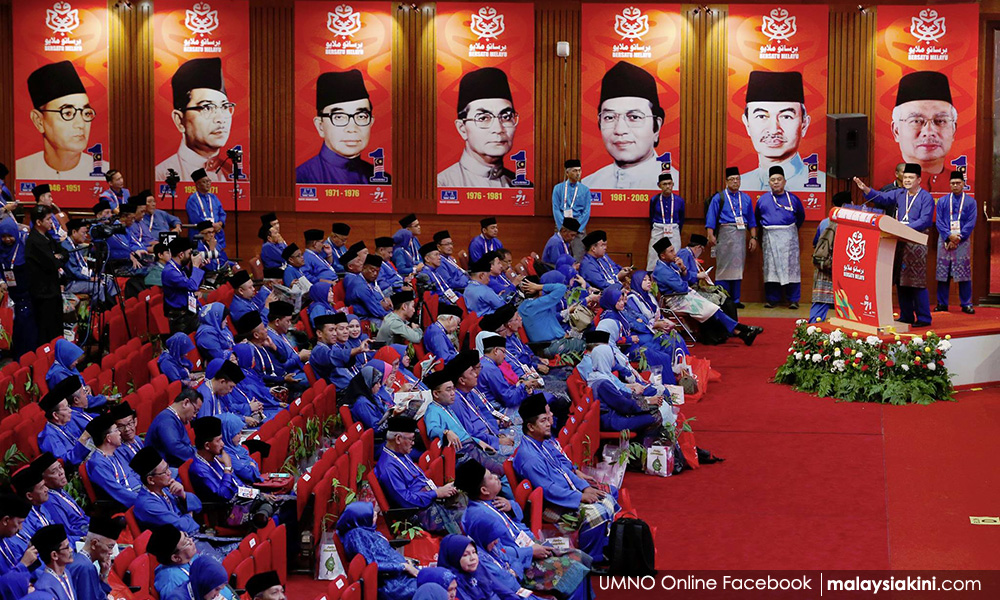
Malays existed before Umno, hundreds of years before Umno, at that time they were okay. In fact, the golden age of the Malay sultanate here existed way before Umno came into place.
It is only after the setting up of Umno, and especially of late, that Malays have been conditioned so strongly to believe that there's no other place to go. 'If you're confident in exercising your democratic rights, then all your special positions will go away' - I think this is a very backward way of playing politics, we need to move on from identity politics.
I have a role to play, what better way than to attempt this than going to a party where the most work can be done.
Why didn't you decide to join Amanah?
As someone with a PAS background - last year Sept 20 was the 20th anniversary of my membership in PAS, I've been a member of PAS for a very long time - for most people, the natural progression from PAS would be Amanah. I had a long talk about that and I must say I spoke to the leaders of Amanah as well.
I think the reality today, it is Bersatu that has a bigger reach into the Malay areas. I have some suggestions on how to move forward, I have some ideas on how we can go ahead with the agenda. I think the party with the best platform at the moment is Bersatu. Of course, within the wider platform of Pakatan Harapan. I am really lucky to have a good relationship with all parties in Harapan. I'm hoping I can strengthen that link.
Was there anyone in particular who approached you to join Bersatu?
I spoke to several people. The conversation with Bersatu went back quite some time. I hosted Mahathir at several events. On the cusp of them forming Bersatu, I hosted him again at another event. I've been talking to (Bersatu president) Muhyiddin Yassin (photo) and (Bersatu deputy president) Mukhriz Mahathir as part of studies I have been doing.

The person pivotal in convincing me this is the right move was Bersatu's director of strategy and policy, Rais Hussin. He's been a good friend.
Was there a specific reason that convinced you to join Bersatu?
Looking at how they make their decisions, the way I see it, Bersatu has this discipline. They come from a background of people with experience being in power, they come into the opposition coalition and they brought in this new discipline of making sure there must be decisions that are reached in discussions and meetings. We must talk about policies, it's not simply about complaining how bad Umno is.
There must be solid steps on how to move forward. Those kinds of things, the focus on policies, moving forward on facts and figures, those are the things that really attracted me.
I've had many of those conversations with various people in Pakatan Harapan, with Rais several times on this. Those are the things that made me eventually decide, 'yes, let's do this'.
The distinguishing factor has to be about the ability to reach the Malay population. If you examine the history of Harapan in the past, it started in various forms but the presence of (PKR de facto leader) Anwar Ibrahim made a difference in the opposition front, the peak was probably Pakatan Rakyat. But at that time the key success factor for Pakatan Rakyat was the non-Malays.
We live in a country where, yes, we might have idealism about how to move forward, where policies are not based on race and religion, that's idealism. We need to deal with what's happening today. Pakatan Rakyat at that time was able to reach a certain demographic of voters. The challenge was still the Malay group.
The entry of Bersatu, especially under the leadership of Mahathir and Muhyiddin, changed those dynamics in a huge way. Never before have rural areas been accessible to the opposition front. So the way I see it, the distinguishing factor of Bersatu today that they have brought into the Pakatan coalition, is the fact that they are able to reach into the Malay areas. I think it'd be wrong for me not to put my hat in.
Did it take you a long time to finally decide to join Bersatu?
Joining Bersatu was a very quick move but joining this political front in a more active way took me years. This has been at the back of my head since the last general election, so I'm afraid I'm one of those slow takers.
So even though, to me, personally, it might be a significant move but compared to many others this is really nothing. They have done this much earlier than me, they are much braver than me in doing this. I'm one of the slow ones, I have a lot to catch up.
What would be your biggest role in Bersatu?
I don't know yer. It's not for me to dictate to the party. I'm joining a new group as the newest employee. If I apply to come to work here, and immediately say I want that desk and chair, I'll be sacked tomorrow. So in the interview process, of course, they ask me where do I see myself in the next five years.
Well, of course, the party didn't grill me like that but I think I have some ideas that I want to contribute, but my position in the party is up to the party leadership to decide. It will be completely wrong for me to come in with "this is Wan Saiful joining, give me something special." It's not about that.
If I do that, that's an element of hypocrisy and ego coming in and that is just simply wrong. I'm very clear, that I'm here to help in any way I can, so I'm waiting for the next instruction.
Why didn't you contest in the last general election?
It's a lot of personal factors. I only came back to Malaysia in 2009. At that time I was building an organisation, I was trying to make sure that the organisation I started will continue to be sustainable.
I think at that time if I were to jump into partisan politics, it would be way too early and would be too damaging to the organisation that I built because Ideas is a think-tank, it has to be independent, non-partisan.
It must continue to have the ability to reach out to politicians and policymakers from both sides. If I were to jump in at that time, it would defeat the purpose of me coming back to Malaysia.
I was talking to a few political parties, but never seriously. There were a few people who came to the office, from both sides. To be more specific, there were five political parties wanting to initiate discussions but never more than the first cup of coffee because I was quite firm at the time, that it was not the time yet. It would be unfair to Ideas, the staff and the cause that I was trying to start at that time.
This is not really about the upcoming general election. Yes, the timing, I must admit, is done to create an impact, but it's not really just about the upcoming election. The reason behind joining is about the long-term prospect. I'm very much looking forward to the time after the general election when hopefully people in the party will be in the government and able to shape government policies.
At the same time we will have more time to think about how to really shape the party, turn it from a party that today is associated with the anti-Najib agenda, which is important, but turn it into a party, when people see they know 'okay, there's more to that'.
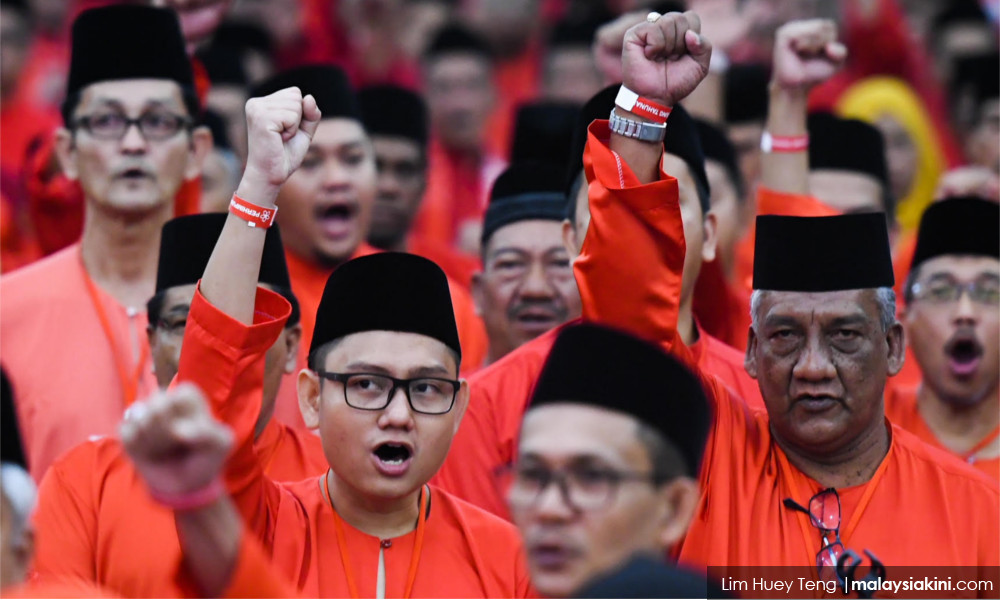
Having spoken to many people in the party, the cause that the party is championing is way bigger than what people are talking today, there are some solid policy ideas that have been generated from inside the party but it's not easily conveyed because what the media and public are interested in is simply sound bites, simple stuff that can be printed easily whereas policy ideas are not easily articulated.
So you'd be fine if you're not fielded in the upcoming general election?
Yes, I'm happy with that. As I said, contesting or not contesting, that is a party decision.
If I'm asked to contest I will, if I'm told I shouldn't do that, that's fine. The important thing here is to make sure there is life after the election.
How ready are you to contest in the general election?
Even the decision to join the party comes years later than many of my other colleagues.
This is a very steep learning curve, let's see how it goes. Let's take it one step at a time.
Malays are more concerned about having a candidate that's on the ground. But you haven't been rooted in a constituency.
That's a fair comment, that is my weakness, I'm not familiar with grassroots politics. That is a great weakness that I have so I guess these are the things the party will have to consider carefully if they are thinking about fielding me.
I will put all my cards on the table, I have some strengths, I have great weaknesses, the position will have to be made by the party and if I am fielded then I guess there'll be a lot of work that needs to be done, we'll just have to work for that.
I'm being very realistic and straightforward, there's no real desire for me to say 'I'll do it, I'll be able to jump the hurdles. This is not an easy thing.
What would be your other weaknesses as a politician?
I think I have to be upfront about things that might be skeletons in the closet. Not having grassroots experience is an important factor to consider, it is a weakness. I'm not familiar as well with the way political parties are structured, I come from a civil society background so there'll be a very steep learning curve for me on that one.
I guess the challenge for me is to be humble enough to admit I'm joining a new thing. Basically, I feel like I'm a graduate just applying for a new job. Realistically speaking that's what's happening so there's a lot for me to learn.
I think on the opposite side, people who would be opposing me would be throwing all sorts of labels like I'm a liberal. I'm really keen to know whether they would use words like 'libertarianism', I wonder whether they would even understand what it means but I'm sure there will be posters coming out, a rubber stamp on my forehead saying 'liberal'.
This is the challenge because the whole world knows I've been advocating for a more liberal Malaysia, what people don't discuss in Malaysia is the fact that Malaysia was founded on liberal principles. Our very proclamation of independence clearly says this is Malaysia - founded on principles of liberty and justice, liberty is about liberal values.
Vision 2020 clearly says we are aiming for a more liberal Malaysia. The problem is the word has been twisted, people are not interested in the true meaning of the word, they are more interested in how to score political points. That will be a very high hurdle for me to climb over.
People will try to dig up all the previous activities that I've been doing, my involvement in PAS. I might as well pre-empt this possible accusation.
Back in 2007, I was active in the British Conservative party in the UK, I'm sure people who want to damage the chances that I may have in this political game, knowing how vicious the politics here is, they will dig that up and say 'see, Wan Saiful has been participating in British politics before, is he still loyal to the country'. Whereas at that time they were with me in the UK walking the streets helping my campaign. This is how hypocritical people can be.
I appeared in newspapers, people were praising me for taking a brave step in the UK at the time but I am quite confident that this issue will come up.
DAP's Howard Lee faced a similar thing, are you worried?
It's something at the back of my mind, but I'm really focused on trying to solve the problems of today and trying to find ideas on how to move forward to the future. There will be people who are stuck in the past. I don't know. When I was six I probably swam naked in the river somewhere, I don't know how far back they want to go.
If I worry too much about this then nothing can be done. It's funny sometimes there are people out there who are so focused on digging up your past and try to hype it up as if it's really big when there are real, big issues happening today and they try to reduce it down to a smaller size.
My answer to that is yes, there are things people can question (but) I don't think I have done anything that I know of, at least that's considered as major. If you want to talk about the past, please do go ahead (but) I'm more interested in addressing the challenges of today and how to move forward to tomorrow.
You contested for the Luton Borough Council and was not successful. Do you think it'll be different this time around in Malaysia?
I don't know whether I'll be fielded or not but if I'm fielded I'm hoping that that experience won't repeat itself. I know for a fact it's not an easy thing to do. At least in the UK, even at the council level, we were talking policies at that time. Here, it's really different altogether.
That's why I think my decision to join Bersatu is the right one. It's a Malay majority party, it is the only party in Harapan that can reach into the Malay ground, I see it as a steep learning curve for me but I have been saying we need to improve the level of confidence among the Malays. This is the only party that can do it.
If you compare Umno and Bersatu, Umno is not interested in increasing the level of confidence in the Malays because they want the Malays to be dependent on them. We need to change that narrative, we need to say that Malays can stand. It is the parties that cannot stand without the group.
We need to change that narrative altogether and I think Bersatu is the best platform to do it.
You described Malaysian politics as vicious. Are you really ready to face Malaysia's dirty politics?
Will you ever be ready for something like this? In my previous life at Ideas, I met so many people - corporate captains, senior government officials, people in the government, politicians. This question of whether you're ready or not to make that leap will always be there.
There are many people that I know in the past would be very happy to share their thoughts very frankly over a sip of latte at KL Hilton but as soon as they move out, they would kiss the hands of people they were complaining about.
I must say it's been a very interesting journey at Ideas, but it also helped me realise that I don't want to be like that. There are certain things that I really need to do now. Whether I'm ready or not, I really don't know, I don't know what's coming.
This is one of the things you never know what's going to hit you until it does hit you but that leap of faith has to be taken now. I'm grateful to Bersatu for being willing enough to accept me. Maybe they don't know what's going to hit them, either.
You mentioned about libertarianism. Libertarians generally prefer very limited government powers. Can this work in Malaysia? Religion, for example, is an extension of the state.
The role of government needs to be defined so they don't control everything we do. But it's important to understand if you want to talk about the political philosophy side of things, the liberals, libertarians do believe the government has a role, the role on the basis that they are trustworthy, they do the job in an honest way, they are not corrupt, they are not using power to enrich themselves.
In the context of Malaysia, we have a certain baseline, we know where we are. I have to be realistic about what can be implemented immediately or not. The priority has to be about curbing corruption that is so rampant in the country. We know what the problems are, we know the current regime will not change the situation.
With reference to your recent writings, you've indicated that Harapan's chances of winning over the majority of Malays are quite slim. Why are you not picking the winning horse?
I have been going around the country, interviewing people on the ground, when you look at the polls, all the polls are saying that Harapan has a big hurdle to climb. So the question that comes to my mind is why is that the situation. That's why I've been travelling across the country, interviewing people from Perlis, Kedah all the way to Johor, trying to find out what their thinking is, and their thinking is, it is really not easy.
There are two things - do I want to be someone championing a cause or do I just want to be another politician. If I want to be a politician, I know which side where my position might be a little bit easier, but I will be on the wrong side, in terms of ethics, direction. But maybe I will have a slightly easier life. So I decided to be on the morally, ethically right side and I know there's a lot of work that needs to be done.
This is why I think it's important to join now rather than wait until after the election. I need to contribute to the cause now so that we build a momentum. The findings of my own study say that it's not impossible, not even slim.
Yes, it's challenging but people are upset, people are angry on the ground, they are waiting for this slight push to convince them that the side we are in now can champion their cause. There's a lot of work on Harapan's side towards this direction and I really want to play a role in this. This is why if I don't do this now I will really regret this, it's a once in a lifetime opportunity to contribute.
What are the examples of policies that are more accepted by Pakatan Harapan?
Ideas came up with many policy proposals. We have been trying very hard to engage with politicians on both sides. On the BN side, the doors are always closed, as if they're not interested at all in hearing the voice from independent civil society organisations. And I must admit on the civil servants' side they are very into receiving new ideas, it's always blocked at the political level.

The doors have been closed, you want to go in, you need to suck up to many people there to open the door. But when you go to the Harapan side, they are very open, very willing to engage in discussions and negotiations. Some of the ideas are openly being championed by several Harapan politicians now.
That really showed me, if you want to make a change in this country, it's not with BN. There's no way you can do that within the current structure. Engagements with Harapan have been very fruitful and beneficial. That helped me believe this is the right move to make.
Harapan leaders have been talking about the need to separate the role of the attorney-general and public prosecutor. That is something Ideas mooted many years ago, we've been lobbying for that to happen.
Getting it on the mainstream political agenda has not been easy but I think it's really important to do that now. The independence of MACC - I really feel they need to be strengthened. I'm really glad among Harapan leaders they are talking about that agenda, how to improve the independence of the MACC.
The problem with the country is corruption and corruption at the highest level, so we need to be clear that in order to solve that we need independent and strong institutions.
The Harapan (politicians) are more open to talking about institutional reforms; that excites me, whereas on the BN side they keep on harping about how if they are not in power, the Malays will be lost, the Malay cause will be cancelled.
It shows the difference between a political party which is thinking about the future and a political party which is trying to grapple with anything in order to survive. Identity politics is the easiest way for a desperate party to stay in power because they are appealing to the emotions and they are trying to win by virtue of dividing society. This is a very divisive agenda, you do it today, you destroy the country for the next 30 years.
On the Bersatu side, talking about real institutional reforms, this is exciting. Not many political parties, almost no parties in BN talk about institutional reforms. These are some of the examples of the things people in civil society have been talking about.
How confident are you that Harapan won't abandon its agenda on institutional reform if it were to come into power?
One of the top things on my personal agenda is to make sure things like institutional reform will get into the manifesto, that will be the official promises.
If it's not delivered, the rakyat can vote us out again in the next election. Let us come in, let us prove we can deliver the promises and then judge whether we are delivering or not.
What would be your policy position that you can offer to constituents?
Things like institutional reform, of course. It's a bit premature for me to put a personal manifesto on the line but I'm very sure many of this will be in Pakatan's manifesto.
I'm going to try to persuade colleagues in Harapan to make sure they do get into the manifesto. Those will be the things that I will champion.
MCA's Wee Ka Siong said Mahathir will return to Umno after the general election.
I don't know what Wee Ka Siong is talking about because he is already with Umno so is he saying it's bad if Mahathir were to go back to Umno, what is he implying?
If going back to Umno is wrong then he should leave and join Harapan, bring MCA with him. I don't think it's logical to assume current founders of Bersatu will go back to Umno.
If they do go back I think the party will leave them, they will not be able to take the party into Umno.
Because the wave at the moment is really not with Umno, many people are talking about the future. There are people who really believe in the cause, we just need to articulate it properly and encapsulate that thinking into a coherent narrative.
I have met with Mahathir, Muhyiddin and Mukhriz, I think they're serious about this and it's based on those discussions that I have had that I think they will do this all the way.
What are your thoughts on the spoilt vote movement?
I know some of the activists, I think they are very keen to see a change in the country.
They come from traditional non-Umno/BN side. It's unfair to say they are paid by Umno. I don't think we should attack them so viciously, they are exercising their democratic rights. They do have a point, it shows Pakatan is not able to convince them enough.
My hope is let's have a chat, I know quite a few of them, let's have a chat. What I would urge them to do is to look at the bigger picture. I'm sure they know a three-cornered fight would be an advantage to Umno.
A three-cornered plus spoilt votes- would be an added advantage to Umno. Yes, the idealism needs to remain, it must be respected, we need to respect that idealism.
But there comes a time when you need to prioritise what you want to see, if you want to see the ruling government stay in power, go ahead with spoilt votes.
If you want to see change, then you need to come out to vote.


Report this comment
Are you sure you want to delete this comment?
This action cannot be undone.