



For the young, reflections of old Umno seen in new Bersatu
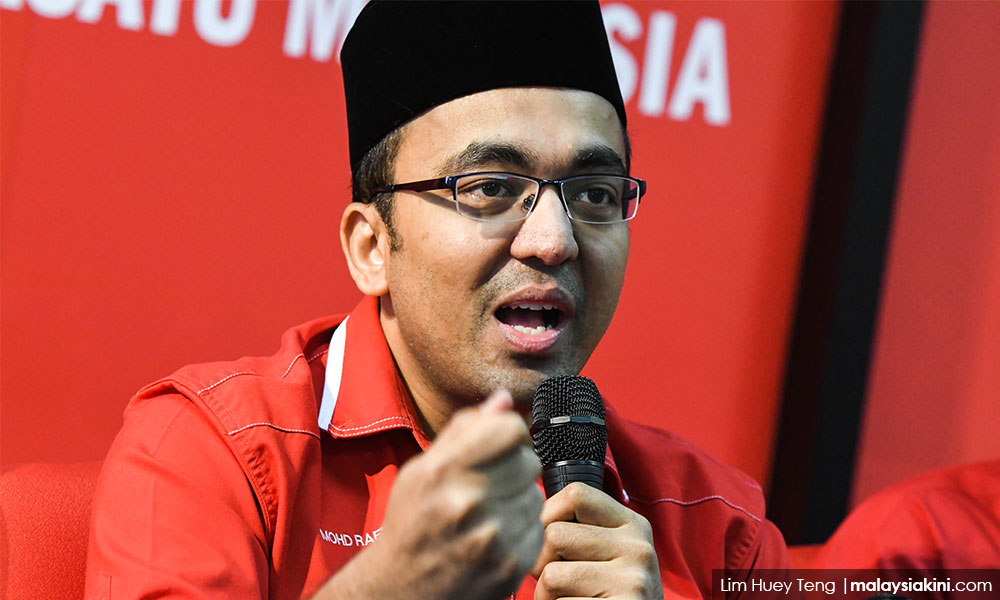
INTERVIEW | For Mohd Rafiq Naizamohideen, the Umno leadership today is seen as men and women with greying hair preaching the need to remain relevant with the young, but struggling to do so.
But it wasn't always like this. Rafiq, now a Bersatu leader, pointed out that Prime Minister Najib Abdul Razak became Pahang menteri besar at the young age of 29 in 1982.
Najib was subsequently appointed a cabinet minister at just 32 years old. At the same age, Rafiq added, Abdul Rahim Thamby Chik was appointed as Malacca chief minister in 1982.
Rafiq was perhaps the odd one out in the modern Umno, climbing to the position of Umno Youth exco member at 27 years old, the youngest at the time.
However, in 2015, Rafiq was suspended for six years for trying to organise a talk for former prime minister Dr Mahathir Mohamad, who was still an Umno member at the time.
Frustrated at the perceived injustice, Rafiq quit Umno and was quickly embraced by Bersatu.
Now at 31 years old, Rafiq sits on the Bersatu supreme council and is the Malacca Bersatu deputy chief.
“The Umno of today closes its doors to the youths.
“But Bersatu has continuity in that we have many youth leaders,” he told Malaysiakini in an interview last week at the Bersatu headquarters in Petaling Jaya...
INTERVIEW | For Mohd Rafiq Naizamohideen, the Umno leadership today is seen as men and women with greying hair preaching the need to remain relevant with the young, but struggling to do so.
But it wasn't always like this. Rafiq, now a Bersatu leader, pointed out that Prime Minister Najib Abdul Razak became Pahang menteri besar at the young age of 29 in 1982.
Najib was subsequently appointed a cabinet minister at just 32 years old. At the same age, Rafiq added, Abdul Rahim Thamby Chik was appointed as Malacca chief minister in 1982.
Rafiq was perhaps the odd one out in the modern Umno, climbing to the position of Umno Youth exco member at 27 years old, the youngest at the time.
However, in 2015, Rafiq was suspended for six years for trying to organise a talk for former prime minister Dr Mahathir Mohamad, who was still an Umno member at the time.
Frustrated at the perceived injustice, Rafiq quit Umno and was quickly embraced by Bersatu.
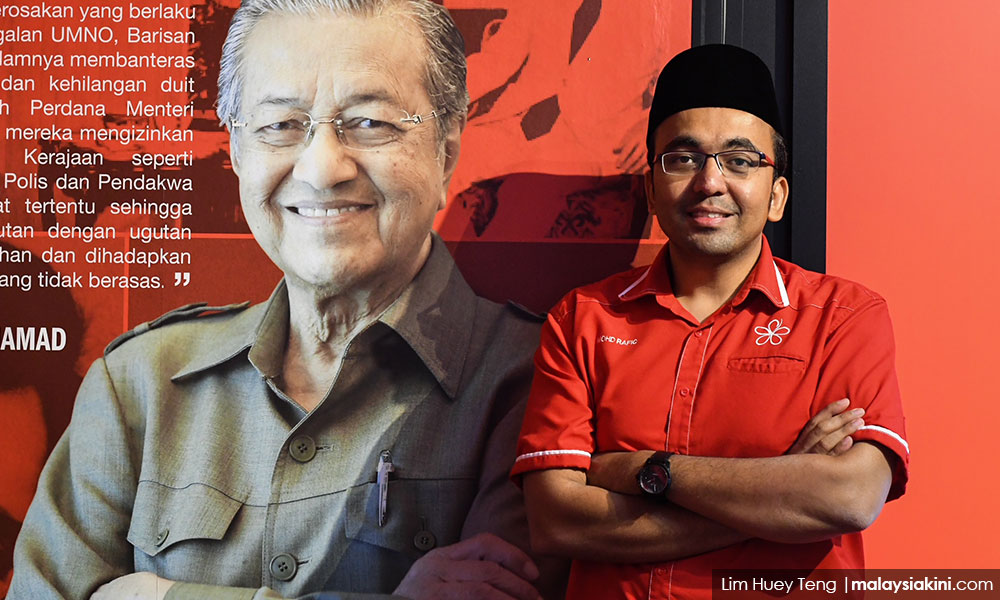
Now at 31 years old, Rafiq sits on the Bersatu supreme council and is the Malacca Bersatu deputy chief.
“The Umno of today closes its doors to the youths.
“But Bersatu has continuity in that we have many youth leaders,” he told Malaysiakini in an interview last week at the Bersatu headquarters in Petaling Jaya.
Rafiq said Umno used to be a fertile breeding ground for young leaders, but Bersatu now appears to have taken on that role.
He noted that Bersatu has also embraced many other young leaders, including Syed Saddiq Syed Abdul Rahman, who was also made a supreme council member and Bersatu Youth chief at just 25 years old.
Former Institute for Democracy and Economic Affairs (Ideas) CEO Wan Saiful Wan Jan pointed out in a 2017 study that 55 percent of Bersatu's 200,000-strong members were under the age of 35 – despite being led by 92-year-old Dr Mahathir Mohamad.
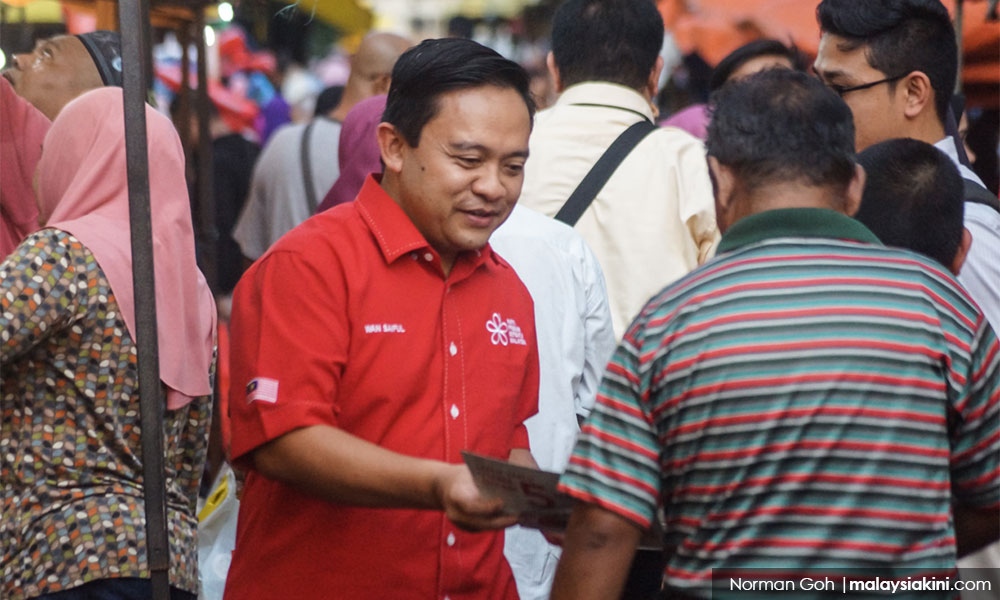
Wan Saiful (photo) himself has since joined Bersatu.
Out with the old
Ironically, the "Old Umno" and "New Umno" dichotomy originated from Mahathir's bruising - and his successful power struggle against rival Tengku Razaleigh Hamzah in 1988 saw Umno being deregistered.
This forced Mahathir to re-register Umno temporarily under the name of "Umno Baru". But the term is now often used to describe a departure from Umno's founding ideals of helping downtrodden Malays towards more capitalistic pursuits.
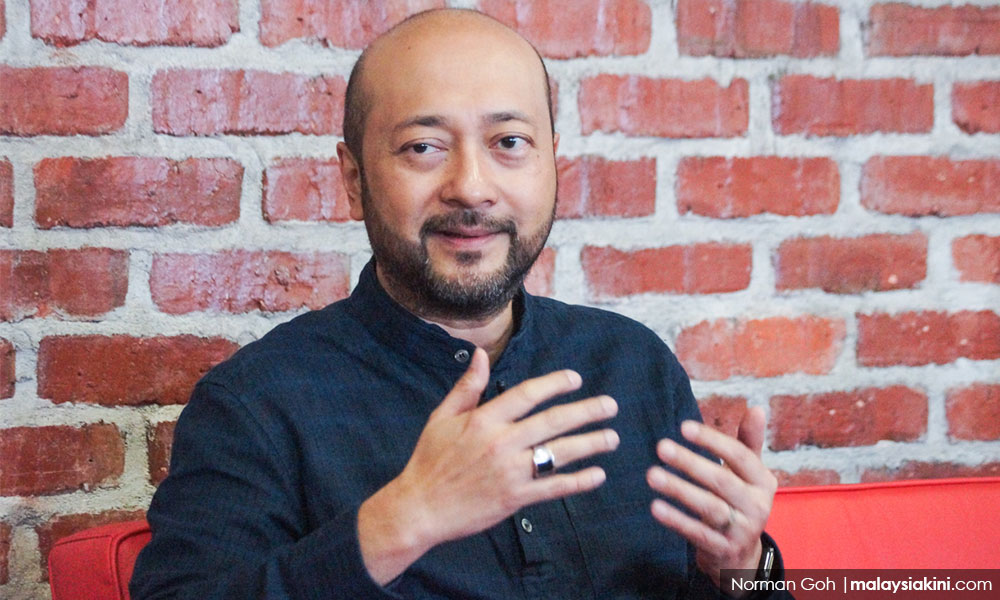
Bersatu deputy president Mukhriz Mahathir conceded that the "rot" in Umno had set in early, but attributed it to circumstances other than his father’s actions at the time.
Mukhriz (photo below) told Malaysiakini that Mahathir had lamented at the time that Umno was turning from a party of teachers into one of businesspersons, owing to the booming economy at the time.
Eventually, patronage took precedence over ideals and leaders became more entrenched in their power.
Now in Bersatu, Rafiq believes that youths will help sustain the party beyond Mahathir's leadership, despite the constant comparisons with another Umno splinter party, Semangat 46, which ended up being short-lived.
In with the new
For Rafiq, Bersatu's acceptance of youths was not the only fresh experience for him.
He admitted that as a component of Pakatan Harapan, decision-making can be a long drawn-out process compared with how things are done in BN.
“(In BN), when most of the ministers come from one party, there is no representation from the other component parties, so the decisions are made unilaterally.
“Important government announcements are made at the Umno annual general assembly, and not at BN programmes,” Rafiq said.
But differences of opinion in Harapan, he said, can be a boon for the coalition as it shows they are democratic and open to accepting new ideas.
He gave the example of Harapan's nomination of Mahathir as the prime ministerial candidate, which was arrived at through consensus.
In contrast, Rafiq said, BN's prime ministerial candidate will always be the Umno president by default.
“Let’s say the president of Umno is very corrupt, but they do not have any choice to choose any other person because the constitution of BN binds all the other component parties to accept the Umno president as the prime minister (candidate),” he said.
Rafiq noted that in the current political climate, there still are expectations that the prime minister should be a Malay.
But from Harapan component parties, he added, there were more Malay leaders to choose from compared with the BN, where they have to come from Umno.
“We have more Malay leadership, it is not just Umno, like in BN,” he said.
Earlier report:
Bersatu leader: How my mom ditched her 40-year Umno membership


Are you sure you want to delete this comment?
This action cannot be undone.