




Battle for Tebrau: Contenders diverge on gameplan for Malay heartlands
GE14 | For PKR's Steven Choong, his narrow defeat in Tebrau during the last general election was obvious - not enough Malays supported him.
It is an outcome that Choong is determined not to repeat and has been working tirelessly in the last five years with substantial efforts spent in Malay villages and Felda areas.
It wasn't that Choong took the Malay vote for granted in the last general election but the fact that he was fielded just a month before polling day, leaving him little time for groundwork.
“In Tebrau, Chinese voters are less than 40 percent, you need to have at least 25 percent Malay votes to win," the Tebrau PKR chief told Malaysiakini as he analysed his defeat.
In the last general election, Choong lost to MCA's Khoo Soo Seang by a 1,767-vote majority. Choong garnered 85 percent of Chinese support, 50 percent of Indian support but only 21 percent of the Malay voters.
Tebrau is home to three Felda settlements and several Malay villages.
To further illustrate the disparity in support, Choong pointed out that he led by more than 3,900 votes in the Chinese-majority state seat of Puteri Wangsa but lost by more than 5,700 votes in the Malay-majority state seat of Tiram. The two seats make up the parliamentary seat of Tebrau.
At the parliamentary level, Tebrau comprises 47 percent Malays, 39 percent Chinese and 11 percent Indians.
The political realities have prompted Choong to work extra hard in the Malay heartlands of Tebrau - but it has proven difficult, having been kicked out of some areas or having to deal with harassment from the Umno grassroots.
But all that changed in 2016, when Umno splinter party Bersatu was formed...
GE14 | For PKR's Steven Choong, his narrow defeat in Tebrau during the last general election was obvious - not enough Malays supported him.
It is an outcome that Choong is determined not to repeat and has been working tirelessly in the last five years with substantial efforts spent in Malay villages and Felda areas.
It wasn't that Choong took the Malay vote for granted in the last general election but the fact that he was fielded just a month before polling day, leaving him little time for groundwork.
“In Tebrau, Chinese voters are less than 40 percent, you need to have at least 25 percent Malay votes to win," the Tebrau PKR chief told Malaysiakini as he analysed his defeat.
In the last general election, Choong lost to MCA's Khoo Soo Seang by a 1,767-vote majority. Choong garnered 85 percent of Chinese support, 50 percent of Indian support but only 21 percent of the Malay voters.
Tebrau is home to three Felda settlements and several Malay villages.
To further illustrate the disparity in support, Choong pointed out that he led by more than 3,900 votes in the Chinese-majority state seat of Puteri Wangsa but lost by more than 5,700 votes in the Malay-majority state seat of Tiram. The two seats make up the parliamentary seat of Tebrau.
At the parliamentary level, Tebrau comprises 47 percent Malays, 39 percent Chinese and 11 percent Indians.
The political realities have prompted Choong (photo) to work extra hard in the Malay heartlands of Tebrau - but it has proven difficult, having been kicked out or some areas of having to deal with harassment from the Umno grassroots.

But all that changed in 2016, when Umno splinter party Bersatu was formed. The same villagers who had in the past kicked him out are now leading his way into the Malay villages and Felda settlements.
"One Umno Youth branch chief (who harassed me in the past) is now with me. He even tells the villagers: 'I told you not to support the opposition but now I ask you to do so.'
"Bersatu has helped a lot... In the past, only a handful of people were willing to loan their premises in Umno fortresses but now people are more accepting and Bersatu has even offered to help me organise events there," he said.
New bridge to the Malay heartlands
Riding on Bersatu's support, Choong has helped provide specific services to the Malay community, including those with disabled family members.
"I've helped such families to apply for grants, getting them dry food and even school bags during the back-to-school season. I have visited most of the kampung," he said.
Echoing this was Tebrau Bersatu chief Mazlan Bujang. "Steven is quite comfortable with us. Since the last general election, he is the candidate who has been the most hardworking and continued to serve the constituency," Mazlan said.
Bersatu's prowess in Tebrau is not to be underestimated. During Bersatu's anniversary last year, the party division was acknowledged as having registered the second highest number of members in the country.
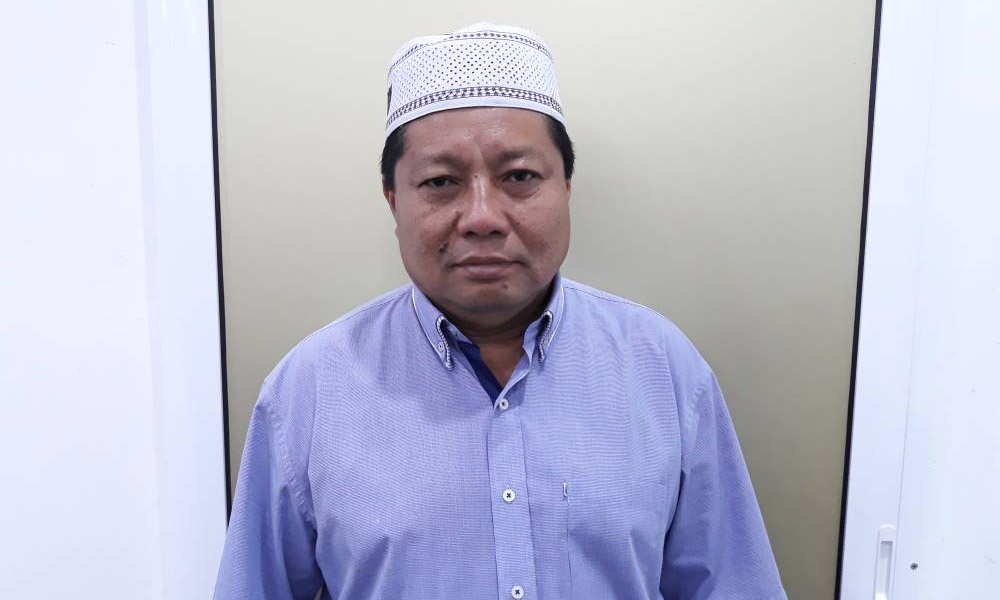
Mazlan (photo) said the party now has some 3,000 members in Tebrau, most of whom were former Umno members.
The figure is enough to tilt the balance in Tebrau, but with PAS possibly joining the fray and making it a multi-cornered fight, the Pakatan Harapan parties must work extra hard to compensate the split votes.
While Harapan is focused on the Malay heartlands, MCA is trying to claw back its Chinese support.
MCA plans to field former deputy minister Hou Kok Chung in Tebrau for the 14th general election. Hou, who is a former lecturer with a doctorate in Chinese studies, was unseated by DAP's Liew Chin Tong in the last general election. Liew was his student.
Hou has adopted the national MCA strategy at the local level, believing that the party's efforts of linking up local Chinese to business and cultural opportunities with a resurgent China can win them back.
In cooperation with Johor Bahru Chinese associations, Hou had helped form the Johor Bahru One Belt One Road (Obor) Centre, which he leads.
The name Obor is from China's key foreign policy, which seeks to link up the region through massive infrastructure projects, thus opening up various business opportunities.
However, a local MCA grassroots leader believes that Chinese voters are a lost cause for the party and the key lies in the Malay heartland, which helped MCA hold Tebrau in the last general election.
"Hou has been promoting Obor on a daily basis but it doesn't resonate well with the regular Chinese voter... They are already hardcore opposition supporters, there is no need to waste time on them.
"When I serviced my car at a local tyre shop recently, I did a quick survey of the row of shops there and all 10 of them turned out to be opposition supporters," he said.
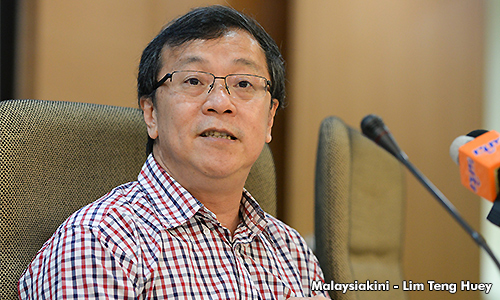
A cursory look at Hou's (photo) Facebook page also showed that most of the events he attended were Chinese-related, such as Chinese temple functions, Chinese schools and associations and peppered with a handful of events involving the Malay community.
MCA piggybacks on popular Umno rep
MCA's focus on the Chinese community in Tebrau is because it is banking on Umno's popular Tiram state assemblyperson Maulizan Bujang to take care of the Malay voters in Tebrau. Maulizan also happens to be the brother of the Tebrau Bersatu chief.
Maulizan admitted that Bersatu is having some impact but believes that Umno can hold the fort in Tiram.
“We are not worried about a Malay tsunami because we are a close-knit community, which does not vote based on sentiment... I visit my constituency every weekend and I've even had 17 functions in a single day.
“I serve all races as I am of mixed blood. My mother has Chinese blood. I can serve everyone,” Maulizan told Malaysiakini in an interview at his office.
Tebrau MCA chief Ng Yew Aik (photo) believes MCA and Umno have a good working formula, particularly at the local council level.

"We enjoy a good relationship in the city council, which has been efficient in delivering services. It has helped us stabilise the Chinese support while we have Maulizan to take care of the Malay voters," Ng said.
But Maulizan's popularity among the local Malay community may not necessarily be entirely transferable to MCA, even though both parties are from BN.
This is particularly true as the local Umno leaders have aggressively lobbied for MCA to give up the Tebrau parliamentary seat altogether and hand it over to Umno to contest.
Hou has also not endeared himself to the local Umno leaders.
"I've never seen Hou have tea with us to discuss the election," complained a local Umno leader.
These slights, while minor, give further justification for local Umno leaders to demand the Tebrau seat. Whatever BN chairperson Najib Abdul Razak decides - whether to favour MCA or Umno for the seat - the decision is bound to upset some voters.
Taking cognisance of how the Umno grassroots feel, caretaker Johor menteri besar Mohamed Khaled Nordin at an event in Kampung Cahaya Baru last week openly endorsed Maulizan - but stopped short on Hou before the Malay-majority crowd.
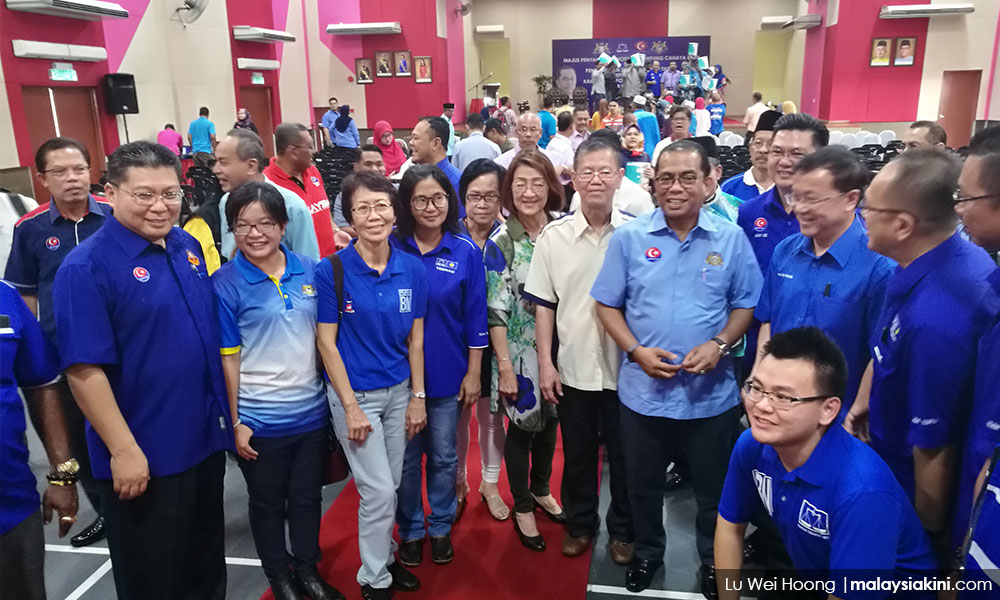
"It's not enough to just support me, I need a team. Please support Maulizan as part of my team.
"Hou was my deputy when I was the higher education minister and he is here with us," Khaled said.
Internal wranglings
While Maulizan was friendly and outgoing at the event, Hou was more subdued and didn't stand to greet the crowd.
This was again, a minor slight, but it didn't escape the eyes of Umno grassroots who later complained about it.
With only weeks left to the May 9 general election, BN is not the only party that has had to deal with internal wranglings.
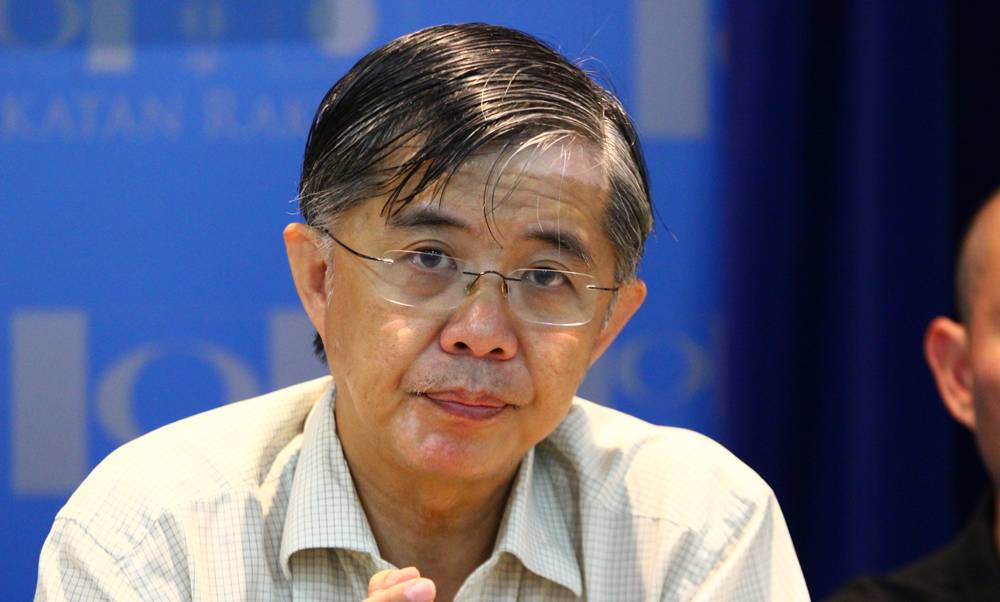
It was reported that the central PKR leadership is seriously considering deploying a "big gun" leader to lead the charge in Johor, after repeated complaints from Harapan allies, and a potential candidate is its vice president Tian Chua (photo).
If the plan goes ahead, among the seats being considered for Tian Chua are Segamat or Tebrau.
But any last-minute change, particularly in Tebrau, where Choong has worked the ground for five years, could cause a local revolt.
But beyond the internal politics of the contending parties and the Malay heartlands, another key factor will be the rapid urbanisation of Tebrau.
According to the electoral roll ending 2017, Tebrau's total voters had ballooned to from 90,482 voters to 123,368 voters, an increase of 26 percent - but its mixed racial composition has been maintained.
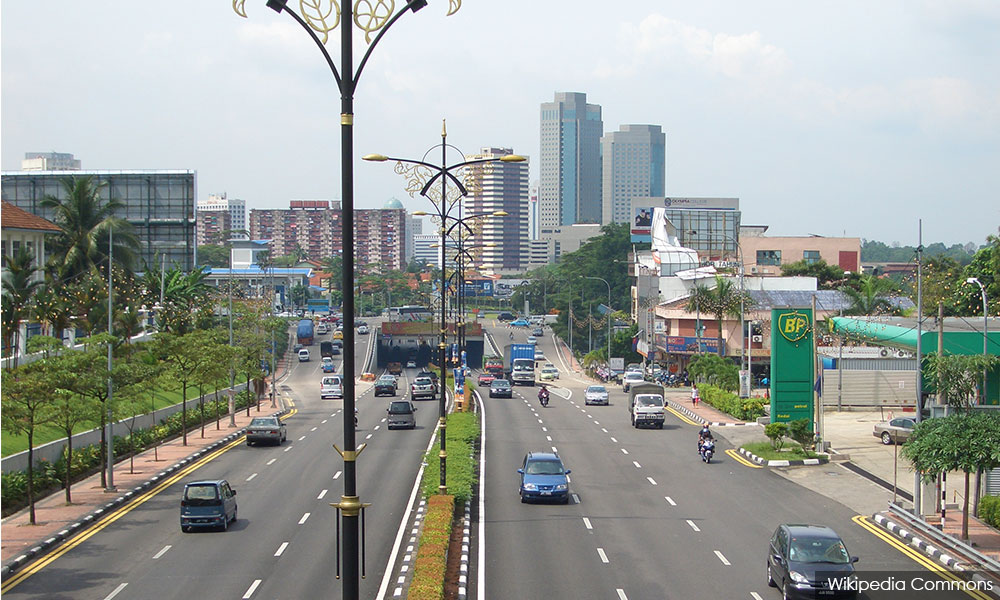
Located in the northeast of greater Johor Bahru and managed by the Johor Bahru City Council and Pasir Gudang Municipal Council, the constituency as seen an explosion of new housing estates.
Tebrau has five industrial areas and a port, among them the Tanjung Langsat heavy industrial area, which focuses on the oil and gas sectors and steel production, while the Desa Cemerlang light industrial area focuses on the electronics and the manufacturing sector.
The constituency is also bustling with retail activities, hosting Johor's first IKEA furniture store, a Tesco shopping mall and two Aeon shopping malls, one of which was in the news last week when the Johor crown prince made a surprise appearance and spent around RM1 million on shopping sponsorship.
Owing to its proximity to the Johor Causeway, many Malaysians settled here to travel Singapore daily to earn their living.
BN leaders have issued mixed comments about those working in Singapore returning to Malaysia to vote but this demography, whether they show up or not on polling day, will also play an important role in the battle for Tebrau.
mixed comments


Are you sure you want to delete this comment?
This action cannot be undone.