


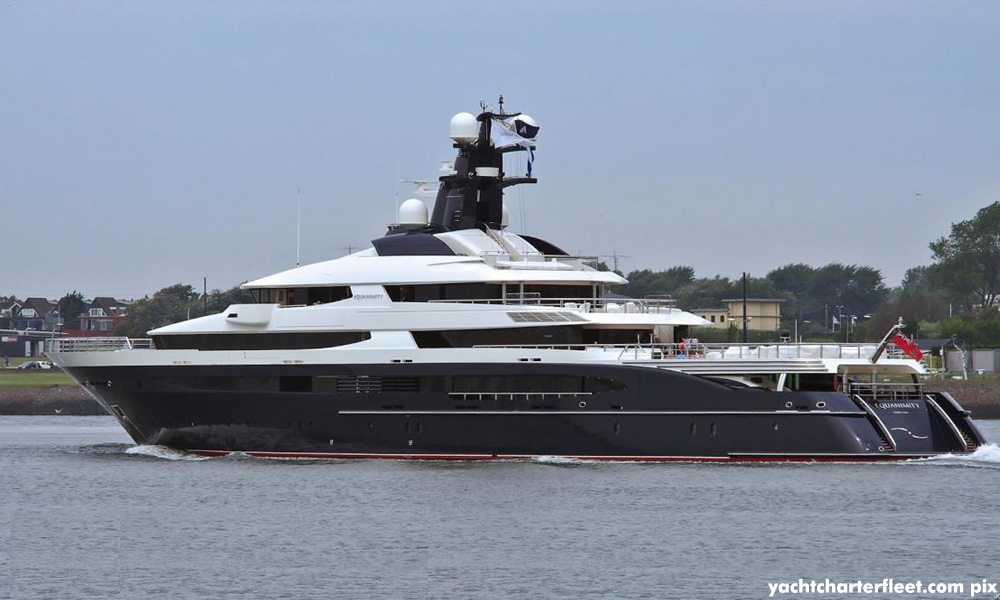

Coincidence? DOJ says Equanimity ‘went dark’ after 1MDB civil suits
The Equanimity had been transmitting its location data “many times a day” up to June 14 last year, one day before the US Department of Justice (DOJ) filed its civil forfeiture suits involving 1MDB, which included the seizure of the superyacht.
Since then, according to the DOJ, the Equanimity’s automatic identification system (AIS) had not transmitted for up to almost a month at a time.
“After that date, the AIS system went dark for several substantial periods of time: nearly a month; six days; and two weeks.
“Either this is an extraordinary coincidence, or the AIS system went dark in response to this forfeiture case,” said Woo S Lee, deputy chief of the DOJ’s money laundering and asset recovery section's international unit, in court filings lodged at the California Central District Court on Monday.
The US$250 million Equanimity was seized by the department two months ago in Indonesia as part of its civil forfeiture suits aimed at confiscating the proceeds of allegedly misappropriated 1MDB funds, that it believes were been funnelled through the US financial system.
In particular, the DOJ claims that businessperson Low Taek Jho is the beneficial owner of the superyacht – although Low claims that the allegations against him are politically motivated, while 1MDB insists that its money had not gone missing.
The Equanimity is currently moored off the coast of Teluk Benoa, Bali, at the time Monday's filing was made.
Yesterday, a South Jakarta court invalidated the seizure of the yacht by Indonesian police - a day after the DOJ made its filing.
Nevertheless, the filing suggests that this would not have a significant impact on its attempts to seize the vessel...
The Equanimity had been transmitting its location data “many times a day” up to June 14 last year, one day before the US Department of Justice (DOJ) filed its civil forfeiture suits involving 1MDB, which included the seizure of the superyacht.
Since then, according to the DOJ, the Equanimity’s automatic identification system (AIS) had not transmitted for up to almost a month at a time.
“After that date, the AIS system went dark for several substantial periods of time: nearly a month; six days; and two weeks.
“Either this is an extraordinary coincidence, or the AIS system went dark in response to this forfeiture case,” said Woo S Lee, deputy chief of the DOJ’s money laundering and asset recovery section's international unit, in court filings lodged at the California Central District Court on Monday.
The US$250 million Equanimity was seized by the department two months ago in Indonesia as part of its civil forfeiture suits aimed at confiscating the proceeds of allegedly misappropriated 1MDB funds, that it believes were been funnelled through the US financial system.
In particular, the DOJ claims that businessperson Low Taek Jho is the beneficial owner of the superyacht – although Low claims that the allegations against him are politically motivated, while 1MDB insists that its money had not gone missing.
The Equanimity is currently moored off the coast of Teluk Benoa, Bali, at the time Monday's filing was made.
Yesterday, a South Jakarta court invalidated the seizure of the yacht by Indonesian police - a day after the DOJ made its filing.
Nevertheless, the filing suggests that this would not have a significant impact on its attempts to seize the vessel.
The filing noted that the DOJ is seeking an order from the California court to have the US government made custodian of the yacht if the Indonesian court rules in Equanimity (Cayman) Ltd 's favour.
The DOJ also expects the Indonesian government to make good on its public statements that the vessel would be handed to the US government regardless.
Lee cited several legal precedents to argue that a properly executed US warrant does not become invalid if it is done abroad in violation of foreign laws, nor does it immunise an asset from forfeiture.
He said this in arguing against Rim’s assertions that awarding the US government with custody of the Equanimity would violate Indonesian sovereignty, especially that of its courts.
Attempts to evade seizure
The DOJ is seeking protective custody of the Equanimity in Indonesia, claiming that the yacht’s existing crew cannot be trusted to bring the vessel to the US, where it is to be put up for sale.
Among others, it cited the crew’s alleged attempts to evade seizure, which included disabling the yacht’s AIS and avoiding jurisdictions deemed likely to assist in enforcing a US arrest warrant.
This was until Feb 28, when Indonesian police, accompanied by US Federal Bureau of Investigation agents, boarded and seized the vessel.
Lawyers representing Equanimity (Cayman) Ltd, have countered that the vessel’s location is publicly available online.
Using the Equanimity’s GPS track logs, they showed the court that the AIS had been transmitting since at least June 2016, except when it was turned off in areas deemed to be at risk of piracy.
Equanimity’s legal team, headed by Naeun Rim, had previously pointed to other means by which the US government could have determined the yacht’s whereabouts.
These include information from the company managing the yacht, or from the vessel’s flag state Cayman Islands long-range identification and tracking (LRIT) system.
‘Absurd assertion’
It was these arguments that prompted Lee to highlight the gaps in the location data submitted by the Equanimity’s claimants.
Lee also dismissed the claim that the US government could have accessed the yacht's location information via the management company or Cayman Islands authorities as “ridiculous.”
“The assertion in claimants’ opposition that these entities would have been ‘more than willing’ to provide the LRIT data if asked is absurd, given the extraordinary measures they have employed to avoid seizure of the yacht.
“The statement in the declaration attached to the opposition that ‘nothing prevented the government from asking Cayman Islands authorities for information about the Equanimity’s location based on the LRIT data” is similarly ridiculous,” he said, adding that turning off AIS puts the vessel at risk of a collision.
Lee also pointed out that the argument is not about whether turning off AIS is the best way to hide the vessel, but to show that the Equanimity’s crew had made attempts to do so.
“This suggests that the current crew is largely concerned with following Low Taek Jho’s orders to keep the yacht away from the government, even at the cost of endangering the yacht.
“The current crew, beholden as they are to Low, are not reliable custodians of the yacht, and cannot be trusted to bring it to the United States,” he said.


Are you sure you want to delete this comment?
This action cannot be undone.