



GE14: Take heed of the silent majority
COMMENT | In early 2016, when crowds of supporters gathered at Donald Trump rallies just months after he announced his presidential bid, they held up signs which read, "The silent majority stands with Trump."
Many critics scoffed, declaring there was no such thing.
In the months that followed, a vast majority of pundits, pollsters, analysts and academicians seemed to agree that the so-called "silent majority" was indeed a big silent nothing. It was, they said, classic Trump – one big marketing campaign.
Yet, by year-end, in one of the most unpredictable, incredible election outcomes in the history of the modern world, the reality television star and real estate mogul triumphed over former secretary of state Hillary Clinton.
His trump card, if you will? Yes, that silent majority. The Silent had made their voices heard the loudest in the ballot box.
It was a pre-Watergate president Richard Nixon that initially used the term when justifying his plan to end the Vietnam war, following nationwide demonstrations involving millions of Americans.
In his famous 1969 speech, Nixon called on "the great silent majority" for support, while dismissing the demonstrators as nothing more than a "vocal minority." And the former answered.
Large turnouts a confidence boost
Perhaps Malaysia should take heed of US presidential election...
COMMENT | In early 2016, when crowds of supporters gathered at Donald Trump rallies just months after he announced his presidential bid, they held up signs which read, "The silent majority stands with Trump."
Many critics scoffed, declaring there was no such thing.
In the months that followed, a vast majority of pundits, pollsters, analysts and academicians seemed to agree that the so-called "silent majority" was indeed a big silent nothing. It was, they said, classic Trump – one big marketing campaign.
Yet, by year-end, in one of the most unpredictable, incredible election outcomes in the history of the modern world, the reality television star and real estate mogul triumphed over former secretary of state Hillary Clinton.
His trump card, if you will? Yes, that silent majority. The Silent had made their voices heard the loudest in the ballot box.
It was a pre-Watergate president Richard Nixon that initially used the term when justifying his plan to end the Vietnam war, following nationwide demonstrations involving millions of Americans.
In his famous 1969 speech, Nixon called on "the great silent majority" for support, while dismissing the demonstrators as nothing more than a "vocal minority." And the former answered.
Large turnouts a confidence boost
Perhaps Malaysia should take heed of US presidential election.
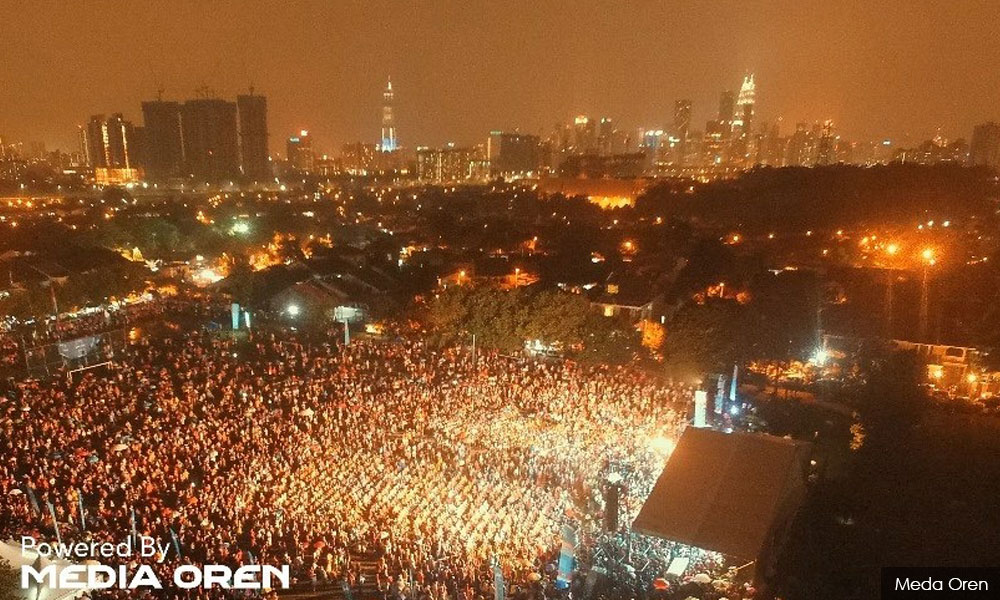
In the final days of an already short, emotion-charged election campaign period, ceramah sessions held by opposition Pakatan Harapan coalition have been bolstered by incredibly large turnouts – mega ceramah, they were called.
In Bukit Katil, Malacca, close to an estimated 10,000 Malaysians arrived to hear former prime minister-turned opposition leader Dr Mahathir Mohamad speak and with him, his former generals, 'Iron Lady' Rafidah Aziz, and former finance minister Daim Zainuddin.
Another 10,000 assembled in Gombak to hear Harapan bigwigs 'perform' – Bersatu president and former deputy prime minister Muhyiddin Yassin, caretaker Selangor menteri besar Mohamed Azmin Ali – himself a protégé of renowned orator and PKR de facto leader Anwar Ibrahim – the late Tok Guru's son Nik Omar, Rafidah and of course, Mahathir.
In Putrajaya, about 4,000 assembled at the opposition's 'Ceramah Kebangkitan Rakyat' rally, which some 50,000 watched live on Mahathir's Facebook page.
The moods at these ceramah programmes were often electric. The crowd, made up of Malaysians of varying ages, races, and professions, even civil servants, chanted and cheered. They braved rain and traffic to be there.
At one point, as one reporter put it, "aunties were climbing over chairs" to hear Rafidah speak. The laser-tongued former international trade and industry minister has been a vocal critique of the caretaker Najib Abdul Razak-led government and a staunch loyalist to Mahathir, and she certainly knew how to work a crowd.
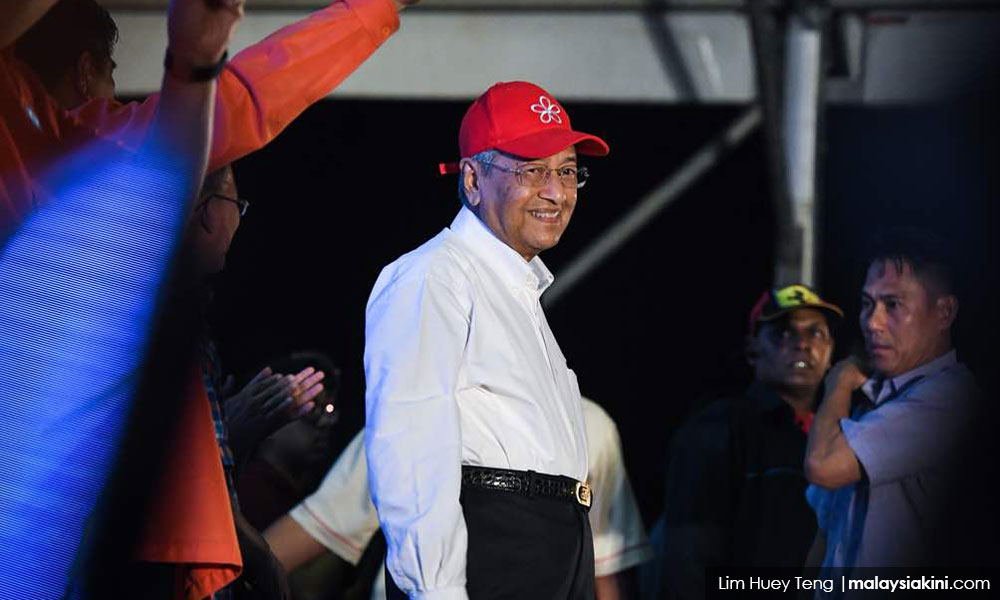
Mahathir, at 92 years of age, has lost little of his potency. His arrival was greeted with near rockstar frenzy, with roaring crowds and ear-shattering cheers. It would seem they would forgive him for anything.
In one ceramah, he mistakenly appealed to the crowd to vote for BN. But he laughed, and reminded listeners that he was once Umno president, now trying to bring them down. Why? "Because Umno is not Umno anymore."
It's been a message he has repeated many times, and on the surface, appeared to appease many who questioned his motives and found his turnabout against the very party he helmed a tad hypocritical.
Looking at drone shots of thousands of people pressed together, spilling out onto the streets, lit by the glow of streetlamps, indeed it is hard not to imagine Najib sweating at the brow. After all, he won the last election, but only just, and through a convenient first-past-the-post system. He lost the popular vote.
What do we want to hear?
When asked what my take is this GE14, I shrug. "It's hard to say", I'd respond. "BN is worried, that's for sure, but they are not taking any chances."
"You're nuts," I am then told. "Look at the crowds, hear what people are saying, Najib is in trouble."
It is tempting to believe my dissenters and to rid myself of my pessimism. Tempting to relax and leave trust to hope that maybe, maybe, change is upon us in an election already heavily titled towards BN.
At the very least, we could count on BN emerging victorious, but with the slimmest of majorities.
In his interview with Malaysiakini, Mahathir too cited these large numbers as a sign Harapan would win today's "mother of all polls" hands down.
If this man, who has held the top post for a staggering 22 years could put up such a confident front, then perhaps there is some truth in that.
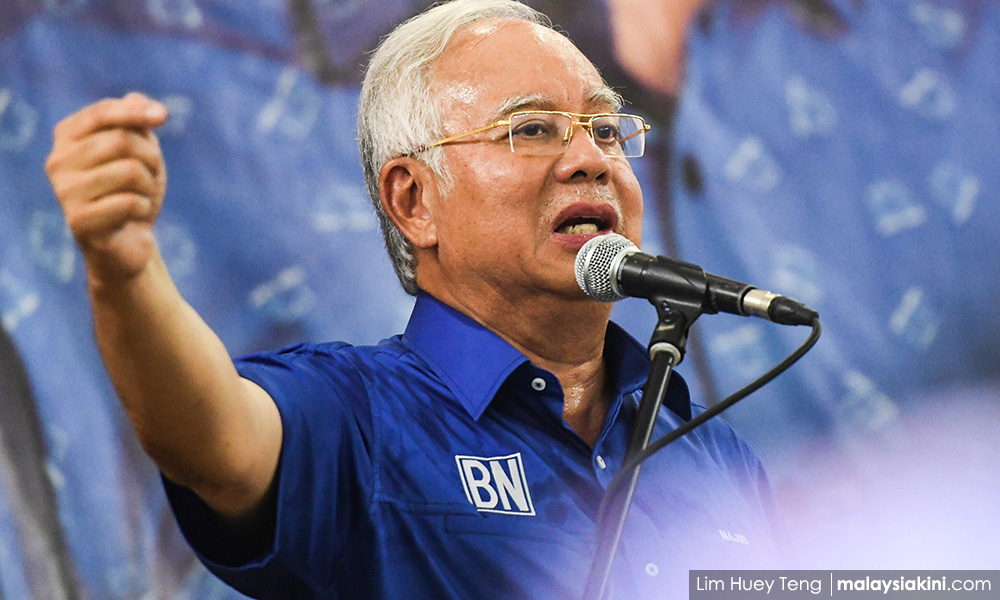
So critics, like myself, scoffed when Najib, and TV3, eagerly claimed that the large turnouts at these opposition ceramah were all smoke and mirrors, parlour tricks by Harapan to give the illusion of vast public support.
In tune or tone deaf?
Yet, at the back of my mind, the threat of the silent majority remained. Are we Malaysians now in danger of becoming so overwhelmed by the ruckus of the noisy minority, to the point we deafen ourselves to the true pulse of the people?
Are we only listening out for those who speak the words we want to hear?
After all, as Marie Whitaker wrote for NBC News: "Those who were unwilling publicly to admit they were supporting Trump used the privacy of the curtain of the ballot box to make their voices heard."
A study by the Merdeka Center, just slightly more than a week ago, found that while there was a swing of support from Malay voters towards Harapan when compared to 2013, it was not enough to wrest Putrajaya.
Particularly, it said, in Johor, the birthplace of Umno, and in Kedah – once Mahathir's political stronghold. Sabah, too, appears almost as impenetrable to the opposition, despite inroads being made.
In Muar, for example, many once-Umno supporters openly expressed their desire for change to PKR's Sungai Balang candidate Naim Jusri, in what is described in a Malaysiakini piece as a "revolt against Umno in Muar's Malay heartland".
Yet, there were those who proclaimed a desire for BN to remain, that change was especially tough for the older generation.
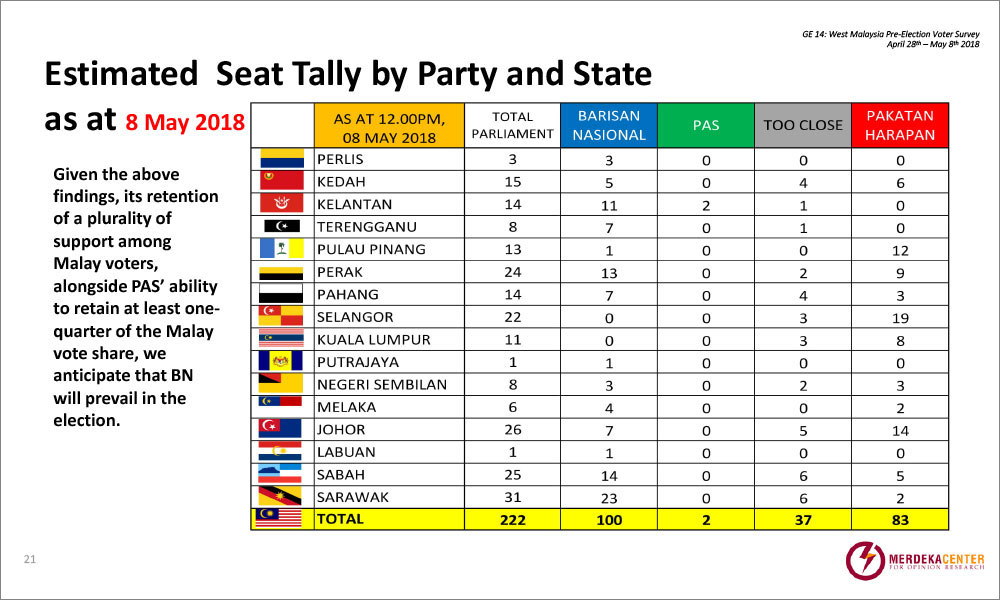
In a final survey released last night, Merdeka Center predicted that BN would still prevail, with at least 100 Parliament seats to Harapan's 83 and with better odds at claiming the remaining seats due to the potential retention of Malay votes.
It's no secret then that the battle for Malaysia will take place predominantly in the Malay heartland, and among rural voting districts.
Mahathir, too, knew that this would be a tough crowd.
He admitted that issues which worked well among urban dwellers, issues such as the 1MDB, a popular fodder for opposition candidates when husting, would have little traction among rural voters largely “unable to understand” the complexities of it.
This, despite the fact that the Najib-founded state investment fund is being investigated by numerous countries in what is described as one of the biggest global financial scandals today.
Instead, it will be the bread-and-butter issues, such as the rising cost of living, that could sway the tide.
But will it be enough? BN, according to Bersih, could potentially win the government with just 16.5 percent of the overall votes.
Will the Malay tsunami that many Malaysians are counting on arrive to wipe out BN's six-decade hold on the land or will it merely tickle their toes? Has Harapan done enough to appease the disquiet in the hearts and minds of the silent majority?
Tonight, we will know.
DARSHINI KANDASAMY is a member of Malaysiakini Team.
The views expressed here are those of the author/contributor and do not necessarily represent the views of Malaysiakini.


Are you sure you want to delete this comment?
This action cannot be undone.