


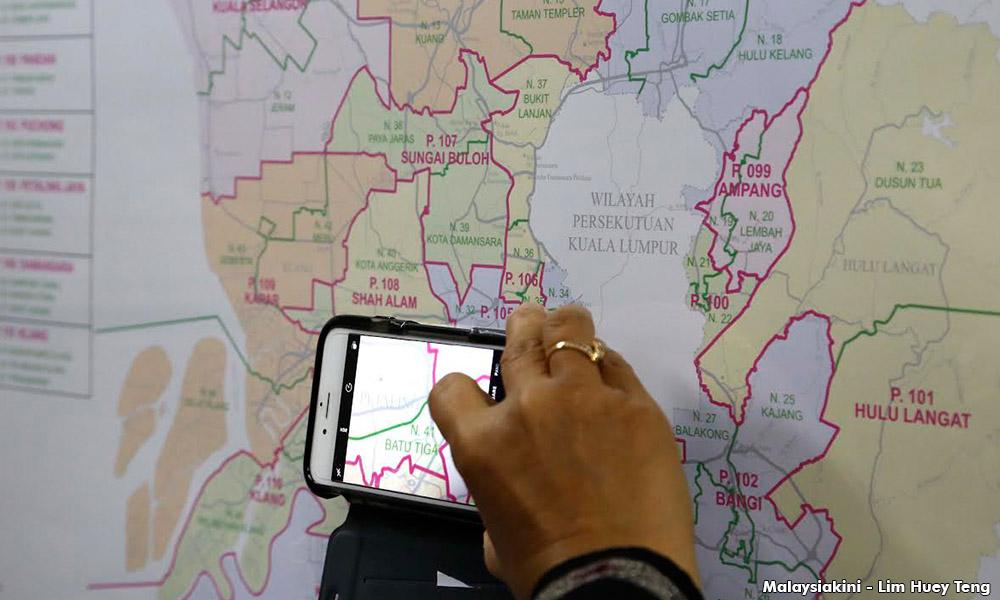

The effects of malapportionment in GE14
COMMENT | The 14th general election (GE14) was an unexpected development for many Malaysians. Many of us are still immersed in its after-effects: Elation; joy; vindication.
In this celebratory atmosphere, however, it is equally important to keep our eyes on the prize: Institutional reform - especially reform of our electoral system.
In this article, I analyse the effects of malapportionment in GE14.
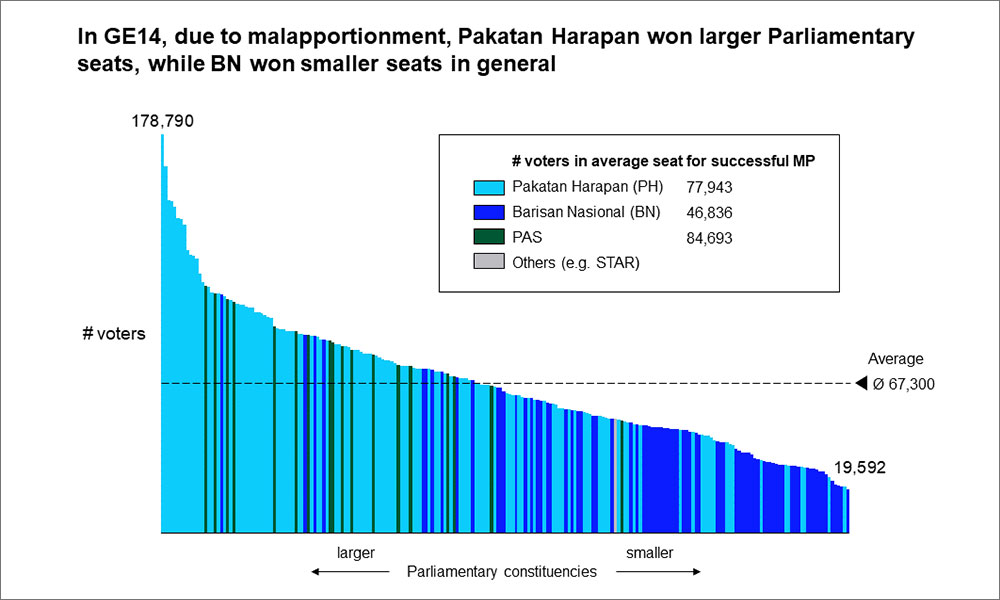
In GE14, in general, Pakatan Harapan won larger parliamentary seats, while BN won smaller seats - as you can see from the graph below.
Malapportionment meant that the 179,000 voters in Bangi, Selangor elected one MP, the same as the 20,000 voters in Igan, Sarawak.
The average GE14 constituency contained 67,000 voters. The average successful Harapan MP won in a larger-than-average seat which had around 78,000 voters, while the average successful BN MP won in a smaller-than-average seat which had about 47,000 voters. It took significantly more votes to elect a Harapan MP than a BN MP.
A fascinating development is that BN lost in almost all "large" parliamentary seats. Out of the 100 largest seats, BN only won in 9. Out of BN's 79 MPs, 70 of them won in the 122 smallest parliamentary constituencies in the country...
COMMENT | The 14th general election (GE14) was an unexpected development for many Malaysians. Many of us are still immersed in its after-effects: Elation; joy; vindication.
In this celebratory atmosphere, however, it is equally important to keep our eyes on the prize: Institutional reform - especially reform of our electoral system.
In this article, I analyse the effects of malapportionment in GE14.
In GE14, in general, Pakatan Harapan won larger parliamentary seats, while BN won smaller seats - as you can see from the graph below.
Malapportionment meant that the 179,000 voters in Bangi, Selangor elected one MP, the same as the 20,000 voters in Igan, Sarawak.
The average GE14 constituency contained 67,000 voters. The average successful Harapan MP won in a larger-than-average seat which had around 78,000 voters, while the average successful BN MP won in a smaller-than-average seat which had about 47,000 voters. It took significantly more votes to elect a Harapan MP than a BN MP.
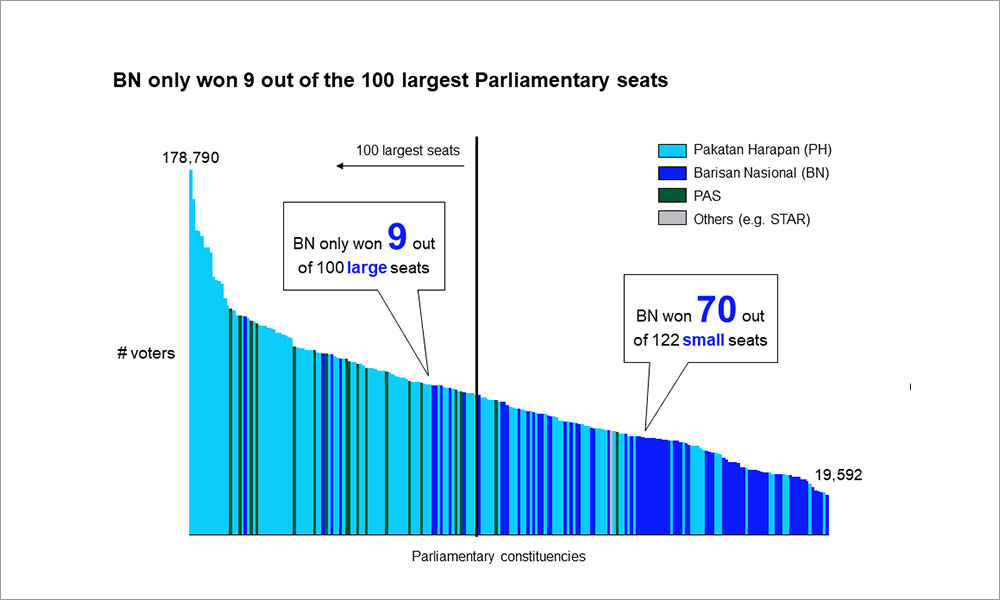
A fascinating development is that BN lost in almost all "large" parliamentary seats. Out of the 100 largest seats, BN only won in 9. Out of BN's 79 MPs, 70 of them won in the 122 smallest parliamentary constituencies in the country.
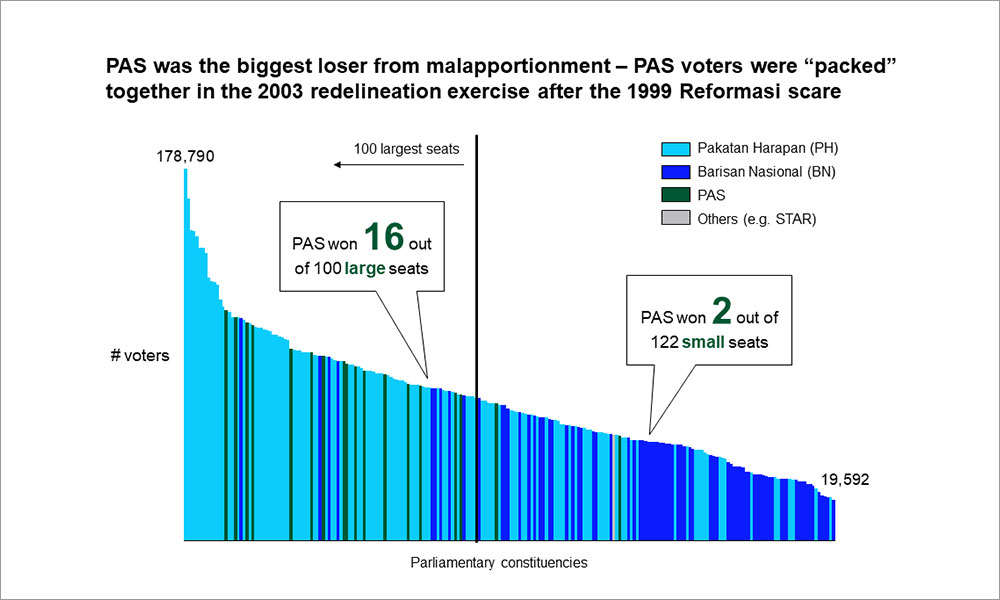
PAS was perhaps the biggest loser from malapportionment - winning 16 out of its 18 seats from the 100 largest parliamentary constituencies, but only 2 out of 122 small seats.
PAS voters were "packed" together in the 2003 redelineation exercise after the 1999 Reformasi scare, when the Malay vote swung against BN. The Islamist party's voters are still suffering from this disenfranchisement.
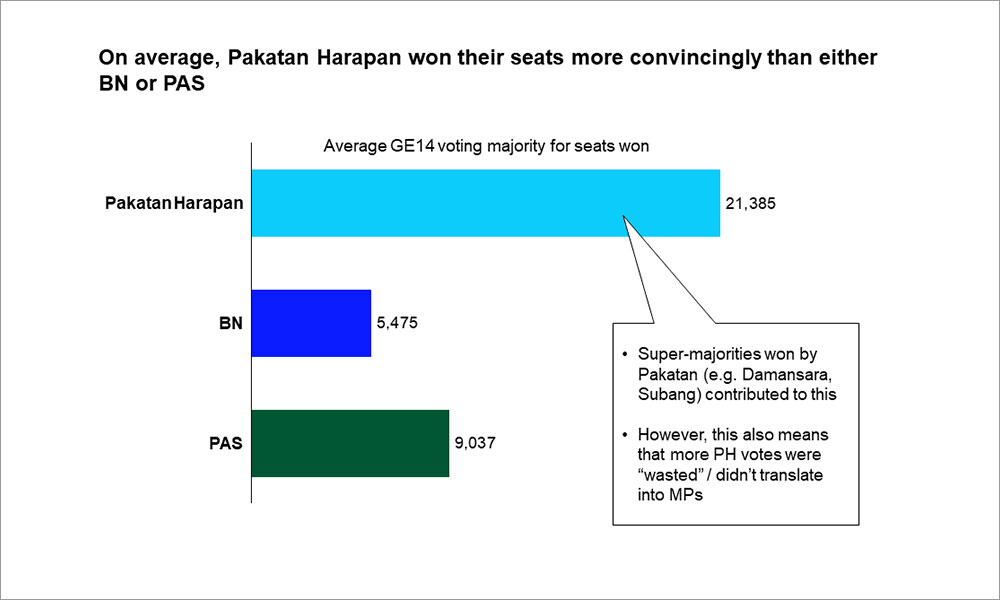
On average, Harapan won their seats more convincingly than either BN or PAS, with an average majority of around 21,000. Harapan supermajorities, for example in Damansara (107,000) and Subang (92,000) contributed to this high amount.
However, this also means that many Harapan votes were "wasted", or didn't translate into MPs. Large districts were effectively disenfranchised, as these supermajorities were larger than even the average constituency size (67,300). Essentially, Harapan could have elected many more MPs solely from their majorities.
The establishment of a committee on institutional reforms under the Council of Eminent Persons is a right step forward. The current structural unfairness in our electoral system needs to be addressed to entrench our nascent but vibrant culture of democracy.
*Notes:
- Data was obtained from this spreadsheet, which contains GE14 results data harvested from the Election Commission site.
- Harapan includes the four main parties (PKR, Bersatu, DAP, Amanah), Parti Warisan Sabah, then-independent Batu candidate P Prabakaran, and the two Sarawak independents that have since joined PKR.
Andrew Loh Zhu An is a co-founder of PulangMengundi.com, a get-out-the-vote online platform that helped Malaysian voters travel home to vote in GE14.
The views expressed here are those of the author/contributor and do not necessarily represent the views of Malaysiakini.


Are you sure you want to delete this comment?
This action cannot be undone.