


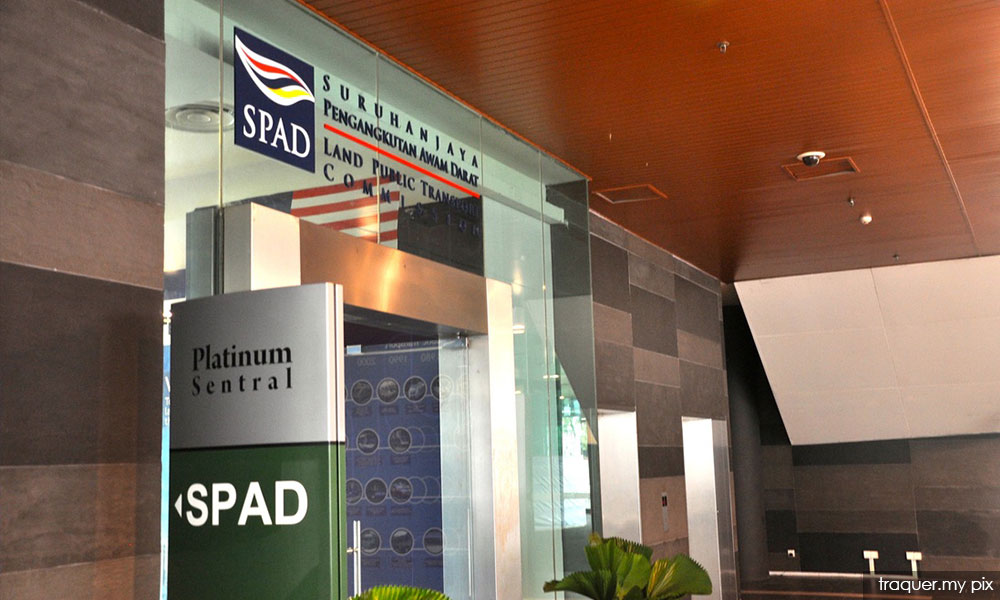

Transport Ministry back-pedalling from Spad to Apad?
COMMENT | The Transport Ministry's back-pedalling explanation on the formation of Apad to replace Spad was interesting. It drew many different responses from many quarters which provided different perspectives on this important issue.
It was said that now, land transport development is to be undertaken by this new agency, thus a letter A to replace S in the acronym of Apad. This new agency is now placed under MoT.
One can understand the new government’s frustrations with an authority like Spad that has been receiving so much allocation for their yearly expenditure but shows very little in return.
Spad commissioners and staff are paid big fat salaries and generous perks but had very little to show in terms of results or achievements made over the years. Their staff monthly earnings were actually much higher than the private sector and of no comparisons to civil servants in other government departments or those directly under MOT.
Among the notable failures of Spad that have been discussed and highlighted in the past include ...
COMMENT | The Transport Ministry's back-pedalling explanation on the formation of Apad to replace Spad was interesting. It drew many different responses from many quarters which provided different perspectives on this important issue.
It was said that now, land transport development is to be undertaken by this new agency, thus a letter A to replace S in the acronym of Apad. This new agency is now placed under MoT.
One can understand the new government’s frustrations with an authority like Spad that has been receiving so much allocation for their yearly expenditure but shows very little in return.
Spad commissioners and staff are paid big fat salaries and generous perks but had very little to show in terms of results or achievements made over the years. Their staff monthly earnings were actually much higher than the private sector and of no comparisons to civil servants in other government departments or those directly under MOT.
Among the notable failures of Spad that have been discussed and highlighted in the past include:
Poor planning and governing framework for the rail network and services
- The poor state of the lorry or freight transport industry
- Unresolved taxi permits issue and the poor state of the taxi industry
- Poorly studied proposals on Bus Rapid Transit (BRT) for Klang Valley which could not be implemented.
- Poorly studied proposals for a tram system for Putrajaya.
- Inconclusive reports on Regional Public Transport Master Plans, and
- Failure of Spad’s appointed consultants to deliver some studies.
Spad also had the habit of appointing the same consultants for different studies despite the failure of the consultants to deliver comprehensive, holistic and implementable plans.
Hopefully, with the closure of Spad, the cancellation of big fat packages for the staff, whose competency was very suspect to begin with, this branch of the government could perform better and cheaper. Under offer are new jobs with JPJ or Apad which will follow government salary scales and benefits.
Vehicle inspection functions
Reading the explanation from the minister, it gives an impression that the thinking is moving in the right direction, although an acrostic change in name appears simplistic at first.

The bigger issue, however, is to define clearly the roles and responsibilities of each - Apad and the Jabatan Pengangkutan Jalan (JPJ).
JPJ, historically known as Registrar and Inspectorate of Motor Vehicles (RIMV), has been broken into two parts in 1994 when the inspection side of their duty was privatised to Puspakom, a company owned by DRB-Hicom.
This inspectorate role and vehicle inspection unit was hived off to Puspakom under a privatisation agreement which appeared necessary at that time. Thus commercial vehicles, ownership transfer and new vehicle registration inspection had now revolved into a monopolistic nature of a business enterprise on the pretext to fulfil a safety requirement or to ensure inspected vehicles are safe.
In actual fact, many in the transport industry refers to this commercial body as an efficient fee-grabbing outfit camouflaged as a computerised vehicle safety inspection unit.
This job of ensuring vehicle safety, in many developed countries such as the UK or Japan, has long been given to local workshops so that a monopolistic nature and tendency for corrupt practices are totally eliminated and the process also become more convenient to vehicle owners.
As many industry players would testify, I strongly believe that this is the direction the minister should consider and start to develop in a new Malaysia; open up and allow MoT certified workshops to undertake vehicle inspection.
The issue of permits
This brings us to the next important question. Which body will issue all the commercial vehicles (bus, lorry and taxi) permits? Should this function be retained by Apad or be given to another body altogether?
It appears that Apad and JPJ are two separate and conflicting authorities with two clearly different functions going in opposite directions. JPJ is a registrar for motor vehicles and a tax collecting department; it has never been a planning agency and would not be able to plan for new rail lines, the MRT or LRT and a feeder bus network to support mass transit systems.
The main interests of JPJ is to register more vehicles; increase in car registration and ownership means more income to JPJ but means nothing except bad news for Apad.
Whereas Apad's main objective is to encourage more usage on public transport, discourage the use of private cars, a rather conflicting function altogether.
Possibly to increase modal split ridership from a current ratio of 85:15 cars to public transport to a ratio of 70:30 may be in the future. So on this score, JPJ is not fit to plan for public transport and for the same reason, should not be allowed to be a permit issuing agency for commercial vehicles either, as this would come into conflict with the long-term strategy to use more rail transport, both for passenger and freight movements.
Apad's strategy is to increase the use of public transport covering taxis, buses and rail-based transport.
Clearly, these are the key arguments in the formulation of transport policies. It requires a clear-cut understanding of the decision-making process involved in the setting up government bodies, departments or agencies in order to execute and implement those policies in the most effective manner. Therefore, setting the right framework that would be functional is an important element in this process.
Policy and planning functions
This brings us to the third element, the policy formulation and the planning process. Whilst the key and major policies should be studied and formulated at the heart of MoT, obviously involving the minister, this role should not be left to a department such as JPJ or Apad.
At the departmental or agency levels, some planning is needed for the data and information gathering purposes and this function must be done by the respective bodies. It goes without saying that any planning function requires a database for analysis purposes.
Thus, JPJ and Apad must equip themselves with a strong database collecting functions and some expertise IS required there.
Whilst Apad should be responsible for some level of planning, realistically this function, for practical reasons, should be given to the state and local government.
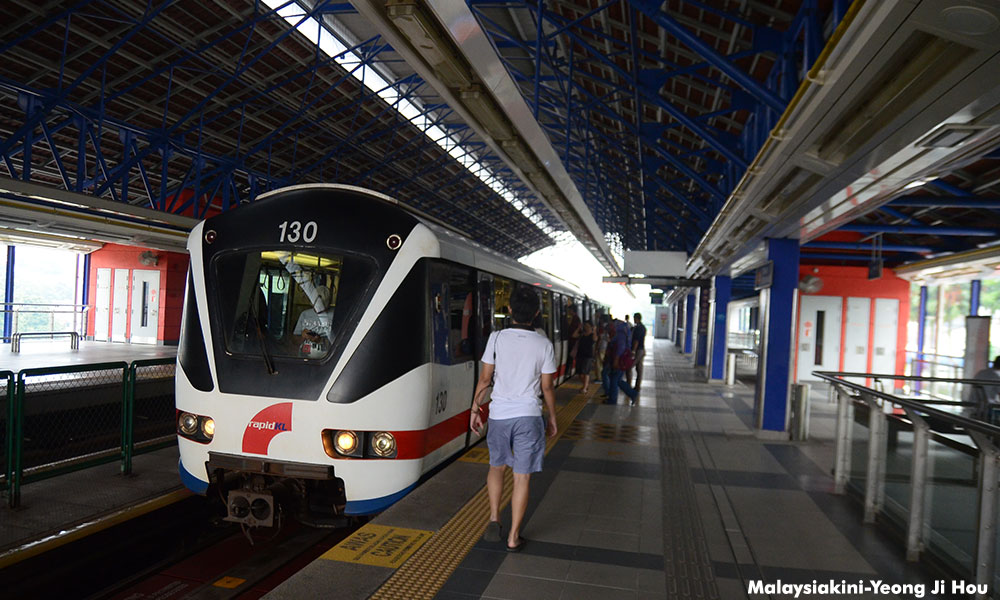
The local authorities should, in theory, know better when it comes to the needs and requirements for local bus services, school bus needs, feeder networkS for KTM, MRT or LRT services. Such planning functions should not be done at the Federal level (Apad).
However, there is another planning role which the MOT (or Apad) should play which has not been done before. This is with regards to transport grants to be made available to support local public transport.
MOT should therefore consider:
- To use road tax revenue (a collection of more than RM4.5 billion per year) as grants to be given to the states or local authorities to improve public transport in certain local areas.
- The determination of this grant and its formula for support could be played by Apad using their database and information.
Planning for transport services (bus, school bus, taxis, terminals, stations and stops) should be done at the state and a local government level and certainly not at federal level.
However, the grants could come from the federal MOT through the collection of road tax and other income derived by JPJ.
A clearly dynamic ministry, MOT has many issues to examine and new decisions are needed. It does not have to follow an old format. Some new thinking and strategies are required in order to move into the next gear.
MOT probably requires some level of expertise to undertake some analyses, formulate these new thoughts and critically examine those ideas. A well laid out plan could be done before a decision is reached by the minister.
There is, of course, a direct conflict between those encouraging greater use of public transport and those wanting to have more cars and dismantling car operating costs such as reduction in petrol price and doing away with toll charges.
This requires some balancing acts, between popular decisions and long-term solutions. On this note, perhaps an advisory council could be of some help.
ROSLI KHAN is a practising transport and logistics professional, academician, consultant and company director with over 30 years of experience.
The views expressed here are those of the author/contributor and do not necessarily represent the views of Malaysiakini.


Are you sure you want to delete this comment?
This action cannot be undone.