



British envoy’s quiet diplomacy helps win the day
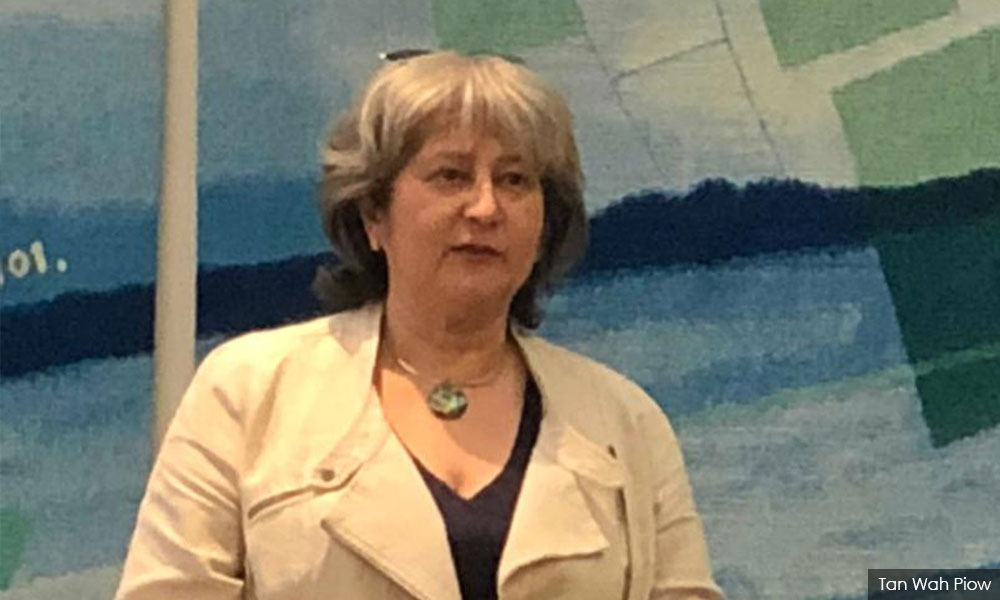
COMMENT | Vicki Treadell, the British high commissioner to Malaysia, in a talk held at the Portcullis House of the House of Commons, revealed that some politicians in the previous Najib government had wanted the British Foreign Office to replace her because of her contacts with opposition politicians and civil society.
This Ipoh-born British diplomat explained how, through quiet diplomacy, she managed to advance the cause of human rights in Malaysia. As the high commissioner at the time of David Cameron premiership, she had to deal with the severe criticisms raised by opposition politicians in Malaysia that the high-profile Cameron-led trade investment visit in July 2015 should be cancelled.
Just prior to the visit, Najib Abdul Razak as then prime minister had sacked both his deputy and the attorney-general for raising the issue of the handling of 1MDB corruption scandal.
The high commissioner explained to the audience that after the sackings, she knew that the official visit had to be arranged differently. She went to see the Malaysian foreign minister insisting that Cameron's programme be changed to include meetings with civil society leaders and at least the family of jailed opposition leader Anwar Ibrahim.
She said she insisted that unless that was agreed to, the visit had to be cancelled. Although her demands were accepted by the Malaysian foreign minister, he later reneged on the agreement upon her return to the high commission. When the Malaysian foreign minister insisted that she tell Cameron that under no circumstances should he meet Nurul Izzah, the daughter of the jailed Anwar, Treadell told the audience it was for her to decide what to tell her boss and not the Malaysian foreign minister.
Eventually, she managed to secure a compromise and the visit went ahead, although not without criticisms even in the British media.
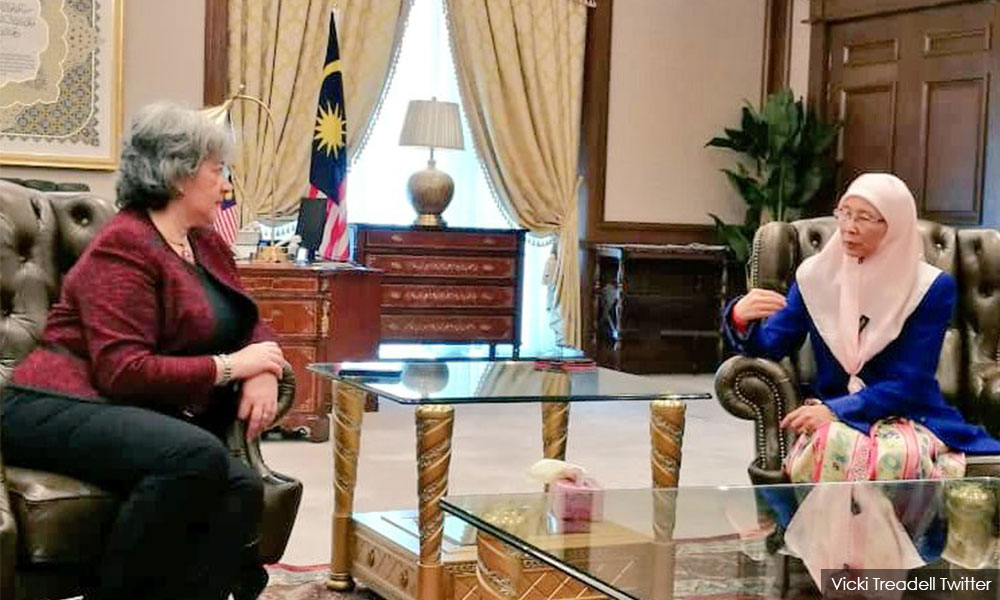
She said she was proud of the fact that following her intervention, Maria Chin Abdullah, the leader of Bersih, was released after two weeks of detention. She said she had argued that there was no justification to detain Maria Chin as she was merely campaigning for electoral reform.
Treadell did not claim exclusive credit for securing the release of Maria Chin, though she used that episode to demonstrate the effectiveness of ‘quiet diplomacy’ as opposed to any high-profile diplomatic protest. This was probably the high commissioner’s oblique response to criticisms of the Foreign Office for its otherwise uncritical acceptance of the Najib regime.
In her 40-minute speech organised by the British Malaysian Group (BMG), Treadell also gave a personal account of how events unfolded on the night of the 14th general election. She said she had her televisions showing the news on the mainstream channels while using the laptops to follow live streaming by online portals and WhatsApp groups.
“At 10pm all the channels were showing Najib speaking to a carefully chosen audience while social media live streams were showing Dr Mahathir Mohamad with ordinary Malaysians.” She said she had never seen Najib in such a state, sweating profusely, wiping his sweat with his white upper pocket kerchief. “I am sure he had been shown the real figures by the Special Branch,” she said.
By 10.30pm that night, “everything was going slow motion”. “We had the worst-case scenario plan, what would be our response then.
“Between 10.30 to 11pm, the numbers (on the election results) stopped. Malaysiakini became the one portal Malaysians trusted,” she recalled. “On social media everywhere, people were trying ways to connect to Malaysiakini...
COMMENT | Vicki Treadell, the British high commissioner to Malaysia, in a talk held at the Portcullis House of the House of Commons, revealed that some politicians in the previous Najib government had wanted the British Foreign Office to replace her because of her contacts with opposition politicians and civil society.
This Ipoh-born British diplomat explained how, through quiet diplomacy, she managed to advance the cause of human rights in Malaysia. As the high commissioner at the time of David Cameron premiership, she had to deal with the severe criticisms raised by opposition politicians in Malaysia that the high-profile Cameron-led trade investment visit in July 2015 should be cancelled.
Just prior to the visit, Najib Abdul Razak as then prime minister had sacked both his deputy and the attorney-general for raising the issue of the handling of 1MDB corruption scandal.
The high commissioner explained to the audience that after the sackings, she knew that the official visit had to be arranged differently. She went to see the Malaysian foreign minister insisting that Cameron's programme be changed to include meetings with civil society leaders and at least the family of jailed opposition leader Anwar Ibrahim.
She said she insisted that unless that was agreed to, the visit had to be cancelled. Although her demands were accepted by the Malaysian foreign minister, he later reneged on the agreement upon her return to the high commission. When the Malaysian foreign minister insisted that she tell Cameron that under no circumstances should he meet Nurul Izzah, the daughter of the jailed Anwar, Treadell told the audience it was for her to decide what to tell her boss and not the Malaysian foreign minister.
Eventually, she managed to secure a compromise and the visit went ahead, although not without criticisms even in the British media.
She said she was proud of the fact that following her intervention, Maria Chin Abdullah, the leader of Bersih, was released after two weeks of detention. She said she had argued that there was no justification to detain Maria Chin as she was merely campaigning for electoral reform.
Treadell did not claim exclusive credit for securing the release of Maria Chin, though she used that episode to demonstrate the effectiveness of ‘quiet diplomacy’ as opposed to any high-profile diplomatic protest. This was probably the high commissioner’s oblique response to criticisms of the Foreign Office for its otherwise uncritical acceptance of the Najib regime.
In her 40-minute speech organised by the British Malaysian Group (BMG), Treadell also gave a personal account of how events unfolded on the night of the 14th general election. She said she had her televisions showing the news on the mainstream channels while using the laptops to follow live streaming by online portals and WhatsApp groups.
“At 10pm all the channels were showing Najib speaking to a carefully chosen audience while social media live streams were showing Dr Mahathir Mohamad with ordinary Malaysians.” She said she had never seen Najib in such a state, sweating profusely, wiping his sweat with his white upper pocket kerchief. “I am sure he had been shown the real figures by the Special Branch,” she said.
By 10.30pm that night, “everything was going slow motion”. “We had the worst-case scenario plan, what would be our response then.
“Between 10.30 to 11pm, the numbers (on the election results) stopped. Malaysiakini became the one portal Malaysians trusted,” she recalled. “On social media everywhere, people were trying ways to connect to Malaysiakini.”
Independent news portal Malaysiakini was temporarily blocked by the Malaysian Commission of Multimedia and Communications (MCMC) on election night.
The 'Great Repeal Bill'
As to British businesses response to Mahathir’s government, Treadell said she had hosted a meeting with 24 top British companies in Malaysia. Their views are that “in the medium and long-term, if the government follows through its programme, Malaysia would be an even greater country.”
She gave credit to Mahathir for making Malaysia into a ‘tiger economy’ during the first period of his rule. “Can this tiger regain its roar?” she asked. “All the early signs are that everyone is committed to doing it.”
On the human rights front, she had met Tommy Thomas, the new attorney general, and had discussed with him the planned constitutional reforms. She was impressed that he was considering a “Great Repeal Bill” to rid a package of bad laws instead of just piecemeal reform.
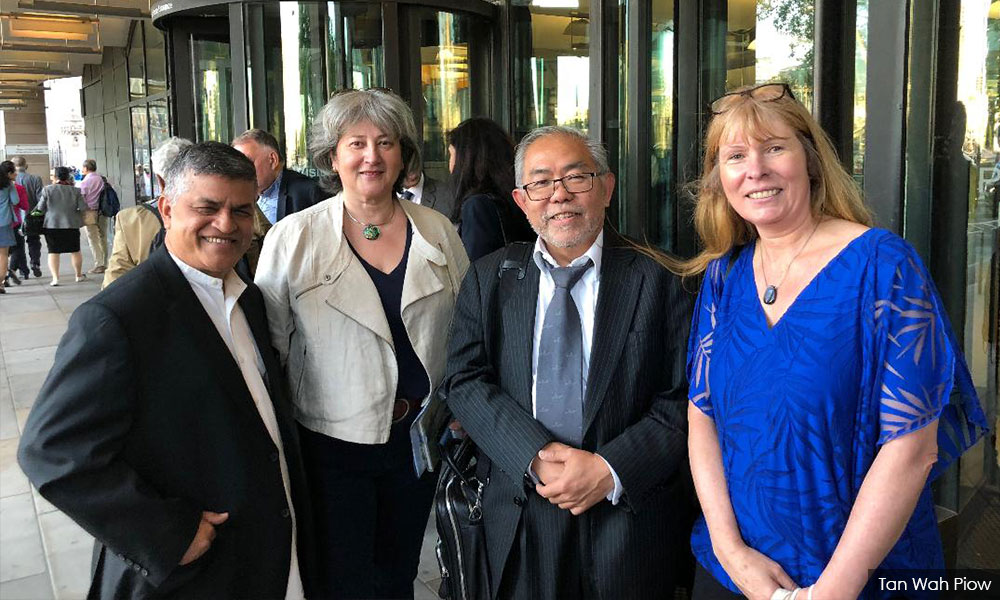
She was also impressed by the pace of the development as demonstrated by the speedy release of Anwar. She singled out for mention Zunar, the Malaysian cartoonist who was also present at her talk in London.
“The lifting of Zunar’s travel ban,” she said, “and the discontinuation of charges against others, are cause for optimism.”
Treadell said Britain also offered assistance in the training of MPs through the Westminster Foundation for Democracy. As she spoke, there were some 30 officers from the Malaysian anti-corruption agency - MACC - in London undergoing training. Although it was arranged pre-GE14, it should now benefit the new government.
On the recovery of illegally obtained assets belonging to Malaysian taxpayers which might be in London, Treadell said she had told Thomas “send the formal request, and the clues for where to look”.
Post-Brexit, the British Foreign Office is doing its part to strengthen its trade links with Malaysia. Since yesterday’s marginalised human rights advocates are today’s heroes, there is no harm flaunting some of Britain’s human rights credentials to impress today’s politicians.
In this instance, if an ethical foreign policy helps sell British goods, why not if the price is right.
TAN WAH PIOW is a Singaporean lawyer who has lived in exile in London for the past 39 years.
The views expressed here are those of the author/contributor and do not necessarily represent the views of Malaysiakini.


Are you sure you want to delete this comment?
This action cannot be undone.