


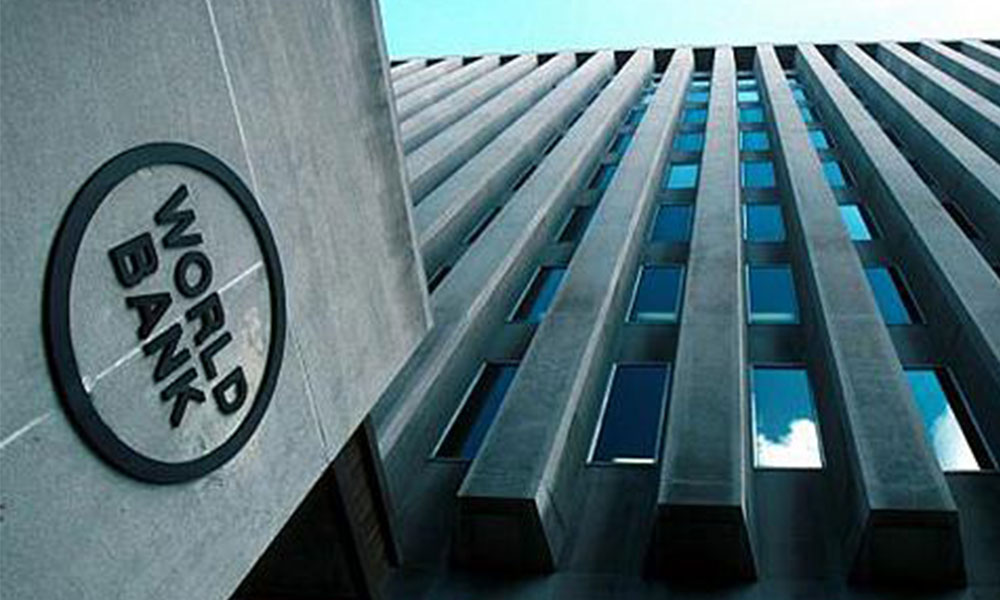

World Bank: M'sia guaranteed debt goes up, direct debt goes down
Putrajaya's direct debt has trended downwards since 2015 but debt guaranteed by the government has gone up since 2016, the World Bank said in its latest biannual report on the Malaysian economy.
The World Bank’s June 2018 edition of the Malaysia Economic Monitor noted that increased loan guarantees for large-scale infrastructure projects were a crucial contributing factor towards the country's growing contingent liabilities...
Putrajaya's direct debt has trended downwards since 2015 but debt guaranteed by the government has gone up since 2016, the World Bank said in its latest biannual report on the Malaysian economy.
The World Bank’s June 2018 edition of the Malaysia Economic Monitor noted that increased loan guarantees for large-scale infrastructure projects were a crucial contributing factor towards the country's growing contingent liabilities.
“Total statutory guarantees stood at RM238.0 billion or 17.6 percent of GDP as of end-2017, up from RM187.3 billion or 15.2 percent of GDP in 2016.
"The steady expansion of fiscal contingent liabilities since 2009 has been driven largely by increased loan guarantees to support the implementation of large-scale infrastructure projects by non-financial public corporations (NFPCs)," the report read.
Should Putrajaya be made to honour these guarantees, the World Bank said there could be an unexpected strain on public finances leading to higher sovereign financing cost.
The World Bank's estimate on government-guaranteed debt was higher than the RM199.1 billion (14.6 percent of GDP) cited by Finance Minister Lim Guan Eng.
Among examples cited by Lim were MRT operators Danainfra Nasional Bhd (RM42.2 billion), Prasarana Malaysia Bhd (RM26.6 billion), Malaysia Rail Link (RM14.5 billion) and 1MDB (RM38 billion).
In the case of 1MDB and SRC International Bhd, which are both technically insolvent, Putrajaya has been forced to foot their debts.
It has been established that the Finance Ministry had to pay 1MDB's creditors close to RM7 billion over the past year alone. Despite this, the previous administration had promised 1MDB's boss Arul Kanda Kandasamy RM5 million in ex-gratia payments.
Vigilance necessary
The World Bank also noted that Putrajaya was committed to RM201.4 billion (14.9 percent of GDP as of Q4 2017) in long-term payments for a range of public-private partnership (PPP) arrangements.
The report explained that these arrangements were mostly to support increased infrastructure investments without immediate budgetary impact to the government.
Although the report said that the risks associated with these commitments appeared "contained" for the moment, it advised "continued vigilance and transparent, orderly management of commitments" in order to reassure the market about Malaysia's longer-term public debt sustainability.
The report noted that the new government was still committed to achieving a 2.8 percent federal deficit target for 2018, and that the expected revenue shortfall due to the removal of the goods and services tax (GST) should be compensated with higher oil-related revenues and spending restraints.
"In addition, the government has indicated that it will reassess the overall federal government debt and liabilities, including the guarantees that have materialised and the future fiscal commitments under PPP arrangements.
"It also intends to review several large-scale infrastructure projects with a view to safeguard longer-term fiscal sustainability," read the report.
The report also noted that the increase in the price of food outpaced other necessities such as housing and transport. This was even more apparent in urban areas.
The report said household income data suggested that broad-based income growth saw mean and median incomes growing faster than inflation across all income categories.
However, those with below-average incomes are not keeping pace with inflation and may resort to second or third jobs to keep up with the increasing cost of living.
"Assuring opportunities for all to develop their capacities and find more productive and remunerative employment will help counter the impact of rising living costs," read the report.
Overall, the World Bank expected Malaysia's near-term economic growth to remain strong - 5.4 percent for 2018 - underpinned by stronger growth of household consumption.
The report said Malaysia was on track to transition from an upper-middle-income economy to a high-income economy within the next two to six years.
The World Bank's definition of "high-income country" involved a gross national income (GNI) per capita of US$12,055. Malaysia's GNI per capita in 2017 stood at US$9,650.


Are you sure you want to delete this comment?
This action cannot be undone.