




Gov't must look into these issues pertaining to pharmacists in M'sia
COMMENT | Malaysian Pharmaceutical Society (MPS) council members recently had the opportunity to have a meeting on July 12 and presented the following topics to Health Minister Dzulkely Ahmad. Issues pertaining pharmacists in Malaysia:
1. Pharmacy Bill
As of now, the Pharmacy Bill which had been drafted over the past 20 years has yet to be tabled in Parliament. There are many benefits with regards to pharmacists in this Bill. However, the objection towards this Bill by MPS still stands on various issues, which was decided by the previous government, which will heavily impact the patients, especially on medication safety.
MPS will support the Pharmacy Bill if the following criteria are fulfilled:
• Mandatory prescription must be issued by prescribers as it is the right of patients
• Include the indication for the medication into the prescription except for certain diseases such as HIV, Aids, STDs, etc.
• Compounding can only be carried out by a registered pharmacist
• Dispensing of psychotropic substances can only be done by a registered pharmacist
• Pharmacy assistant has to work under the supervision of a registered pharmacist
The above points had been raised in previous letters to the government and it is hoped that the new Pharmacy Bill will be tabled immediately for the betterment of all parties.
2. Dispensing Separation (DS)
This is a separate issue from the Pharmacy Bill. It must be solved for the betterment of the rakyat from the aspect of patient safety and medication safety. Presently, DS already exists in five out of six of the healthcare systems in Malaysia without any legal provisions. In fact, it is a best practice which is supported by the World Health Organisation.
The decision to implement DS in the primary private healthcare setting which involves the general practitioners and community pharmacists lies on the shoulders of the minister. A decision has to be made as soon as possible as the implementation may take the entire period of the current government’s mandate.
All parties must benefit from this initiative, especially the rakyat. The implementation of DS will require several other integrated actions, which include the National Insurances Scheme, National Drug Formulary, standardisation of medication prices in the National Drug Formulary, zoning for community pharmacy and clinics as well as a thorough explanation to the rakyat.
All developed countries in the world have implemented DS. On top of that, even countries such as Indonesia, Thailand, Philippines, Taiwan, India and Pakistan have already implemented DS.
Therefore, DS should be implemented as soon as possible in line with the hopes of the present government to reform the present healthcare system for the sake of the rakyat. The present government must not delay any longer in implementing DS...
COMMENT | Malaysian Pharmaceutical Society (MPS) council members recently had the opportunity to have a meeting on July 12 and presented the following topics to Health Minister Dzulkely Ahmad. Issues pertaining pharmacists in Malaysia:
1. Pharmacy Bill
As of now, the Pharmacy Bill which had been drafted over the past 20 years has yet to be tabled in Parliament. There are many benefits with regards to pharmacists in this Bill. However, the objection towards this Bill by MPS still stands on various issues, which was decided by the previous government, which will heavily impact the patients, especially on medication safety.
MPS will support the Pharmacy Bill if the following criteria are fulfilled:
• Mandatory prescription must be issued by prescribers as it is the right of patients
• Include the indication for the medication into the prescription except for certain diseases such as HIV, Aids, STDs, etc.
• Compounding can only be carried out by a registered pharmacist
• Dispensing of psychotropic substances can only be done by a registered pharmacist
• Pharmacy assistant has to work under the supervision of a registered pharmacist
The above points had been raised in previous letters to the government and it is hoped that the new Pharmacy Bill will be tabled immediately for the betterment of all parties.
2. Dispensing Separation (DS)
This is a separate issue from the Pharmacy Bill. It must be solved for the betterment of the rakyat from the aspect of patient safety and medication safety. Presently, DS already exists in five out of six of the healthcare systems in Malaysia without any legal provisions. In fact, it is the best practice which is supported by the World Health Organisation (WHO).
The decision to implement DS in the primary private healthcare setting which involves the general practitioners and community pharmacists lies on the shoulders of the minister. A decision has to be made as soon as possible as the implementation may take the entire period of the current government’s mandate.
All parties must benefit from this initiative, especially the rakyat. The implementation of DS will require several other integrated actions, which include the National Insurances Scheme, National Drug Formulary, standardisation of medication prices in the National Drug Formulary, zoning for community pharmacy and clinics as well as a thorough explanation to the rakyat.
All developed countries in the world have implemented DS. On top of that, even countries such as Indonesia, Thailand, Philippines, Taiwan, India and Pakistan have already implemented DS.
Therefore, DS should be implemented as soon as possible in line with the hopes of the present government to reform the present healthcare system for the sake of the rakyat. The present government must not delay any longer in implementing DS.
3. 'Peduli Sihat' scheme
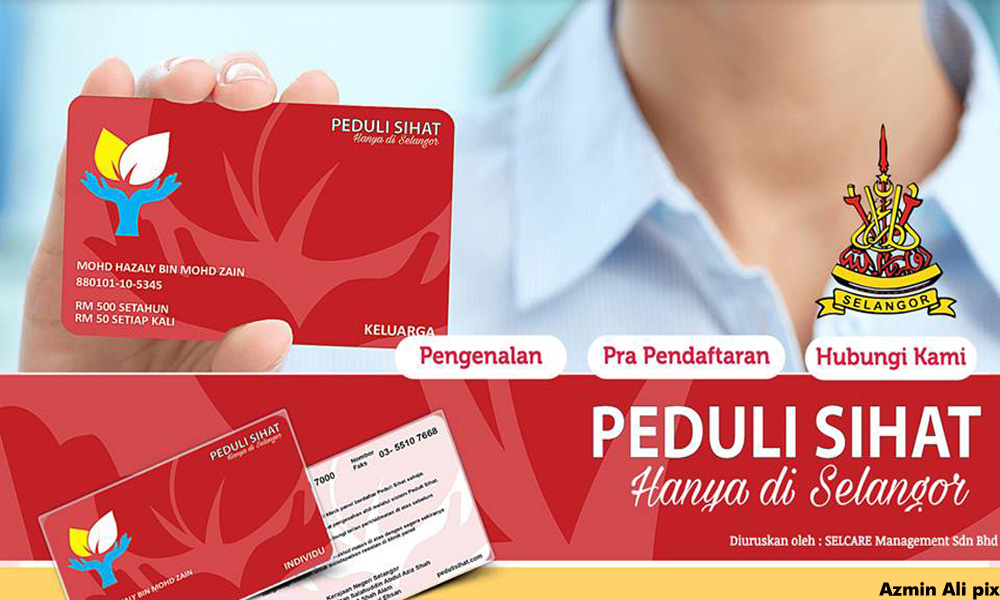
MPS hopes that the implementation of the 'Peduli Sihat' scheme by the government will involve all community pharmacies. It will benefit the B40 group of the rakyat as they would be able to obtain products and medications at reasonable prices as well as get professional advice from pharmacists in terms of wellness and preventive health. This will have a huge impact towards this segment of the population and is in line with the aspirations of the present government.
4. MPS manifesto – 14th general election
For the first time, MPS had launched a manifesto in four languages, namely Malay, English, Mandarin and Tamil, in conjunction with the 14th general election aimed at the government which would be formed.
The gist of the manifesto is:
1. Uphold the pharmacy profession as a member of the healthcare team for the benefit of Malaysians.
2. Enhance the role of pharmacists in all sectors of the Malaysian healthcare system.
3. Develop the pharmacy profession in line with the development at the international level.
4. Ensure the welfare of pharmacists is well taken care of, both in public and private sectors.
5. Ensure that pharmacy services are carried out ethically and professionally, and their level and quality are harmonised in both the public and private sectors.
6. Ensure that medicines are effective, accessible and affordable, both in the public and private sectors.
7. Ensure safer use of medicines in both the public and private sectors by urging the government to ensure that the health system is benchmarked against the current world standard where dispensing separation is the norm.
MPS has also carried an analysis in line with the 'Buku Harapan' dan matched it with our manifesto.
5. The country’s need for registered pharmacists
Every year there are 1,300 pharmacy graduates produced by 21 public and private universities. The high number of graduates has posed a number of challenges to the pharmacy profession in Malaysia. The question is how many pharmacists are actually needed in Malaysia? MPS had proposed that a moratorium towards new pharmacy programmes be put in place until the government can set a clear policy to rectify this issue.
The dual system (private and public) has resulted in the authorities having a difficult time in establishing the actual need of pharmacists in Malaysia. There are also issues raised with regards to the quality of pharmacy education.
The government needs to establish an inclusive health policy which involves all stakeholders and is spearheaded by the Ministry of Health. This issue has critically affected the training of provisionally registered pharmacist even though liberalisation had been implemented in this aspect. Perhaps the government can extend the pharmacy education programme to five years, whereby the final year will include pre-registration training. This would reduce the overall load on the government.
6. Recognising the pharmacy profession
MPS urges the government to recognise the pharmacy profession in line with the global standards by WHO in the principles of Good Pharmacy Practice whether in the public or private sector. This matter is of importance as the roles, responsibilities and contributions of pharmacists towards the healthcare system of the country is enormous.
Pharmacists as healthcare professionals are medication experts and guardians of medicine. For your information minister, the theme of the “World Pharmacist Day 2018” celebration carries the theme “Pharmacists: Your Medicine Experts”.
Therefore, it is the responsibility of the government to ensure the level of pharmaceutical care delivery to the rakyat is balanced out in the public and private sector as it involves all Malaysians directly. We cannot afford to have different standards of medication and patient safety in this country.
7. Professional fees for pharmacists
Pharmacists are the only profession in this country that provides professional services for free. Therefore, the government should allow pharmacists to charge a fee for all professional services provided by pharmacists in the following:
• Smoking Cessation –mQuit
• Medication Counselling
• Medication Reconciliation
• Home Medication Review
• Weight Management
• Medication Therapy Adherence Clinic (MTAC)
• Home Medication Delivery
8. National Medicines Policy
The existing National Basic Medicine Policy (DUNAS) is a great reference and a foundation. However, it should be placed under a National Health Policy which should be developed for the country. This National Health Policy should be inclusive, involving various stakeholders and should cover the physical and mental health aspects from womb to tomb. In order to reduce the government’s financial burden, emphasis and priority should be on promotive and prevention aspects as well. The primary care sector should be strengthened as this would inevitably not only reduce the government’s burden but also the escalating cost in the management of non-communicable diseases (NCD).

9. Core health transformation
MPS supports the above action plan. However, the plan needs to be inclusive, involving both the public and private sectors. Both sectors working in silos will not benefit the country as a nation. The government should reform the healthcare sector to the standards of developed countries such as Australia, United Kingdom, New Zealand and Canada which are inclusive, comprehensive and sustainable.
If the government wishes to pursue with the National Voluntary Health Insurance (NVHI) for the private sector which was proposed by the previous government, it is the stand of MPS that community pharmacies must be included. Based on Budget 2018, RM80 million had been allocated to kickstart this initiative. However, to date, MPS has not been involved or invited for any discussions that suggest our involvement. We urge that MPS be included in the discussions if NVI were to be carried out in Malaysia.
10. Control of drug pricing
Over the years, high and inconsistent prices of drugs have been debated and discussed during parliamentary sessions. There are studies which indicate that different regions in Malaysia display different prices for the same drug and this makes it difficult for the rakyat. There are also reports that suggest the prices of medicines in Malaysia is far greater than those in the neighbouring countries, Australia included. The main contributing factor to this variant is because the government has yet to implement any form of price control for medicines for the benefits of the rakyat. MPS has consistently supported MOH in this aspect.
MPS has also been directly and actively involved with the Malaysia Competition Commission (MyCC), in monitoring the pharmaceutical trade sector which is highly vulnerable to medical inducement and corruption. MPS desires that the government control medicine prices because medicines are not merchandise or commodities. The price of medicine at the consumer level should be standardised. This move will not only benefit the consumers but will avoid profiteering and medicine price wars in Malaysia.
11. Welfare of public sector pharmacists
The contribution of pharmacists in the public sector must be given due recognition. Although the previous administration provided a time-based scheme for the pharmacy profession, it was dissatisfactory due to the lack of available positions for Jusa C tier or higher. The government should also allocate hazard allowances for pharmacists engaging in radiopharmacy, cytotoxic drug reconstitution, and methadone treatment. Pharmacists should also receive allowances for working overtime.
12. Licensing fees
MPS has been informed of altered fees for several licenses relevant to the pharmacy profession. We urge that such fee increments be kept to a reasonable level. For instance, the MOH has put forth a fee of RM300 for a Type A Poison License, which at present is free of charge. We would advise a more modest fee schedule for these licenses
13. Upholding the pharmacy profession
The government must recognise and uphold the pharmacy profession in Malaysia, to enable pharmacists to serve with professionalism, integrity, and sincerity for the benefit of the rakyat. The specialised knowledge and skills of pharmacists must be leveraged to ensure the welfare of the rakyat. A citizen-centric government must give its pharmacists the room and opportunity to serve the rakyat.
As such, the pharmacy profession in Malaysia must be headed by a competent leading pharmacist. For this reason, the Malaysian Pharmacy Council which is to be set up under the Pharmacy Bill must be headed by a pharmacist. Meanwhile at the MOH, the highest position a public pharmacist should be able to be elected as director-general, which is the highest position available.
The views expressed here are those of the author/contributor and do not necessarily represent the views of Malaysiakini.


