


What Umno's 'social media' engagement really means
COMMENT | During Umno’s recent presidential debate, Ahmad Zahid Hamidi pointed towards social media as his overarching strategy to win over the grassroots. His campaign ticket did not reference the reforms expressed by the other two candidates, Tengku Razaleigh Hamzah and Khairy Jamaluddin.
Zahid’s strategy instead was an aggressive one, which was consistent with how he rebuked other component BN parties who had failed to muster enough wins in the 14th general election. Following that, Puteri Umno also echoed this strategy, harnessing social media as a “catalyst for change” in a political landscape where Umno was no longer the federal government.
To be frank, I do not think Umno knows what they mean exactly when they refer to social media as their engagement strategy moving forward. Pre-GE14, only two Umno politicians arguably had a grasp on social media as an engagement platform: The now-disgraced former premier Najib Abdul Razak and former youth and sports minister Khairy Jamaluddin.
The former now uses social media as a platform to defend himself and criticise the current Pakatan Harapan government, while the latter is using it to criticise his party.
Social media = online propaganda
For Umno, when they say “social media”, they are actually saying “online propaganda”. Social media engagement is never about listening to groused Malaysians who had legitimate reasons for rebuffing BN at the polls. Like the mass media BN used to grip, social media is a one-way distribution platform.
This is made clear in any previous public statements over the years where Umno has called for an aggressive social media presence to win the perception war - most notably over the 1MDB scandal that necessitated the previous BN government to rush through the Fake News Act weeks before GE14 to “control the narrative”...
COMMENT | During Umno’s recent presidential debate, Ahmad Zahid Hamidi pointed towards social media as his overarching strategy to win over the grassroots. His campaign ticket did not reference the reforms expressed by the other two candidates, Tengku Razaleigh Hamzah and Khairy Jamaluddin.
Zahid’s strategy instead was an aggressive one, which was consistent with how he rebuked other component BN parties who had failed to muster enough wins in the 14th general election. Following that, Puteri Umno also echoed this strategy, harnessing social media as a “catalyst for change” in a political landscape where Umno was no longer the federal government.
To be frank, I do not think Umno knows what they mean exactly when they refer to social media as their engagement strategy moving forward. Pre-GE14, only two Umno politicians arguably had a grasp on social media as an engagement platform: The now-disgraced former premier Najib Abdul Razak and former youth and sports minister Khairy Jamaluddin.
The former now uses social media as a platform to defend himself and criticise the current Pakatan Harapan government, while the latter is using it to criticise his party.
Social media = online propaganda
For Umno, when they say “social media”, they are actually saying “online propaganda”. Social media engagement is never about listening to groused Malaysians who had legitimate reasons for rebuffing BN at the polls. Like the mass media BN used to grip, social media is a one-way distribution platform.
This is made clear in any previous public statements over the years where Umno has called for an aggressive social media presence to win the perception war - most notably over the 1MDB scandal that necessitated the previous BN government to rush through the Fake News Act weeks before GE14 to “control the narrative”.
To contextualise Umno’s understanding of social media, we need to also trace their genesis in the creation of cybertroopers.
Post-Reformasi in the 90s, blogs, online forums, and budding news portals (notably Malaysiakini) populated the Internet; a haven for voices critical towards the ruling BN government. Arguably, the then-opposition supporters saw the Internet as a space for freedom of expression where mass media and public forums could not speak for them.
This space of uncensored expression was supposedly secured in MSC’s Bill of Guarantees, and what Prime Minister Dr Mahathir Mohamad calls his many “regrets” but ironically used to attack his political enemies. At the turn of the millennium, Umno realised they were late to the game and stepped up their occupation of the digital space.

Chief among those who led BN into the digital frontier was Tun Faisal Ismail Aziz, who claims to have coined and constructed the term we now come to know as “cybertrooper” - an Internet presence to counter oppositional views by the masses. However, online propaganda was not limited merely to just nondescript virgin social media accounts. Part of the machinery were also social media specialist companies and public relations firms who also formed the undercurrents of online propaganda.
They did so via blogs, usually anonymously written, or online campaigns led by accounts indiscernible from bots. Sometimes contracted propaganda would “expose” videos produced by former media personnel. Occasionally, it would be a simple graphic or long text message forwarded over Whatsapp.
Online propaganda found strength in numbers, and disseminated information that official established media otherwise could not. On top of that, they were more affordable to finance than mushrooming news portals loosely owned or aligned to specific politicians or Umno affiliates. Online propaganda was a game harnessed by both BN and Pakatan – ultimately making it a war of perception.
The evolution of Umno's social media presence
For Umno, which was beginning to recognise how Malaysians, even those in lower-income groups, were being more digitally-integrated, social media was a way to influence the masses directly. Whether it was via Whatsapp (a choice distribution platform), or social media sites like Twitter or Facebook – to use social media is to access the public unfiltered, while shrouded in the grey area of anonymity that the Internet offers.
Blogs too became a prominent voice. Take Umno Youth exco, Papagomo, who is a well-known blogger and has a strong following. In 2015, he posted incendiary fake news that led to right-wing Malays participating in the Low Yat racial riots. Or more notoriously, Raja Petra Kamaruddin, who years ago, initially tied then defence minister Najib to the murder of Altantuya Shaariibuu and has since turned to lambasting the Harapan government while indulging in armchair commentary from the United Kingdom.
In other words, when Umno says “social media”, they are not saying engagement with grassroots, as they would like everyone to believe. They are instead attempting to reclaim and rewrite the narrative.
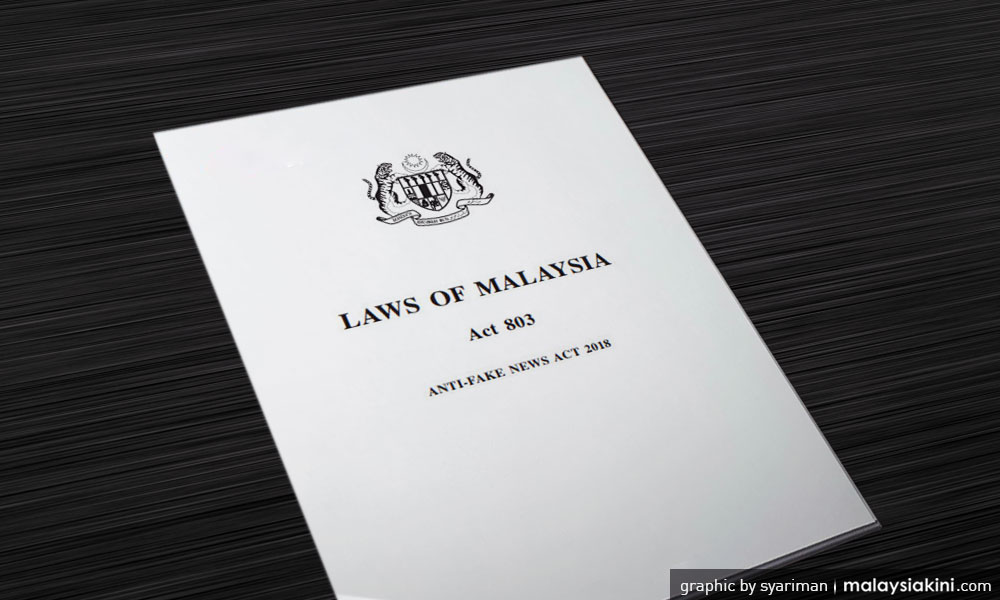
Reform and engagement never passed the lips of Umno, simply because the party rejected it – with promises of reform, if any, being only superficial. This is unsurprising given Umno’s proclivity for rewriting and reclaiming narratives. There is no better example than the passing of the Fake News Act under the previous BN government – which the new Harapan government has promised to repeal but seems to lack proper commitment in executing.
A tool to cover up 1MDB
While not outrightly saying so, the fake news legislation came at a suspect time, after the official media blackout on 1MDB.
While the press could be reined in by existing laws, the Fake News Act aimed to blanket over the public who resided outside media jurisdiction.
For the past three years since the 1MDB scandal came to light, Umno had undoubtedly been hell-bent on rewriting the 1MDB narrative. And they most certainly would have if they had not spectacularly lost at the national polls on May 9.
So, does it come as any surprise to know what Umno truly means when they state social media engagement as their main strategy going forward? They may have lost a grip over the newspapers (save Utusan Malaysia) and broadcasting companies – but they still have the Internet.
Given Zahid’s stance, alongside plenty of other Umno warlords who seem to be in denial over the actual reasons for their loss, and instead point their fingers to everyone but themselves – this signals a future blowback that observers and experts have predicted will be more conservative and right-wing.
We witnessed it during the 2016 American presidential elections when right-wing sites and fake news purveyors were at their height – effectively paving the way for Donald Trump’s win. All they needed to do was deface Hillary Clinton and stir the imagination and sentiments of the American public who wanted to find every reason to undermine the then-Democratic Party candidate.
In the next five years leading up to GE15, expect the same from Umno, who will have their sights trained on their abdicated throne in Putrajaya. They may have decreased resources, but it does not take much to start online propaganda.
All you need is a co-ordinated team engineering the right message delivered at an opportune time of heightened sentiments. Harapan should know: It was how they swayed public opinion in their favour after all.
AZIFF AZUDDIN is a Malaysian sociology postgraduate student currently studying overseas.
The views expressed here are those of the author/contributor and do not necessarily represent the views of Malaysiakini.


Report this comment
Are you sure you want to delete this comment?
This action cannot be undone.