




Outrage of modesty charge in 'ear-squats' case?
The police are investigating whether or not the officer being questioned for filming the 'naked ear-squats' session can be charged under Section 509 of the Penal Code for outrage of modesty, said Deputy Internal Security Minister Noh Omar.
The police are investigating whether or not the officer being questioned for filming the 'naked ear-squats' session can be charged under Section 509 of the Penal Code for outrage of modesty, said Deputy Internal Security Minister Noh Omar.
Responding to questions as to why there have been no arrests to date, he said this is being investigated as a 'non-seizable' offence and that the Attorney-General's Chambers would have to advise police as to whether an arrest can be made.
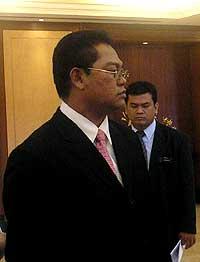 He also disclosed that investigations show the woman was not one of the four Chinese nationals who had been arrested on suspicion of possessing false passports, as various media reports have claimed.
"I do not want to say what nationality she is, but she is not of the four," he told reporters at Parliament House this morning.
He also said the public prosecutor and proposed independent body could scrutinise the extent of the strip search conducted in this case, to determine if the powers had been exceeded.
Noh said the police draw their powers for strip searches from the Criminal Procedure Code and Standing Orders of the Inspector-General of Police.
However, he said problems may arise when the extent of the body search is disputed because this leads to questions over interpretation and discretion.
"How do we interpret the term 'strip search'? To take off some clothes? What is enough? That is up to the discretion of the police," he said.
"How would you make your assessment? Body search? Maybe (in your opinion, the detainee) cannot take off everything. What if the detainee claims she is menstruating? Would you believe her? What if she's lying?"
Resourceful detainees
Noh related complaints he has heard from some police officers that detainees could be extremely resourceful in hiding objects in their body despite being stripped of their clothes.
"Sometimes you find that detainees have hidden things in their private parts, even hand-phones! How are you going to investigate? Poke and dig around? Scan them?
"Do you know how many people are arrested in one day? Detainees have swallowed items before. When they go to the toilet, they're willing to rummage through their own faeces to recover their possessions."
On comments that medical personnel could conduct physical examinations to determine whether or not a detainee was hiding anything, Noh said there are not enough doctors to cater for the number of arrests occurring on a daily basis.
The same goes, he said, for suggestions that scanners could be used to detect hidden objects.
 The deputy minister warned that safeguarding the rights of detainees and curbing police powers would come back to haunt Malaysians in the form of a higher crime rate.
"If people agree that the police should not be so strict, then if in the future there are more crimes, don't blame the police," he said.
"If such things don't happen, then other crimes will occur...(involving) night clubs, guest-relations officers, drugs and many other things."
Noh also urged the media not to play up the issue to the detriment of the morale of the police force
"Don't weaken the morale of our police force," he said, adding that the issue had already tarnished the force's image within and outside the country.


Are you sure you want to delete this comment?
This action cannot be undone.