


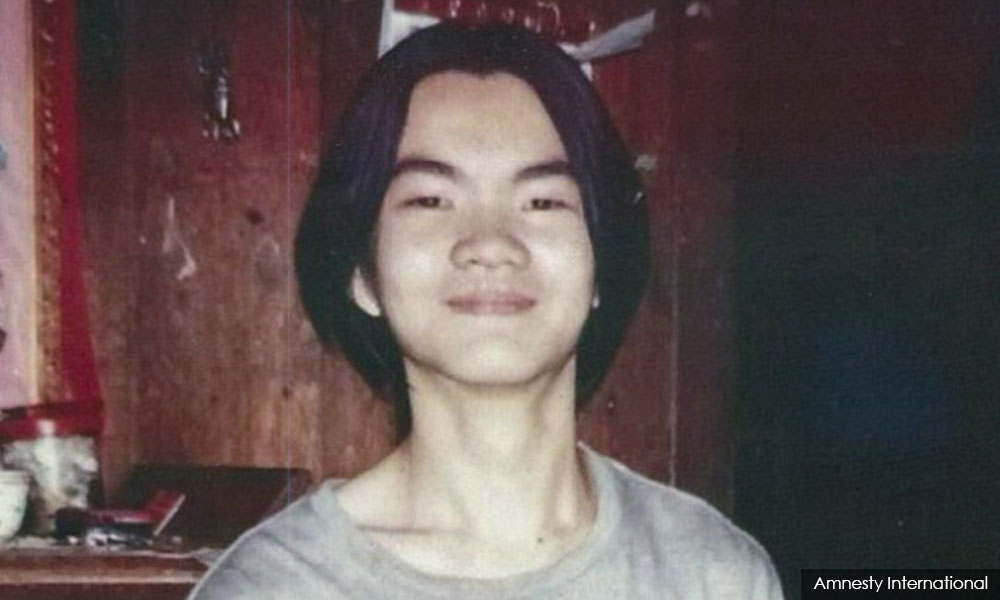

The shadow of death: Living with a family member on death row
SPECIAL REPORT | When death penalty cases make media headlines, the focus is usually on the accused, the circumstances of the crime or the high-profile lawyer involved.
Family members of death row inmates are largely the unseen victims who have to cope with a huge emotional and financial burden. This segment of the death penalty series focuses on the family members of a death row inmate Hoo Yew Wah, 33.
Yew Wah was given the mandatory death sentence in 2005 for possession of 188.35g of methamphetamine. Because of the large quantity in his possession, it was presumed that he was trafficking and he was charged under Section 39B of the Dangerous Drugs Act 1952.
Yew Wah has been on death row in the Bentong Prison since he was sentenced to death in 2011. He has been strictly prohibited from interacting with other inmates for the past seven years. His appeals were dismissed twice while his request for clemency from Sultan of Johor has gone unanswered since 2014.
Throughout the years, he has missed family events, including funerals, and his life continues to hang in the balance.
Language problems, police brutality, forced confession
Yew Wah had just turned 20 when he and his girlfriend were arrested by police in Johor after they found him in possession of drugs. Having quit school at 11, he only spoke Cantonese and Mandarin then.
On the day of his arrest, he had no legal representation. He was provided a translator by the police to record his statement. However, he refused to sign it because he could not understand the translated statement.
He has alleged that the Johor police broke his finger and threatened to beat his girlfriend when they forced him to sign a confession. Although he raised these issues during trial, his conviction was upheld and he was sentenced to death in May 2011.
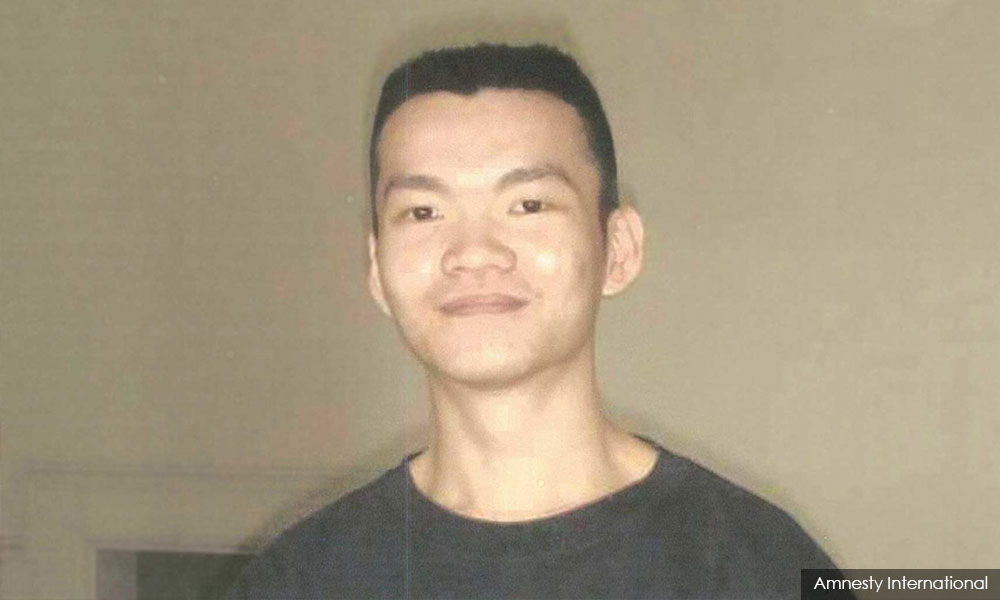
At the age of 26, after six years of imprisonment, Yew Wah (photo) was moved to death row and kept under strict surveillance. Each death row inmate is entitled to two appeals but by that time, his family had exhausted their savings and gone into debt from funding his legal defence...
SPECIAL REPORT | When death penalty cases make media headlines, the focus is usually on the accused, the circumstances of the crime or the high-profile lawyer involved.
Family members of death row inmates are largely the unseen victims who have to cope with a huge emotional and financial burden. This segment of the death penalty series focuses on the family members of a death row inmate Hoo Yew Wah, 33.
Yew Wah was given the mandatory death sentence in 2005 for possession of 188.35g of methamphetamine. Because of the large quantity in his possession, it was presumed that he was trafficking and he was charged under Section 39B of the Dangerous Drugs Act 1952.
Yew Wah has been on death row in the Bentong Prison since he was sentenced to death in 2011. He has been strictly prohibited from interacting with other inmates for the past seven years. His appeals were dismissed twice while his request for clemency from Sultan of Johor has gone unanswered since 2014.
Throughout the years, he has missed family events, including funerals, and his life continues to hang in the balance.
Language problems, police brutality, forced confession
Yew Wah had just turned 20 when he and his girlfriend were arrested by police in Johor after they found him in possession of drugs. Having quit school at 11, he only spoke Cantonese and Mandarin then.
On the day of his arrest, he had no legal representation. He was provided a translator by the police to record his statement. However, he refused to sign it because he could not understand the translated statement.
He has alleged that the Johor police broke his finger and threatened to beat his girlfriend when they forced him to sign a confession. Although he raised these issues during trial, his conviction was upheld and he was sentenced to death in May 2011.
At the age of 26, after six years of imprisonment, Yew Wah (photo) was moved to death row and kept under strict surveillance. Each death row inmate is entitled to two appeals but by that time, his family had exhausted their savings and gone into debt from funding his legal defence.
As Yew Wah's family told Malaysiakini, through a voice recording in Cantonese: "We are a poor family. We spent all our savings, borrowed from others for the lawsuit, but it has all failed."
They complained that the lawyer they hired never appeared in court but assigned others to do so instead.
"When it came to the appeal, we had nowhere to go, we could not afford to hire any more lawyers."
"My brother (Yew Wah) suggested that we engage a government-appointed lawyer. But we really don't know what exactly the lawyer did. We had totally no idea when the appeal was supposed to be when it ended, and what the lawyer is doing. The public defender never even contacted us for any discussion."
According to the law, the government will appoint a lawyer for those who cannot afford to engage one. Nevertheless, the quality of legal representation always comes into question and this could directly affect the outcome.
Yew Wah's family was not aware of the dismissal of his appeals until they visited him at Bentong Prison. His petition for a royal pardon has been pending since 2014 and his family has no clue as to the status of his application to the Pardons Board.
Then, in 2015, the family met with Bentong MP Liow Tiong Lai, when the then-minister visited the Bentong Prison during Chinese New Year.
They asked for his assistance with Yew Wah’s pardon application, which was supported by the Geha Bodhi Care Centre, a non-profit addiction treatment centre. In October 2017, Amnesty International Malaysia started a worldwide petition campaign.
Strong public views on the death penalty abolition have made death row inmates families shy away from the media and members of the public, to avoid heated confrontations and possible misrepresentation.
In fact, Malaysiakini has not been able to interview Yew Wah's family in person. They preferred to be interviewed through Amnesty International Malaysia, which engaged them last year for the petition campaign for Yew Wah. Also, the family insists on being identified only as "Yew Wah's family."
Read more: Death penalty: Six things you need to know
Death only for 'the most serious crimes'
On Nov 30 last year, the Dewan Rakyat passed the Dangerous Drugs (Amendment) (DDA) Bill to remove the mandatory death penalty and give courts full discretion to mete out life sentences to drug traffickers.
Although capital punishment still exists, the move is at least aligned with the International Covenant on Civil and Political Rights (ICCPR), whereby capital punishment is only applied to the "most serious crimes."
On Oct 10 this year, the new Pakatan Harapan government fulfilled its pledge and announced it was going to abolish all laws and regulations that relate to the death penalty.
Yew Wah's mother was surprised by the policy change. His family members said: "The government’s decision to abolish the death penalty gives our family hope, especially for my mum. She was so happy when she heard about this."
On their brother’s conviction, they said: "He was in the wrong, but we think that he shouldn’t have been sentenced to death.
"My brother, Yew Wah, did not even finish his primary education. He started working at an early age. He was arrested before he was 21. He might have been taken advantage of, but he was too young to realise that."
“We think that a 30-year imprisonment sentence is much better than taking someone’s life. As family members of a death row inmate, we hope he will be given a second chance at life after serving his sentence."
Read more: Should the state be given the power to kill?
Missed loved ones' funerals
During his incarceration, Yew Wah has missed out on a lot of family events.
At his father's funeral, the priests recited religious verses and cast divination blocks to seek accord from the deceased to be sent off – a crucial funerary rite.
Yew Wah’s family members recalled: "The priest asked us to kneel over and over again but we failed to get a divine answer (agreement to depart).
"My mum felt very sad. She told my dad’s spirit: 'I know you are most worried about Yew Wah. Please rest in peace. We will take care of him and visit him often. We will try our best to ask for a pardon until he is released.'
"We all cried asking my dad to go in peace, and not to worry about my brother. Finally, we received a divine answer and we knew my dad agreed to depart."
Yew Wah was his grandmother's favourite grandson. Towards the end of her life, she asked to be brought home from the hospital. At home, she lay in the living room, wearing an oxygen mask, as relatives came to visit her for the last time.
"She was mostly unconscious but still clung on to life, hoping for my brother’s return. After a while, we asked one of the nieces to pretend to be Yew Wah. She told her: 'Grandma, I’m back! It’s Yew Wah – I have returned to see you'.
"We placed our niece’s hand on our grandmother’s hand. She felt it and asked why his hand had become fat. She didn't even wait for an answer and left us. We still feel guilty for deceiving her."
Yew Wah was completely unaware that his beloved grandmother was dying as his family then had no way to inform him.
While responding to Malaysiakini’s interview questions, his family members initially read from a prepared statement for the voice recording but their voices broke into sobs when sharing these painful memories.
In a 2015 interview with The Star at the Bentong Prison complex, Yew Wah said: "My friends lived a luxurious lifestyle and I wanted the same. I followed them in selling drugs on a small scale and was pretty soon involved full-time in the trade.
"It was easy money and I lied so much to my parents that they did not suspect anything. They were so shocked when I was arrested in 2005.
"If given a chance, I want to prove that I have changed. I want to look for a proper job and spend my life taking care of my mother."
Families' access to inmates
According to Prison Regulations 2000 under the Prisons Act 1995, death row inmates are entitled to be visited by their relatives, legal representatives, religious personnel or consular's representative if he is a foreign prisoner. There are also provisions to enable the death row inmate to be moved to the nearest prison where his family lives.
Death row inmates are only allowed a 45-minute visit per week during the prison’s operational hours, in the presence of a prison officer.
NGOs familiar with the procedure say that while no prior appointment is required, family members are required to produce a visitor card and visits must routinely be on the same day.
This adds additional stress to the emotional toll for families, who might even be visiting from out of state.
RELATED REPORTS
Part 1: Death penalty: Six things you need to know
Part 2: From the judicial frontlines: An inside look at the death penalty


Are you sure you want to delete this comment?
This action cannot be undone.