




Bird flu: More chickens to be culled
The authorities will slaughter all poultry in and around four villages following confirmation of the country's first outbreak of the deadly H5N1 strain of bird flu in over a year.
The authorities will slaughter all poultry in and around four villages following confirmation of the country's first outbreak of the deadly H5N1 strain of bird flu in over a year.
"We will carry out the culling exercise tonight as it is easier to catch the free-range chickens," Noraidah Abdul Rahim, veterinary services director for central Selangor state, told AFP.
"Birds in a one kilometre radius area surrounding the affected areas will be culled," she added.
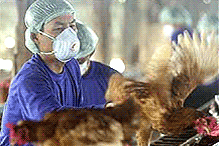 The government yesterday confirmed a new outbreak of avian influenza after 40 chickens died in four villages in Gombak, just north of the capital Kuala Lumpur.
Some 110 birds were culled that night.
Noraidah said the dead chickens were not from commercial farms but were kept by individuals who allowed their birds to roam freely.
"I didn't know that my chickens had the virus," said Mohamad Idris Ismail from Pasir Wardieburn village, one of the four affected.
"My chickens were dying at a rate of eight chickens a day for the past three weeks," the 53-year-old said.
"They started looking sickly and weak, and just died in their sleep. I've been rearing chickens for nearly two years now and I've never seen anything like this."
Fighting cocks smuggled in
Selangor and Federal Territory Poultry Traders Association adviser Lee Chong Meng urged the public not be alarmed by the outbreak.
"There are no commercial farms in the Federal Territory. Hence, it is safe to eat their chickens," he said.
Lee said it was possible that villagers could have smuggled in fighting roosters from neighbouring Thailand and these birds may have infected the free-range chickens.
Neighbouring Singapore, the biggest market for Malaysian poultry, has suspended poultry and egg imports from Selangor.
Health authorites have launched a door-to-door policy to check the health of residents of the four villages.
"It is part of our active case detection plan. We will check on the people with high temperature and who may have a history of exposure to the dead chickens," said Ramli Rahmat, the Health Ministry's disease control director.
Malaysia's last H5N1 outbreak came in late 2004 in a village in northern Kelantan state. It declared itself free of bird flu in January 2005.
Livestock breeding is a major industry in Malaysia, employing thousands of workers.
More than 90 people have died from bird flu in China, Southeast Asia, Iraq and eastern Turkey since 2003. So far, there have been no human deaths in Malaysia due to the virus.


