




Now, the twin towers are being monitored
Malaysia has widened its bird flu surveillance around a village just north of the capital to include the Petronas Twin Towers after announcing a new outbreak, officials said today.
Malaysia has widened its bird flu surveillance around a village just north of the capital to include the Petronas Twin Towers after announcing a new outbreak, officials said today.
The area within a 10km (6.2-mile) radius of the affected village, which includes the National Zoo as well as the towers, was being monitored for dead birds, a Veterinary Department spokesperson told AFP .
 The surveillance was expected to continue for at least three weeks to ensure the area was free from the deadly avian influenza, the spokesperson said.
Health officials believe that fighting cocks smuggled in from neighbouring countries could have been the source of the new outbreak.
"The cockerels may have been brought here by foreign workers who organised illegal cock fights," the New Straits Times quoted a health department source as saying.
Malaysia confirmed late Monday a new outbreak of avian influenza after 40 chickens died in four villages in Kuala Lumpur.
500 birds culled
So far at least 500 birds have been culled in operations aimed at preventing the spread of the disease. Health officials are conducting door-to-door health checks in the affected villages to determine if any residents had been infected as culling operations continue.
"There are no new deaths of chickens, ducks or birds at the villages, and we are monitoring the birds at the National Zoo," Sukandar Abdul Latif, the Agriculture Ministry's deputy secretary-general, told the Star daily.
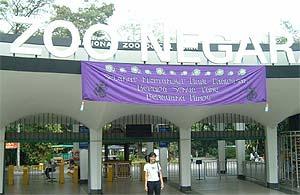 The National Zoo has closed its bird exhibit and has started disinfecting visitors and their cars to prevent the spread of the outbreak, Zoo director Mohamed Ngah said.
He was concerned as the zoo was only a 10-minute drive from a village where 40 free-range chickens had died of the deadly H5N1 strain of the avian influenza.
"We have 300 free-flying storks, this is my worry. Until the government gives the all-clear, we have closed the bird enclosure," Mohamed told AFP.
"We are now using biosecurity, using antiseptic to kill the virus," he said.
All vehicles entering the zoo compound will be sprayed with disinfectant while visitors will be required to walk through antiseptic carpets, he said.
Neighbouring Singapore, the biggest market for Malaysian poultry, has suspended poultry and egg imports from central Selangor state, which surrounds the capital.
Malaysia's last H5N1 outbreak was in late 2004 in a village in northern Kelantan state. It declared itself free of bird flu in January 2005.
The H5N1 strain has claimed at least 90 mostly Asian lives since late 2003 and has now spread to Africa and Europe. So far, there have been no human deaths in Malaysia due to the virus.


