


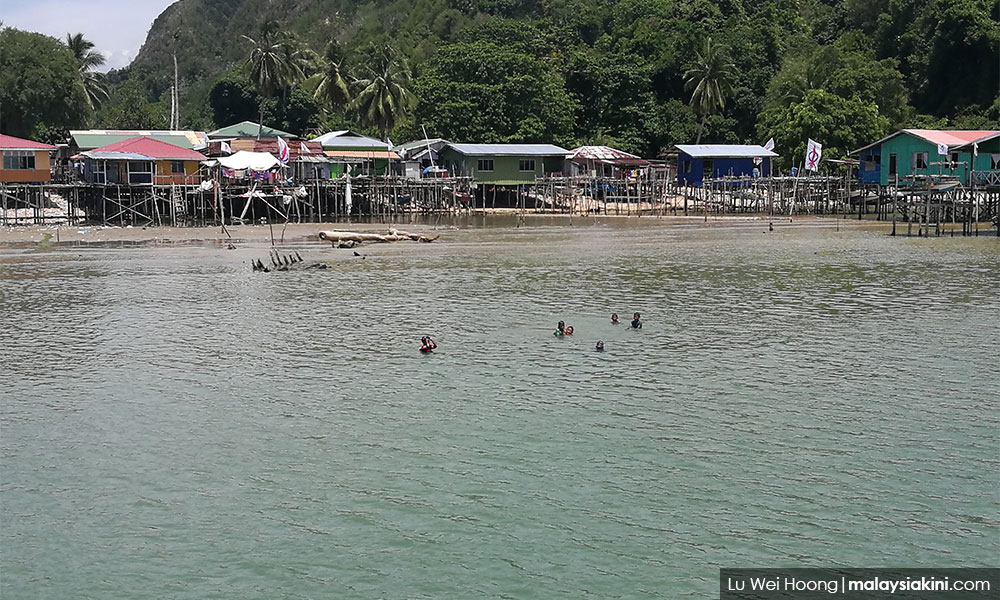

The invisible people of Pulau Berhala
SANDAKAN POLLS | The term “Land below the wind” was popularised by the autobiographical accounts of American writer Agnes Newton Keith in a book of the same name.
Her later works would chronicle life under Japanese rule where she and her family were held in an internment camp in Pulau Berhala off the western coast of Sandakan.
In the 1970s, the camp’s facilities were used as an immigration detention camp to house refugees - mostly Bajau people - fleeing the armed conflict between the Filipino military and the Moro National Liberation Front.
Now that the camp is no longer there, the Bajau people remain on the island but most of them are stateless and their movements restricted to Pulau Berhala.
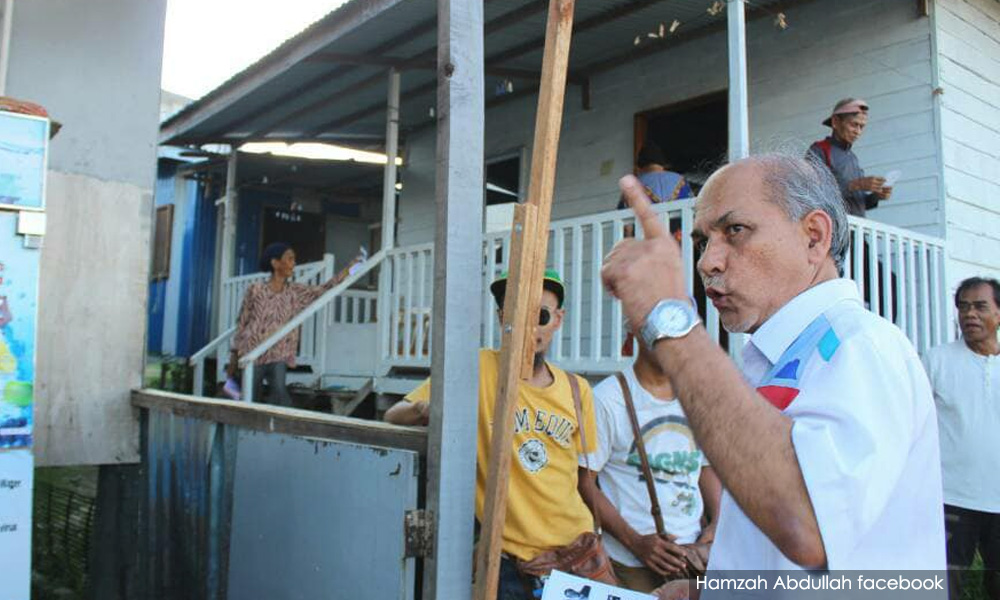
During a recent visit to Kampung Pulau Berhala, campaigning activities by DAP were in full swing, despite the small number of voters located here. But for most settlers on Pulau Berhala, being stateless means they are disconnected politically from greater Sabah and the rest of Malaysia...
SANDAKAN POLLS | The term “Land below the wind” was popularised by the autobiographical accounts of American writer Agnes Newton Keith in a book of the same name.
Her later works would chronicle life under Japanese rule where she and her family were held in an internment camp in Pulau Berhala off the western coast of Sandakan.
In the 1970s, the camp’s facilities were used as an immigration detention camp to house refugees - mostly Bajau people - fleeing the armed conflict between the Filipino military and the Moro National Liberation Front.
Now that the camp is no longer there, the Bajau people remain on the island but most of them are stateless and their movements restricted to Pulau Berhala.
During a recent visit to Kampung Pulau Berhala, campaigning activities by DAP were in full swing, despite the small number of voters located here. But for most settlers on Pulau Berhala, being stateless means they are disconnected politically from greater Sabah and the rest of Malaysia.
Muslim Sali, 62, was among those who have fled the conflict in Tawi-Tawi islands in southern Philippines in 1971 along with his father and grandmother. He is currently an imam at a mosque in Pulau Berhala.
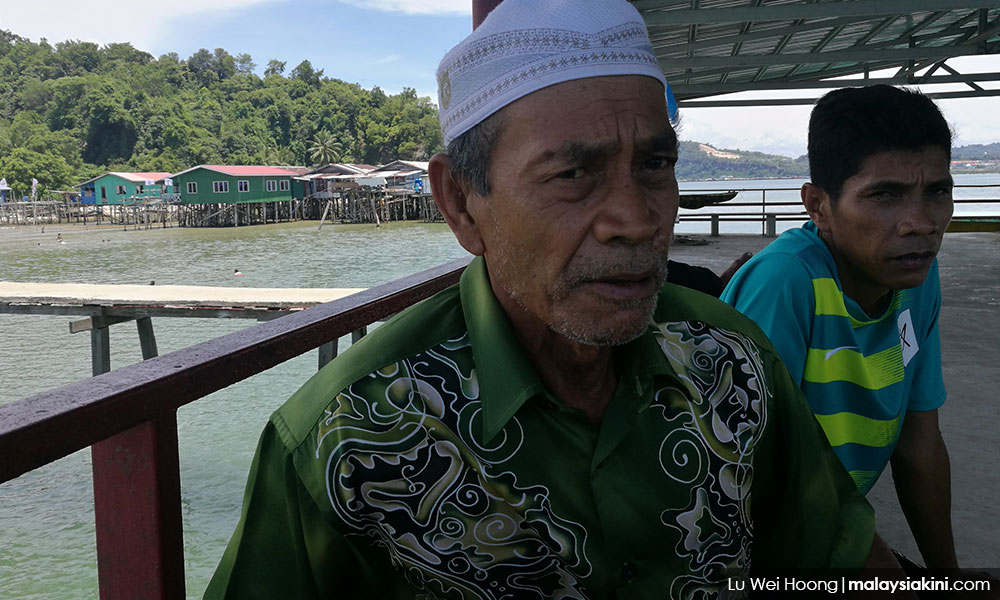
The reasons for his incarceration, said Muslim, was because he didn’t have travel documents. He was arrested in Sandakan.
“At the time, the rumour was that anyone with a guarantor could make a ‘passport’. Incidentally, I had one (among the locals) and I received my ‘passport’,” he said.
The “passport” he was referring to was, in fact, the IMM13 document (example below) issued by the federal government at that time to document refugees and limit their movements only to Sabah and Labuan.
Holders of such documents had limited working rights and access to public facilities. But with this “passport” in hand, Muslim said he was allowed to leave the detention camp and work as a labourer on the mainland.
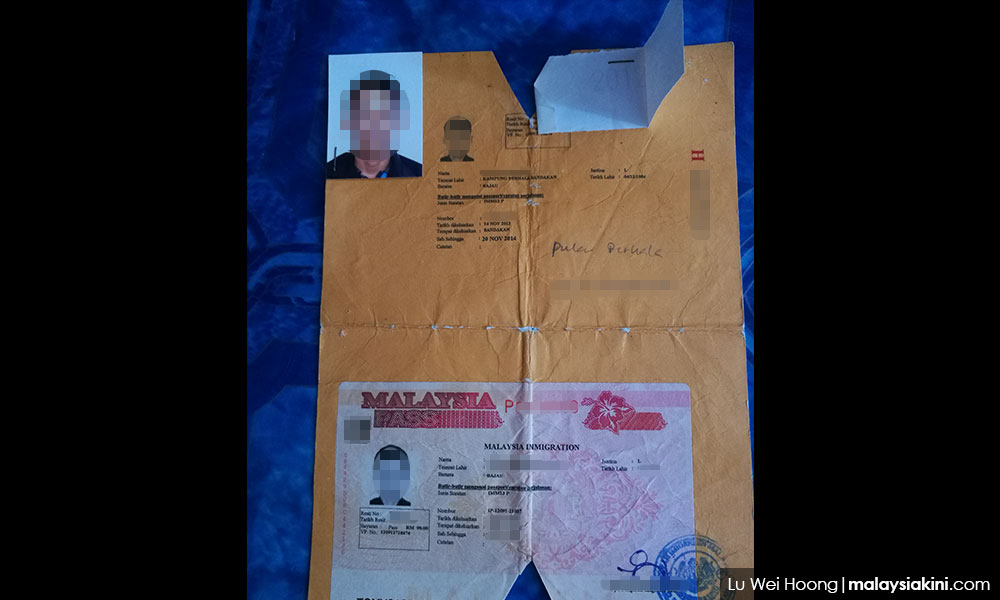
During one boat ride to Lahad Datu many years ago, Muslim lost his IMM13 document and hence was regarded as an undocumented person once again and forced to live in the shadows.
Muslim eventually married a Malaysian citizen. He now has eight children of which only four are Malaysian citizens.
“When my wife was expecting our first four children, we were too scared to go to a government clinic. Some people advised us to do so in order to obtain a birth certificate. It would make the process of getting an identity card easier.
“It was only with our fifth child that we started to visit the clinic. The birth of our children was recorded and they received their identity cards,” he said.
As for his wife, Muslim said she was once a Malaysian identity card holder until she was denied the MyKad which was introduced in 2001. Again, his wife became stateless.
“When my wife had the IC with the bunga raya (hibiscus flower) watermark, she voted a few times. Not anymore,” he said.
Teaching the ‘3M’
For Muslim, his biggest concern is the fact that some of his children and grandchildren are unable to go to school or find work because they are stateless.
“We just want the government to give us our papers so we won’t be arrested. When the kids grow up, they will have trouble making a living. They didn’t go to school,” he said.
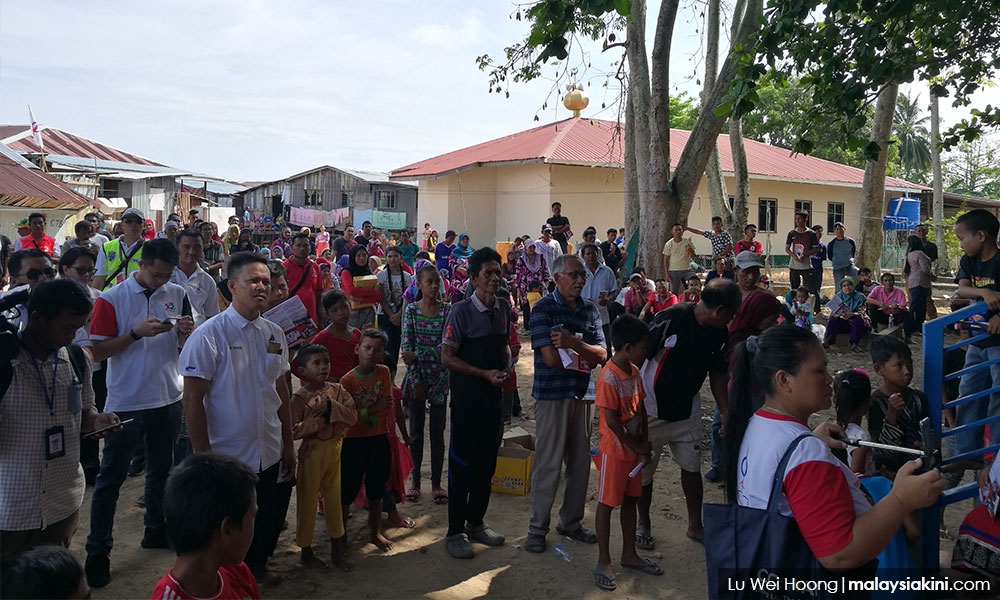
Malaysiakini had visited the island during the weekday and also spoke to several teenagers who said they could not go to school nor work as they were non-citizens. There are no schools on the island. The lucky few who are citizens have to travel by boat to the mainland every day to receive an education.
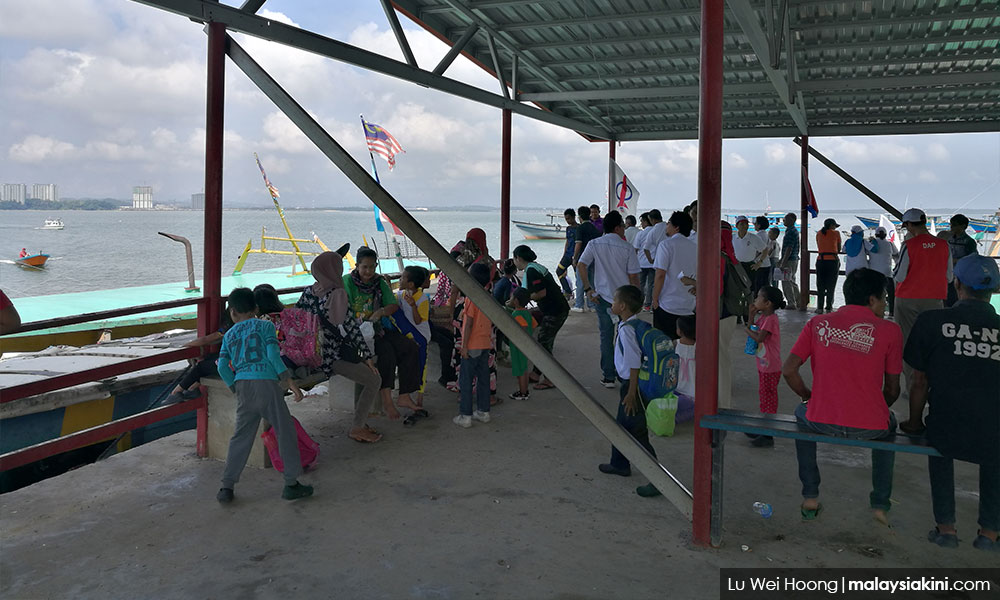
For the rest, education for what they refer to as the “3Ms” - membaca, menulis dan mengira (reading, writing and mathematics) - comes from the military personnel stationed on the island, according to Kampung Pulau Berhala village chief Junior Jikirin.
He said the military also provides medical assistance, but only those who hold the IMM13 and a "lepa-lepa" document.
The lepa-lepa referred to the community’s traditional boat. However, it also refers to a document issued by the Semporna Native Court to identify people of Bajau Laut descent.
However, this document has no legal significance and is not recognised by the Malaysian government.
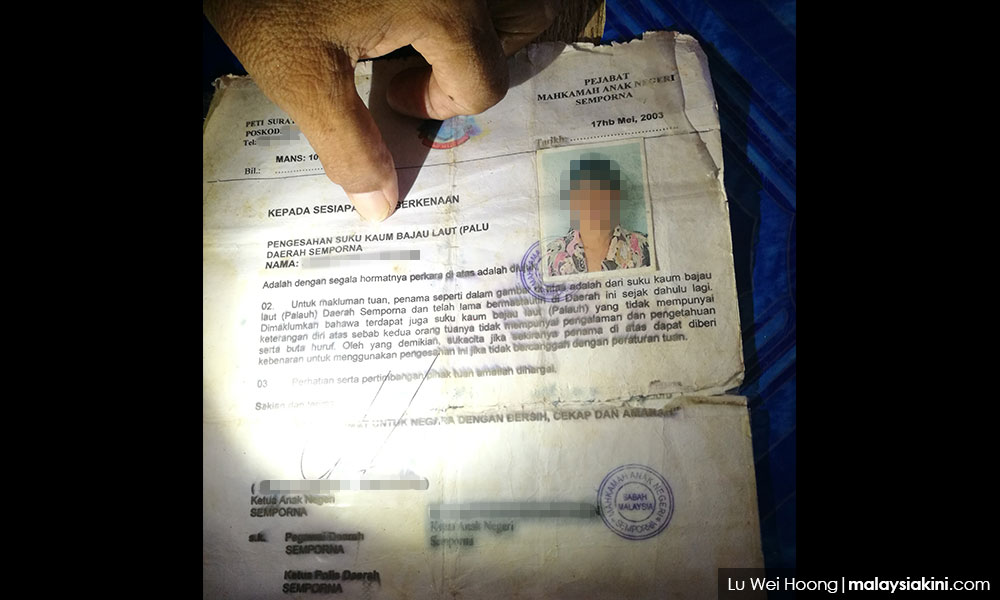
“If you have a lepa-lepa document, you can commute between Semporna and Pulau Berhala by sea. If you choose the land route, you will test your luck,” said Junior.
He said what document a person has will also affect how they are received at public hospitals. For instance, he said a MyKad holder will only have to pay a nominal fee to deliver a baby while an IMM13 document holder will have to pay RM4,000.
A lepa-lepa document holder, which is akin to having no documents at all, will not be accepted by public hospitals, he said.
By Junior’s estimates, there are 2,500 residents on Pulau Berhala. Based on this and other figures cited by junior, some 60 percent of residents have no documents whatsoever while only eight percent are MyKad holders.
Sabah has had a long-standing problem with non-citizens. According to the Statistics Department website, about 29.7 percent of Sabah’s population of four million are non-citizens.
The number of non-citizens in the state has been growing by 3.4 percent a year since 2010, outpacing the national average growth of 1.4 percent, according to the department's figures.
Sabah’s non-citizen population has been a thorny political issue for decades. A royal commission of inquiry (RCI) had in 2014 concluded that a syndicate was involved in the granting of identity cards to foreigners illegally.
Critics argued that Sabah had experienced a massive population boom as part of a social re-engineering scheme to reduce the proportion of non-Muslim Sabahans to Muslim Sabahans for political purposes.
A task force was set up following the RCI report but little progress has been heard of the matter since.
Focusing on the children
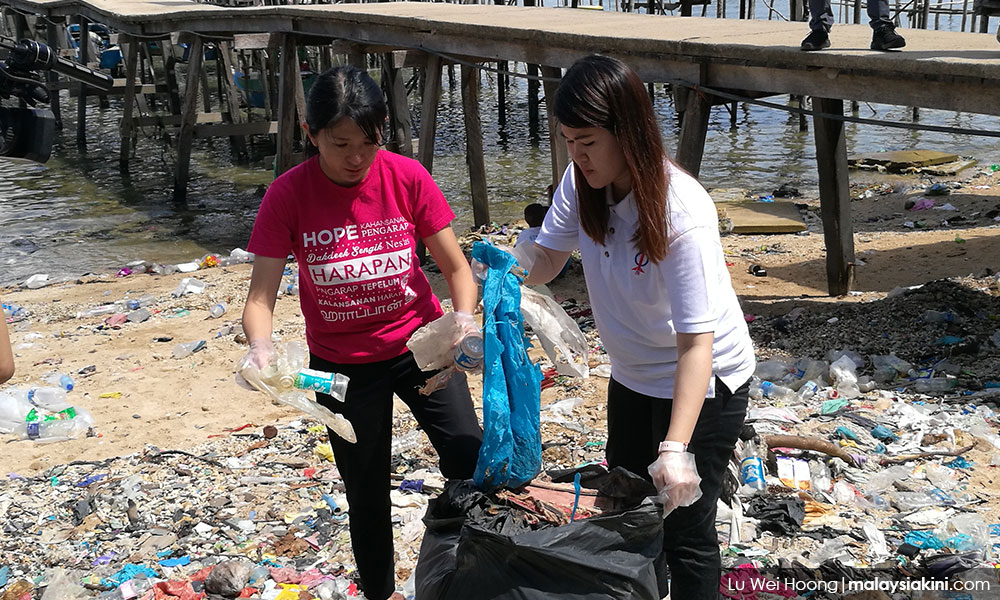
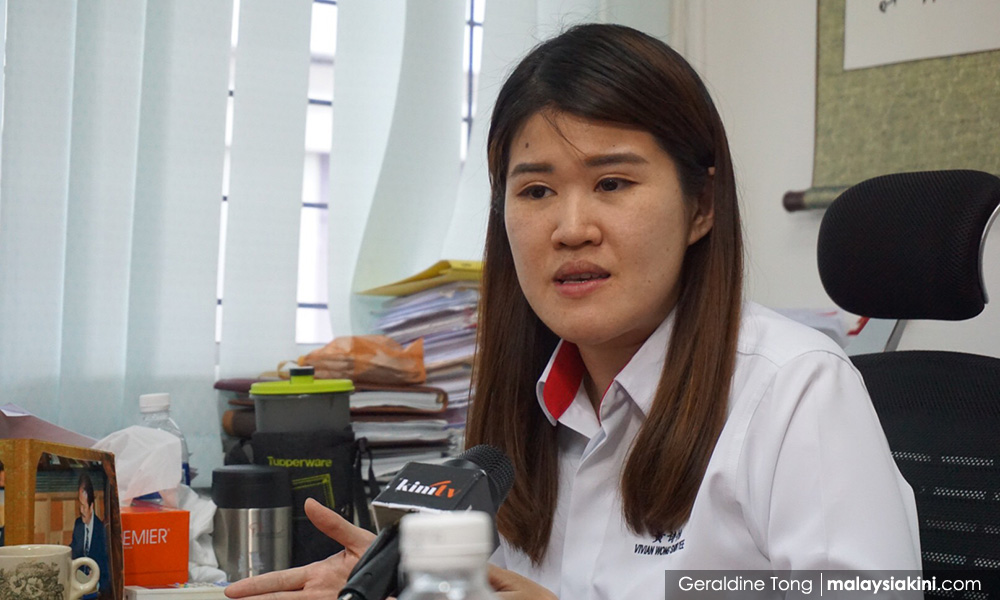
As part of the ongoing Sandakan by-election campaign, Pulau Berhala was visited by candidate Vivian Wong and federal minister Yeo Bee Yin on April 30.
The duo had taken part in a cleanup and awareness campaign on the use of plastic. However, locals told Malaysiakini that they were more keen to know if the visitors could help them with their citizenship woes.
“We live here in peace. However, we all have problems with our papers,” said one resident who did not wish to be named.
Wong conceded that this was a long-standing issue with no easy solution. However, she stressed that in the interim, stateless children must be allowed to receive an education.
“We are aware that there are a lot of children who cannot go to school because they don’t have papers,” she said.
She also pledged to bring volunteers to the island to provide medical care in the future.
So close yet so far
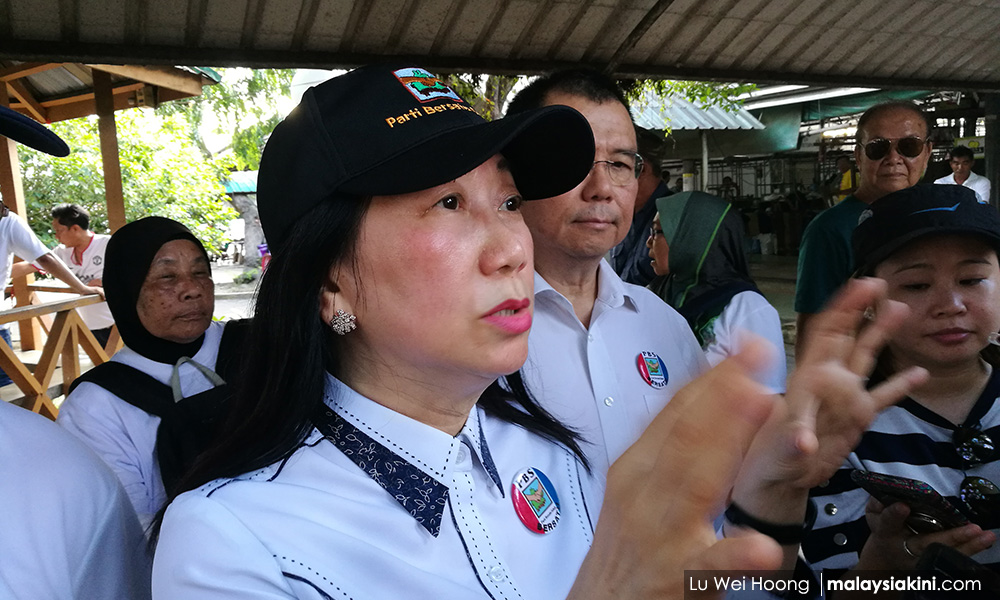
For Linda Tsen, the PBS candidate, raising the plight of the stateless children in Parliament was her election pledge.
She claimed that the present federal government was not doing enough to resolve Sabah’s problems with non-citizens, noting that the previous government had at least formed a commission to study the matter.
“Of course, we would like to see Sabah without any illegal immigrants. As I told you, this issue has been haunting the Sabah people for a long, long time."
However, for Muslim, he is being haunted by the fact he and some of his family members cannot venture beyond Pulau Berhala despite his entire family having embraced Malaysia as their new home.
“My family are all here. Our children will die here. Of course, I consider (Malaysia) as my homeland.
“The old timers here can only live on the island. They cannot head to Sandakan to meet their relatives and friends,” he said.
From the jetty where Muslim was interviewed, Sandakan was only five kilometres away. But like Keith and the other prisoners during the war, Sandakan is a symbol of freedom that is so close, yet so far.


Report this comment
Are you sure you want to delete this comment?
This action cannot be undone.