




Hand, foot and mouth epidemic declared in S'wak
Malaysia on Wednesday declared that an outbreak of hand, foot-and-mouth disease in the eastern state of Sarawak has escalated into an epidemic with some 200 cases being reported daily.
Malaysia on Wednesday declared that an outbreak of hand, foot-and-mouth disease in the eastern state of Sarawak has escalated into an epidemic with some 200 cases being reported daily.
Health Minister Dr Chua Soi Lek said the disease had reached epidemic proportions "because of the increase in the number of cases in the beginning of this year."
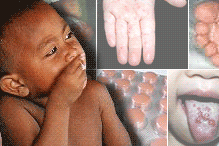
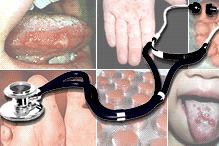 The disease, which affects infants and young children and is not related to foot and mouth disease which afflicts animals, has so far killed four youngsters in Sarawak on Borneo island.
State health officials have recorded a total of 3,087 cases since January 1. The disease is spread by poor hygiene and causes fever, rashes and painful blisters in the mouth and on the hands and feet.
All kindergartens in the state have been shut down to prevent the spread of the disease, and hospitals are on alert to treat and isolate people, Chua said.
"All the hospitals, especially in towns like Miri and Kuching and Sibu, where it's the worst, the hospitals have to be ready for isolations. We usually put them in isolation wards because it spreads very fast," he told AFP.
Public awareness campaign
Chua said authorities were on the lookout for outbreaks in the rest of Malaysia, where it is endemic, and a public awareness campaign would soon be launched.
 "We have to go on a big information drive to make the people more aware of the problem," said Chua, who sharply criticised kindergartens that continue to remain open in Sarawak.
"The mentality is that if the school is not affected, then why should they close down," he said, dismissing the offenders as "profit-oriented".
Sarawak suffered outbreaks of hand, foot-and-mouth disease in 1997, 2000 and 2003, in what officials say is a three-year cycle. The 1997 outbreak killed 31 people.
Chua said the government was investigating why the disease was rearing its head so regularly.


