




MAS parent yet to decide on aircraft sale
The parent of national carrier Malaysia Airlines said today it has made no decision on the sale of aircraft proposed under a restructuring plan after reports said the carrier's management was pressuring for the disposal of 30 aircraft.
The parent of national carrier Malaysia Airlines said today it has made no decision on the sale of aircraft proposed under a restructuring plan after reports said the carrier's management was pressuring for the disposal of 30 aircraft.
"I am not able to comment until a decision has been made," Shahril Mokhtar, general manager for corporate services at Penerbangan Malaysia Berhad, which owns Malaysia Airlines, told AFP.
The Star daily reported today that Malaysia Airlines had already asked Penerbangan to sell about 30 aircraft as part of efforts to raise desperately-needed funds.
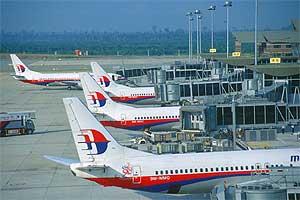 It cited unidentified sources as saying that a final list of aircraft to be sold will be drawn up when Malaysia Airlines finalises its network rationalization and fleet requirement plan, adding that this was likely to be by the midyear.
The loss-making airline was looking to dispose of up to 13 Boeing 747-400 planes, several Boeing 737-400s, Fokkers and Twin-Otters, it said.
The move would help Malaysia Airlines raise about RM759 million (US$205 million) as it would get 80 percent of the proceeds in line with an agreement during a 'widespread asset unbundling' exercise several years ago, it said.
The remaining 20 percent would go to Penerbangan, which is 100 percent owned by state investment arm Khazanah Nasional.
'Goodwill payment'
Malaysia Airlines officials declined to comment on the report when contacted.
However an airline spokesman told AFP that all of Malaysia Airlines' 21,000 staff will receive a one-off "goodwill payment" of RM1,000 (US$270) each this month to boost their morale during the restructuring.
The ailing carrier recently announced a four billion ringgit rescue plan over a span of three years to return the carrier to profitability.
The plan includes extensive cost-cutting and the axing of unprofitable routes, rationalising of the fleet or retiring of older aircraft and a plan to eventually purchase new aircraft.
Malaysia Airlines, which posted a RM1.3 billion loss for the 2005 financial year, has blamed its troubles on crippling fuel prices and lower load factors, but projected a return to profitability in 2007.


