




Water woes: Oh man, not another committee...
The setting-up of a cabinet committee to assess all landfills with respect to water catchment and environmentally sensitive areas on the contamination of water supply, leads Parliamentary Opposition Leader Lim Kit Siang to ask a few questions.
The setting-up of a cabinet committee to assess all landfills with respect to water catchment and environmentally sensitive areas on the contamination of water supply, leads Parliamentary Opposition Leader Lim Kit Siang to ask a few questions.
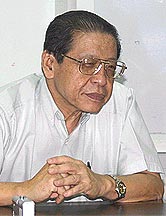 Topping the list, is if whether the government is making history by having the most number of cabinet committees.
"Malaysians want to know the number of cabinet committees headed by the prime minister and his deputy, as well as other committees not headed by them and what this implies in terms of good and efficient governance," he said in a statement today.
Secondly, the veteran politician asked if this trend was a reflection of the growing loss of authority of the individual ministers.
"This week's spectacle where Syabas (Syarikat Bekalan Air Selangor) chief executive Rozali Ismail publicly berated Environment and Natural Resources Minister Azmi Khalid raised eyebrows all around," he said.
Rozali had responded to the minister's criticism of the company for disclaiming responsibility for the foul-smelling water supplied to homes in Kuala Lumpur and Selangor after a heavy downpour last month.
Following this, the Department of Environment (DOE) responded and held Syabas fully responsible for the incident.
'Thunderous' silence
Commenting further on this tit-for-tat, Lim asked if Rozali was "flexing his political muscles" to demonstrate that he commanded greater influence in Umno than Azmi?
 The opposition leader's final question was wether Syabas has been let off scot-free for providing the stinking and undrinkable water to hundreds of thousands of households.
He also took a swipe at Selangor Menteri Besar Dr Mohd Khir Toyo and Energy, Water and Telecommunications Minister Dr Lim Keng Yaik for their 'thunderous' silence on the matter.
Lim, who is the Ipoh Timor MP, said he will seek a clarification from Keng Yaik when the latter gives a briefing on the two water bills for opposition parliamentarians tomorrow.
It was previously reported that the smell was due to the increased levels of ammonia in the water - caused by the heavy rains - reacting with the chlorine.


