



Malaysia as Asean's cryptocurrency hub
COMMENT | Wild West or Wall Street?
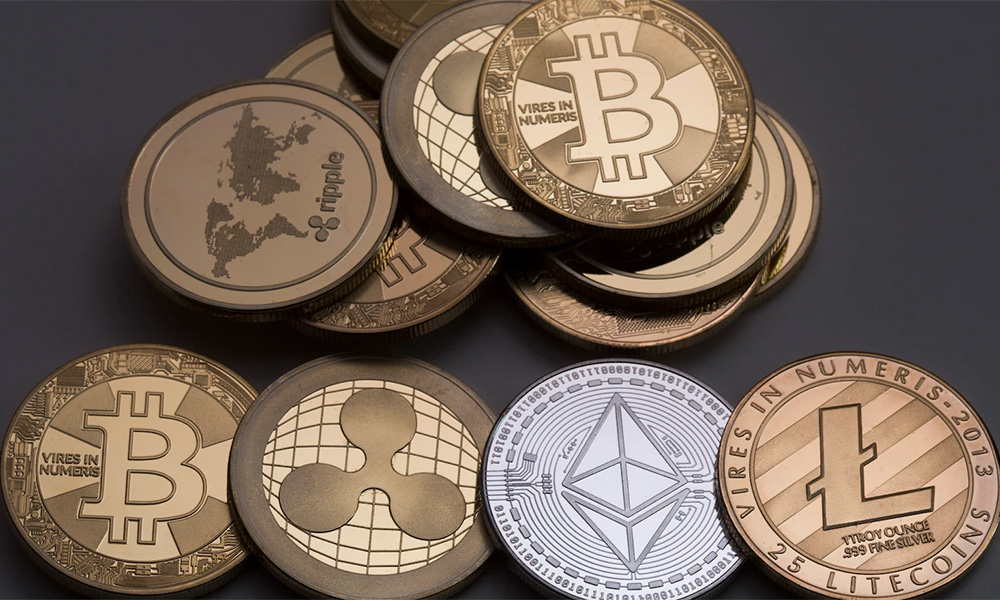
It’s anyone’s guess what the future price of bitcoin will be. Depending on who you listen to, it’s either the latest speculative fad which will end in tears; or else tomorrow’s currency of choice. The leading opinion makers for either case seem to be millennial-aged pundits with little or no financial expertise.
The first wave of investors into this new asset class has more in common with prospectors in a gold rush than the pin-striped bean counters who peddle stocks and bonds; and the ensuing volatility that followed reinforced the public’s perception of cryptocurrencies as more Wild West, less Wall Street...
COMMENT | Wild West or Wall Street?
It’s anyone’s guess what the future price of bitcoin will be. Depending on who you listen to, it’s either the latest speculative fad which will end in tears; or else tomorrow’s currency of choice. The leading opinion makers for either case seem to be millennial-aged pundits with little or no financial expertise.
The first wave of investors into this new asset class has more in common with prospectors in a gold rush than the pin-striped bean counters who peddle stocks and bonds; and the ensuing volatility that followed reinforced the public’s perception of cryptocurrencies as more Wild West, less Wall Street.
Like with all new things – personal computing, mobile telephony, the internet – the actual pace of change is way ahead of public dialogue. While the layman is still trying to define blockchains, uber geeks are onto sidechains and acyclical graphs – and incumbents should beware their place in the pecking order.
How can one forget that in August 2018, the New York Stock Exchange’s operator Intercontinental Exchange (ICE) announced the launching of a global “digital asset” exchange – named Bakkt – a landmark event that opened the floodgates of institutional capital into cryptocurrencies, effectively ending one part of the debate, i.e. whether values of cryptocurrencies rise or fall, volume was increasing exponentially, albeit moderating a little while later.
Bulge bracket corporates such as Starbucks and Microsoft are lending considerable muscle to the Bakkt platform with plans to allow customers to pay for its goods and services with digital currency.
Concurrently, by elevating the standard for efficiency, security, custody and settlement, the doors have been opened for institutional, merchant and consumer participation in the digital asset marketplace.
To put it simply, regardless of your views about the value of coins, volume in them is going to explode.
Purpose-built to fit the market
Malaysia is uniquely positioned to throw its hat into the ring. Like with all new technologies, the incumbent players are most incentivized to maintain the status quo and protect their existing assets.
Cryptocurrencies are viewed – rightly or wrongly – as a threat to banking and financial centres where trade, securitization and asset management activity is transacted via the leading exchange currencies.
Within Asia, this means that the tier-one financial centres of Hong Kong, Singapore, Tokyo and Shanghai all view this coming tsunami with emotions ranging from caution to alarm, and will be slow to lead a transition of commerce from current means, which it dominates, into uncharted new terrain.
Kuala Lumpur’s financial markets are tiny by comparison, and the Ringgit Malaysia (RM) is hardly the currency of choice for global trade. Yet it boasts the leading banks in Asean (Maybank and CIMB) and a world-class commercial infrastructure. With the proper regulatory support, it could emerge as the leading hub for digital asset innovation in Asia, complementing European region front runners such as Zürich.
Malaysia’s banks already enjoy pole position within Asean, which is the world’s fastest growing economic bloc, encompassing 550 million people, and with GDP expanding above 5 percent annually.
Though cryptocurrency platforms are largely domiciled in the US and Europe, 70 percent of capital flows into digital assets actually flow from Asia – making a Crypto Currency Exchange (CCX) within the region an inevitability. Meanwhile, both Singapore and Hong Kong have restricted Initial Coin Offerings (ICO)s and crypto-exchanges.
Let’s not forget the Tun Razak Exchange – the 70-acre white elephant staring us down from Kuala Lumpur’s city centre – is in desperate need of viable next generation financial marketplaces to fill its skyscrapers and bring sustainable white collar employment for it to avoid becoming yet another headache left by the previous administration for us to sort out.
A ‘CCX’ in the TRX has a nice ring to it.
RAIS HUSSIN is a supreme council member of Bersatu. He also heads its policy and strategy bureau.
The views expressed here are those of the author/contributor and do not necessarily represent the views of Malaysiakini.





Are you sure you want to delete this comment?
This action cannot be undone.